
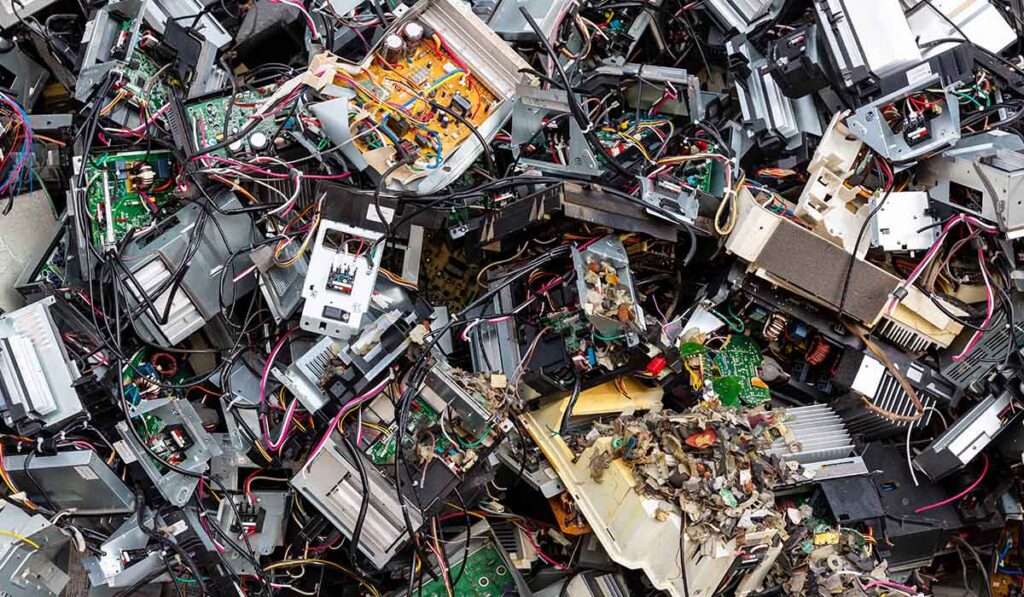
Our insatiable appetite for technology comes with a hefty price tag for the planet. Every discarded phone, laptop, and TV contributes to a growing mountain of e-waste – the fastest-growing waste stream globally. But beyond cluttering landfills, this electronic graveyard harbors a hidden threat: environmental contamination and potential harm to human health. So, why exactly is e-waste bad for the environment? Let’s dive into the toxic heart of this issue.
1. Poisonous Brew: E-waste is a cocktail of hazardous materials. Lead, mercury, cadmium, and arsenic – these are just a few of the nasty ingredients lurking in circuit boards, batteries, and display panels. When improperly disposed of, these toxins leach into the soil and groundwater, contaminating ecosystems and posing serious health risks to wildlife and humans alike.
2. Air Pollution Nightmare: Burning e-waste releases a plume of toxic fumes laden with dioxins, heavy metals, and flame retardants. These pollutants can travel long distances, contaminating the air we breathe and contributing to respiratory problems, birth defects, and even cancer.
3. Resource Depletion: Manufacturing electronics is a resource-intensive process, requiring the extraction of precious metals and rare earth elements. Improper e-waste disposal squanders these valuable resources, forcing us to dig deeper and further for virgin materials, exacerbating environmental damage from mining and refining activities.
4. Landfilling Woes: Landfills are the dumping ground for most e-waste, but these overflowing repositories are not designed for toxic materials. Over time, the toxins can seep into the surrounding soil and water, contaminating entire ecosystems. Additionally, landfills take up valuable land that could be used for sustainable development.
5. Illegal Export and Unfair Labor: Developed nations often export their e-waste to developing countries, where lax regulations and cheap labor lead to unsafe and unethical recycling practices. Workers in these informal recycling sectors are often exposed to hazardous materials without proper protection, putting their health and well-being at risk.
The good news? We can turn the tide on e-waste! By adopting responsible practices like:
- Repair and reuse electronics whenever possible.
- Recycle e-waste through certified channels.
- Demand sustainable products from manufacturers.
- Support legislation promoting responsible e-waste management.
Together, we can prevent our electronic addiction from becoming a toxic legacy for future generations. Let’s make a conscious choice to break the e-waste cycle and protect our planet, one discarded device at a time.
References:
- The World Health Organization: https://elytus.com/blog/e-waste-and-its-negative-effects-on-the-environment.html
- The Geneva Environment Network: https://elytus.com/blog/e-waste-and-its-negative-effects-on-the-environment.html
- Earth.Org: https://earth.org/environmental-impact-of-e-waste/
- Basel Convention on the Control of Transboundary Movements of Hazardous Wastes and their Disposal: https://www.basel.int/