
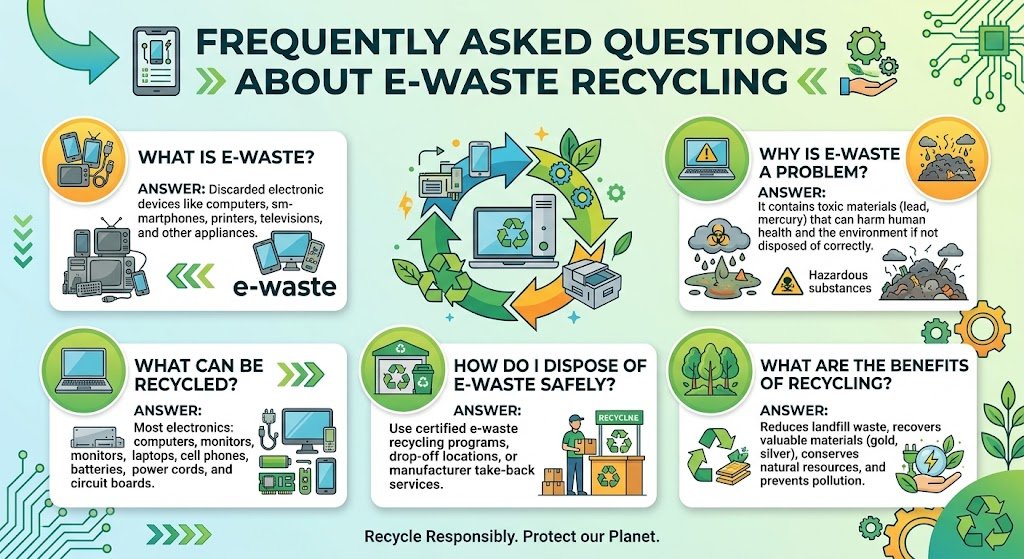
E-waste recycling can raise many questions, from what types of electronics can be recycled to how data and sensitive information are handled. This guide answers the most common questions about e-waste recycling, responsible electronics disposal, reuse, data security, and resource recovery.
Electronic waste, or e-waste, is one of the fastest-growing waste streams in the world. From old smartphones and computers to printers, televisions, servers, batteries, and cables, unwanted electronics can contain valuable materials as well as substances that require responsible handling.
E-waste recycling helps recover useful resources, reduce environmental pollution, and ensure that electronic equipment is managed safely at the end of its useful life.
Below are some of the most frequently asked questions about e-waste recycling.
1. What is e-waste?
E-waste is discarded electrical and electronic equipment that is no longer wanted, working, or useful. It can include computers, laptops, mobile phones, printers, monitors, televisions, servers, networking equipment, cables, appliances, and other electronic devices.
2. Why is e-waste recycling important?
Responsible recycling helps prevent electronics from ending up in uncontrolled dumpsites or being improperly dismantled. It also allows materials such as metals, plastics, glass, and other components to be recovered and reused.
Recycling therefore supports both environmental protection and resource conservation.
3. What electronics can be recycled?
Many types of electrical and electronic equipment can be recycled, including:
- Computers and laptops
- Mobile phones and tablets
- Printers and scanners
- Monitors and televisions
- Servers and networking equipment
- Keyboards, mice, and other accessories
- Cables and chargers
- Circuit boards and electronic components
- Certain batteries and electrical equipment
The exact items accepted depend on the recycler’s capabilities and local regulations.
4. Can broken electronics be recycled?
Yes. Electronics do not have to be working to be recyclable. Broken, damaged, obsolete, or end-of-life equipment can often be processed to recover useful materials and components.
However, devices containing batteries or sensitive components may require specialized handling.
5. What happens to electronics during recycling?
A responsible recycling process generally involves collection, sorting, assessment, dismantling, material separation, recovery, and responsible downstream processing.
Reusable components may be separated where appropriate, while materials such as metals, plastics, and other recoverable fractions are directed to suitable recycling processes.
6. Is e-waste recycling safe?
Professional e-waste recycling is designed to manage electronic equipment safely and responsibly. Some electronics contain materials that can be harmful if handled incorrectly, so dismantling and processing should be carried out using appropriate procedures, equipment, and environmental controls.
7. Can valuable materials be recovered from e-waste?
Yes. Electronic equipment can contain valuable materials such as copper, aluminium, steel, and other metals. Some electronic components and circuit boards may also contain precious metals.
Recovering these materials reduces the need to obtain all resources from new extraction.
8. What should I do before recycling a computer or phone?
Before handing over a device for recycling, remove personal accounts and back up any information you need.
For devices that contain sensitive or confidential information, data destruction or secure data sanitization should be treated as a separate priority. Simply deleting files or performing a factory reset may not be sufficient for every situation.
9. Can e-waste recycling protect my data?
Recycling itself does not automatically guarantee data security.
If an electronic device contains sensitive information, it should go through an appropriate data sanitization or destruction process before or as part of its end-of-life management. Businesses may also require documentation confirming that the data-bearing equipment was securely processed.
10. Is e-waste the same as general waste?
No. E-waste is a specific category of waste involving electrical and electronic equipment.
Unlike ordinary household or general waste, electronic equipment can contain a mixture of recoverable materials and components that require specialized handling. This is why placing electronics in general waste bins is generally not the best disposal option.
11. Can e-waste be reused instead of recycled?
Yes, when equipment is still suitable for continued use, reuse, repair, refurbishment, or redeployment may be preferable to immediate material recycling.
The important principle is to assess the equipment and choose the most appropriate end-of-life option rather than automatically sending everything for disposal.
12. What should businesses do with obsolete IT equipment?
Businesses should have a documented process for managing obsolete IT assets. This can include:
- Identifying and inventorying equipment
- Protecting or sanitizing sensitive data
- Sorting equipment for reuse or recycling
- Using responsible recycling channels
- Maintaining appropriate records and certificates
- Ensuring environmental and regulatory requirements are addressed
This approach can form part of a broader IT Asset Disposition (ITAD) program.
13. Can e-waste be recycled indefinitely?
Materials such as metals can often be recovered and recycled multiple times. However, recycling processes can involve material losses, contamination, degradation, or technical limitations.
This is why preventing unnecessary electronic waste, extending product life, repairing equipment, and reusing suitable devices are also important parts of a circular economy.
14. Where should I take e-waste for recycling?
Use a reputable e-waste recycler or authorized waste-management provider that can demonstrate responsible handling and appropriate downstream processing.
Requirements vary between countries, so organizations should also consider applicable environmental regulations and documentation requirements.
15. What is the difference between e-waste recycling and e-waste disposal?
E-waste recycling focuses on recovering useful materials and components from electronic equipment.
Disposal is a broader term that refers to the final management of waste when reuse or recovery is not possible.
A responsible approach prioritizes reuse and recovery where practical and ensures that remaining waste is handled through appropriate channels.
16. How can individuals reduce e-waste?
You can reduce e-waste by:
- Keeping electronics in use for longer
- Repairing devices where practical
- Donating or responsibly reusing functional equipment
- Buying durable products
- Avoiding unnecessary upgrades
- Recycling electronics through appropriate channels
- Keeping electronic waste out of general waste streams
Small decisions can make a significant difference when adopted by many people.
17. How can businesses reduce e-waste?
Businesses can establish an e-waste management policy covering purchasing, asset tracking, maintenance, reuse, secure data destruction, recycling, and documentation.
Regular audits of IT equipment can also help organizations identify assets approaching end of life and plan their responsible disposition in advance.
18. What is the most important thing to remember about e-waste recycling?
The goal is not simply to get rid of old electronics. It is to ensure that unwanted equipment is managed responsibly from collection through its final destination.
A good e-waste management process protects data, supports resource recovery, reduces environmental risks, and promotes responsible use of materials.
Final Thoughts
E-waste recycling is an important part of responsible resource management in a technology-driven world. Whether you are disposing of one old phone or managing thousands of corporate IT assets, the right approach can help prevent pollution, recover valuable materials, and protect sensitive information.
When electronics reach the end of their useful life, responsible recycling is better than simply throwing them away.