
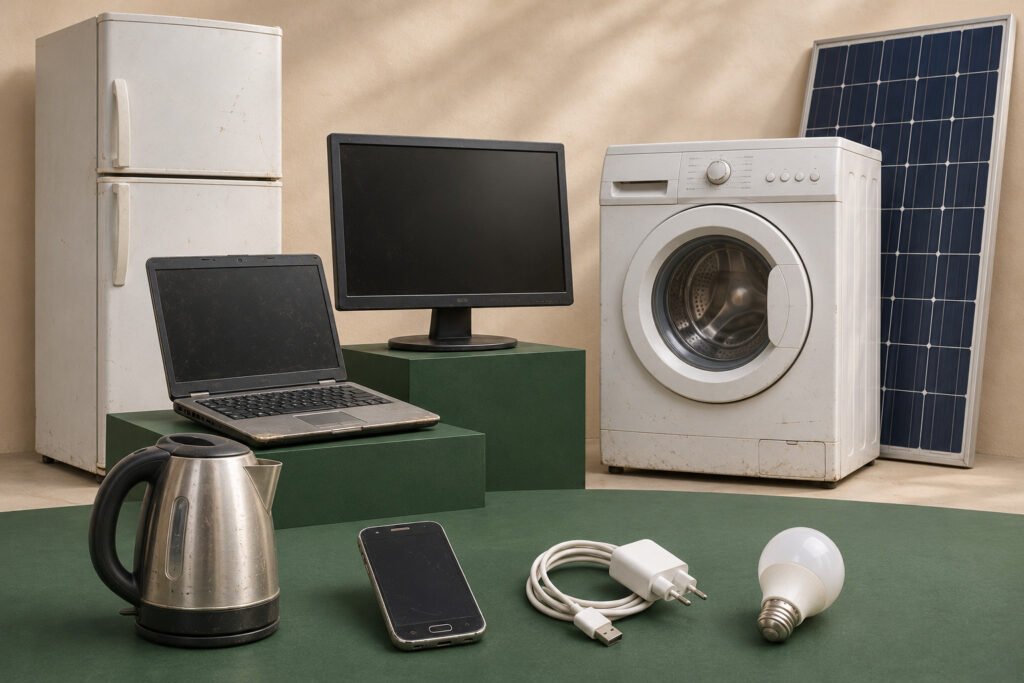
A cracked phone is an obvious example of electronic waste. But what about a broken kettle, a box of old chargers or a refrigerator that no longer cools? These can all count as e-waste. The term covers everyday electrical appliances as well as computers and other digital devices.
What is electronic waste?
Electronic waste, or e-waste, is electrical or electronic equipment and its parts that have been discarded as waste. You may also see the term WEEE, which stands for waste electrical and electronic equipment. A device’s age and condition can help you decide what to do with it, but what matters for this definition is whether it’s being discarded. A working printer sent for recycling can count as e-waste, while a working printer passed on for someone else to use is second-hand equipment.
Common examples of e-waste
| Category | Examples |
|---|---|
| Computers and communications equipment | Desktop computers, smartphones, routers and printers |
| Screens and monitors | Televisions, computer monitors, laptops and tablets |
| Cooling equipment | Refrigerators, freezers and air conditioners |
| Large electrical equipment | Washing machines, dishwashers and solar panels |
| Small electrical equipment | Kettles, toasters, electric shavers and battery-powered toys |
| Lighting | LED bulbs and fluorescent tubes |
These examples follow the broad categories used in the Global E-waste Monitor. The items an individual collection programme accepts can vary by location.
What about chargers, cables and batteries?
Chargers and cables are easy to overlook when clearing out a drawer or an office storeroom. Check whether your local electronics collection service accepts them alongside devices. Loose batteries may need a separate drop-off, and devices with built-in rechargeable batteries may have specific collection instructions. Keep lithium-ion batteries and devices containing them out of household rubbish and mixed recycling bins.
What should you do with unwanted electronics?
- Consider repair or reuse. If the item still works or can be repaired, see whether you or someone else can keep using it.
- Protect your data. Back up what you need and securely erase personal or business information before handing over phones, computers or storage drives. If you can’t erase the device, ask the recycling provider about secure data destruction.
- Check what your local service accepts. Look for an electronics collection point, a retailer take-back programme or a specialist recycler. Confirm acceptance before bringing items such as a refrigerator, a fluorescent tube or a solar panel.
A simple rule for your next clear-out: if an item uses electricity or batteries and you’re ready to discard it, check your local e-waste guidance first. That applies to the charger in your drawer just as much as the fridge in your kitchen.