
Yes, Specialized recycling technologies can extract lithium from spent lithium-ion batteries and process it into materials that may be used to manufacture new batteries.
However, lithium recovery is not automatic. The amount recovered depends on the battery’s chemical composition, the recycling technology used, and the efficiency of the recovery process.
What Is Lithium, and Why Is It Used in Batteries?
Lithium is a lightweight chemical element widely used in rechargeable batteries because it helps them store considerable energy relative to their weight.
Lithium-ion batteries power many everyday technologies, including:
- Smartphones, tablets, and laptops
- Electric vehicles and electric bicycles
- Cordless power tools
- Solar energy storage systems
- Portable electronic devices
- Industrial and commercial energy storage equipment
These batteries contain lithium alongside other materials, which may include graphite, copper, aluminium, nickel, cobalt, manganese, iron, and phosphorus, depending on the battery chemistry.
How Is Lithium Recovered From Used Batteries?
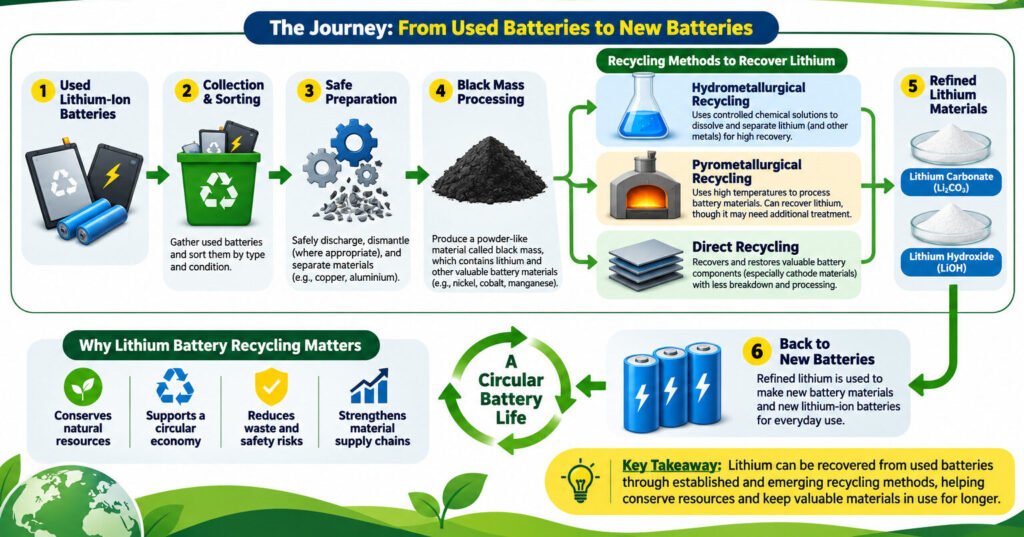
Lithium recovery is a specialized industrial process involving several stages.
1. Collection and Battery Sorting
The process begins when used batteries are collected through approved recycling channels.
Batteries are inspected, identified, and sorted according to their chemistry, condition, and safety requirements.
This is important because different types of batteries require different recycling methods. Lithium-ion batteries, for example, are not the same as single-use lithium-metal batteries.
2. Safe Preparation and Material Separation
At appropriately equipped facilities, batteries undergo controlled preparation before further recycling.
Depending on the technology, this may involve controlled disassembly, electrical discharge where appropriate, mechanical processing, and material separation.
Some recycling processes produce a powder-like material called black mass, which generally contains valuable electrode materials, including lithium-bearing compounds.
Other components, such as copper and aluminium, may be separated into their own recycling streams.
3. Lithium Extraction and Recovery
Specialized facilities process lithium-containing material using chemical, thermal, or emerging direct-recycling technologies.
The aim is to recover valuable battery materials while controlling environmental and safety risks.
4. Refining for Reuse
Recovered lithium may be refined into compounds such as lithium carbonate or lithium hydroxide.
When these materials meet the necessary purity and performance specifications, they can become inputs for manufacturing new battery materials.
This allows recovered lithium to re-enter the production cycle instead of relying entirely on newly mined resources.
For a broader explanation of material separation, read The Science Behind Electronics Recycling.
Which Recycling Methods Can Recover Lithium?
Three major approaches are used or being developed for lithium-ion battery recycling.
Hydrometallurgical Recycling
Hydrometallurgy uses controlled chemical solutions to dissolve and separate valuable materials from processed battery components.
It can recover lithium alongside metals such as nickel, cobalt, and manganese, depending on the battery chemistry and process.
This method can achieve high recovery efficiencies, although it requires careful management of chemical reagents, wastewater, and remaining residues.
Pyrometallurgical Recycling
Pyrometallurgy uses high temperatures to process battery materials.
It is particularly effective at recovering certain metals, such as nickel and cobalt. However, lithium often ends up in the resulting slag and may require additional treatment to be recovered.
Therefore, a battery processed through smelting does not necessarily have its lithium successfully recycled.
Direct Recycling
Direct recycling aims to recover and restore valuable battery components, especially cathode materials, without completely breaking them down into individual elements.
By preserving more of the original material structure, this approach may reduce some processing requirements.
Direct recycling remains an important area of research, development, and industrial scale-up.
The US Environmental Protection Agency’s guide to lithium-ion battery recycling provides additional information about these processes.
Why Is Lithium Battery Recycling Important?
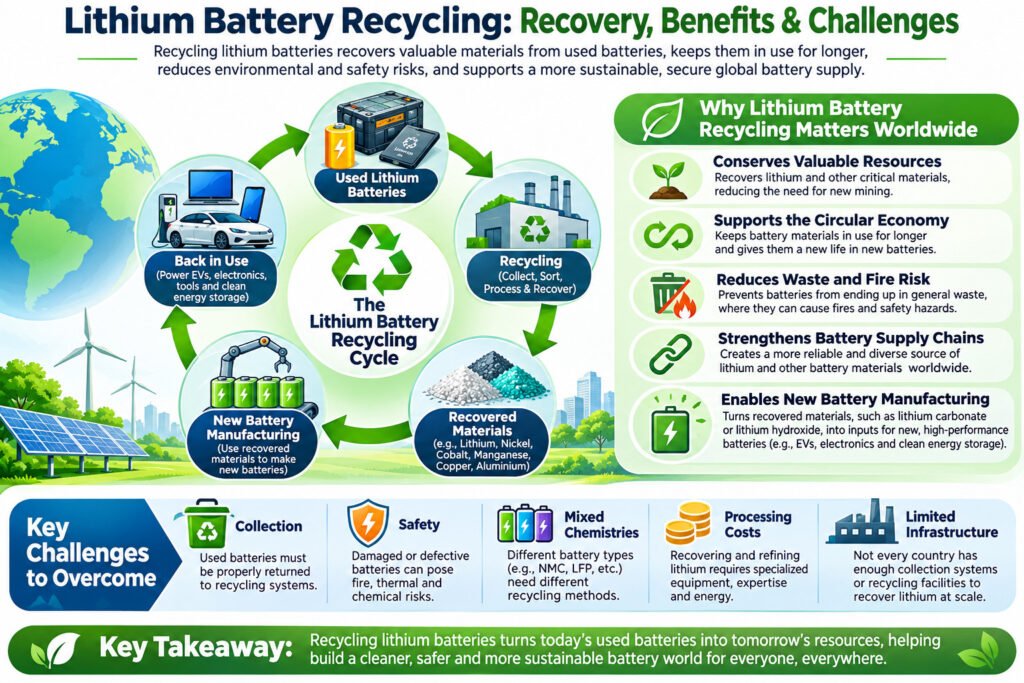
It Conserves Valuable Resources
Recycling creates an additional source of lithium and other battery materials,
It Supports the Circular Economy
Recovered materials can be refined and returned to manufacturing, helping extend their productive use beyond a battery’s original lifespan.
It Reduces Improper Battery Disposal
Lithium-ion batteries can create fire hazards when damaged, crushed, or mixed with ordinary waste.
Dedicated recycling systems help manage these risks while providing opportunities to recover useful materials.
It Strengthens Material Supply Chains
As battery demand increases, recovered lithium may become a more important part of the global materials supply.
The International Energy Agency’s Global Critical Minerals Outlook 2026 discusses the growing importance of battery recycling and critical mineral supply chains.
You can also explore The Economics of Electronics Recycling to understand the opportunities and costs involved in recovering materials from discarded electronics.
What Are the Challenges of Lithium Recovery?
Despite technological progress, several obstacles remain.
Collection: Used batteries must reach appropriate recycling facilities rather than being discarded with ordinary waste.
Safety: Damaged and defective batteries may present fire, thermal, and chemical hazards.
Complex battery designs: Different battery chemistries and construction methods make sorting and processing more difficult.
Processing costs: Recovering and refining lithium requires suitable equipment, technical expertise, environmental controls, and energy.
Recycling infrastructure: Not every country has facilities capable of recovering lithium from battery materials.
Addressing these challenges requires cooperation between manufacturers, consumers, collection providers, recyclers, and policymakers.
How Should Used Lithium Batteries Be Disposed Of?
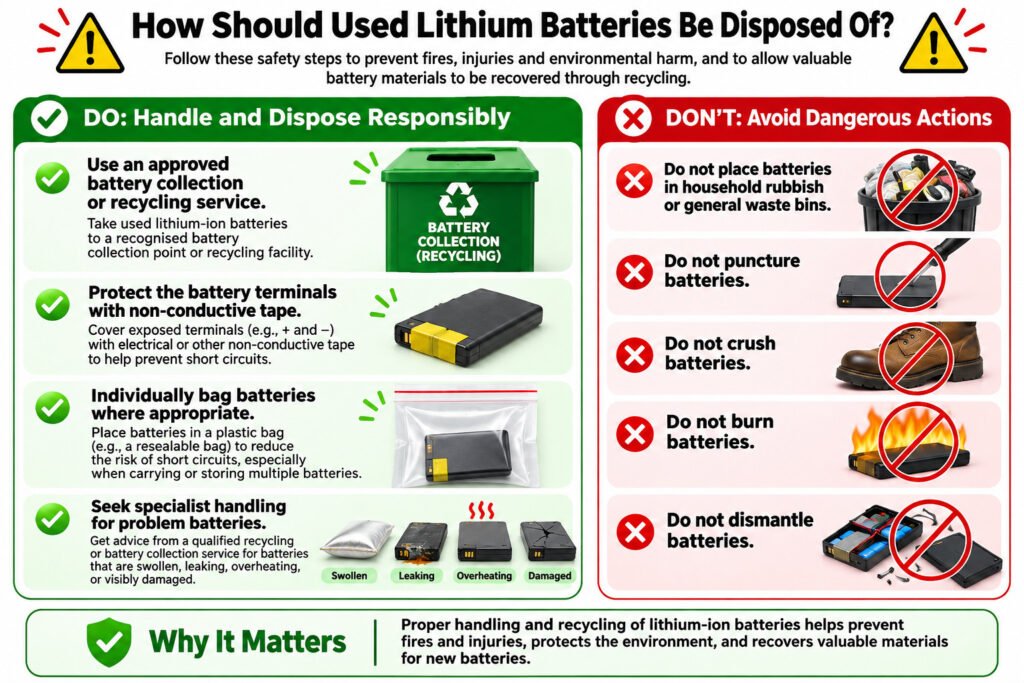
Used lithium-ion batteries should not be placed in ordinary household rubbish or mixed recycling bins.
For safe handling:
- Use a recognized battery collection or recycling service.
- Where appropriate, isolate exposed battery terminals with non-conductive tape or individually bag intact batteries to prevent short circuits.
- Do not puncture, crush, burn, or attempt to dismantle batteries yourself.
- Seek specialist guidance for swollen, leaking, overheating, or visibly damaged batteries.
Large electric vehicle and energy storage batteries require arrangements with appropriately qualified service providers.
For more safety information, see the EPA’s guidance on used lithium-ion batteries.
Frequently Asked Questions
Can lithium from old batteries be reused?
Yes. Recovered lithium can be refined into suitable compounds for new battery manufacturing, provided it meets the required quality standards.
Is lithium lost when a battery dies?
No. A battery losing its ability to hold a useful charge does not mean its lithium has disappeared. Lithium-containing materials can remain available for recovery.
Can lithium be recovered from electric vehicle batteries?
Yes. Electric vehicle batteries can be processed through specialized recycling systems to recover lithium and other useful materials.
Is lithium battery recycling environmentally friendly?
Properly managed recycling can conserve resources and reduce waste. However, its environmental performance depends on the technology, energy consumption, chemical management, and overall recovery efficiency.
Are all lithium batteries recyclable?
Many lithium-containing batteries can be processed by specialized recyclers, but their chemistry, condition, and local recycling infrastructure determine which recycling options are available.
The Future of Lithium Recycling
Advances in battery recycling are creating opportunities to recover more lithium, improve material purity, and reduce processing costs.
Better battery identification, automated sorting, more efficient chemical recovery, and direct recycling technologies could help make the industry more effective.
However, recycling begins with proper collection. Even advanced technology cannot recover lithium from batteries that never enter a suitable recycling system.