
Small electrical items are easy to overlook when clearing out homes, offices, schools, and workplaces. Old phone chargers, broken kettles, unused cables, and faulty electronic gadgets often end up in drawers or general waste, even though many can be recycled.
The good news is that many small electrical items can be collected together for recycling, provided they are accepted by the recycling facility and any batteries or components requiring special handling are managed separately.
Knowing what can be grouped together makes electronic waste recycling safer, simpler, and more efficient.
What Counts as Small Electrical Waste?
Small electrical waste includes unwanted devices and appliances that operate using electricity, batteries, or electronic circuits.
Common examples include phone chargers, headphones, keyboards, hairdryers, electric toothbrushes, toasters, computer accessories, and small electronic toys.
These items form part of Waste Electrical and Electronic Equipment (WEEE), commonly known as e-waste.
For a broader explanation, read our guide to what is considered electronic waste.
Which Small Electrical Items Can Be Recycled Together?
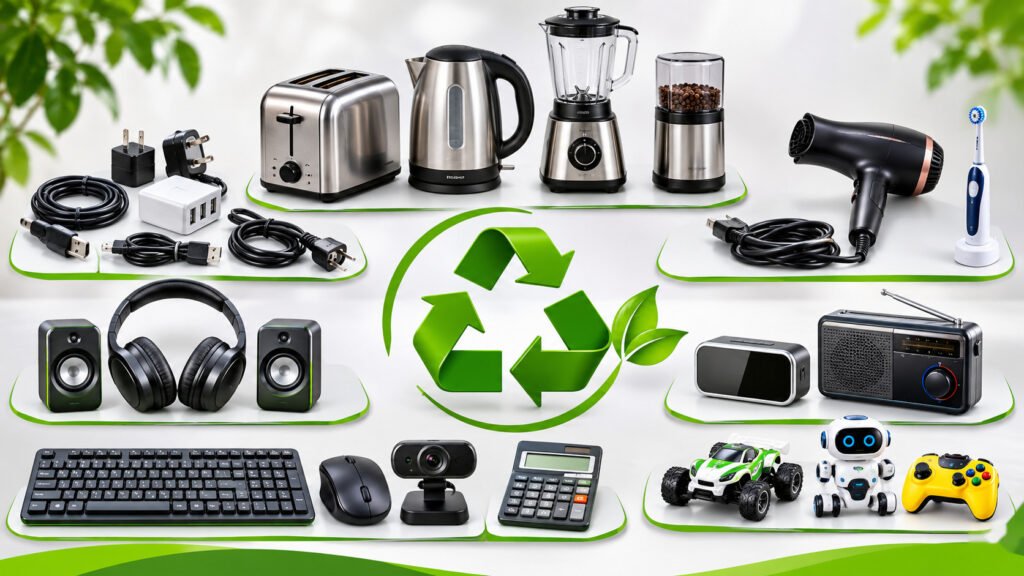
Many recycling facilities accept mixed collections of small electrical equipment. The following groups can often be collected together, subject to the facility’s requirements.
| Category | Examples |
|---|---|
| Cables and accessories | USB cables, charging cables, power adapters, extension leads |
| Computer peripherals | Keyboards, wired mice, webcams, small speakers |
| Small kitchen appliances | Toasters, kettles, blenders, coffee grinders |
| Personal care appliances | Hairdryers, hair straighteners, corded electric shavers |
| Small household electronics | Digital clocks, radios, calculators, plug-in electronic toys |
Although these items may enter the same collection stream, they are not necessarily recycled together during processing. Recycling facilities sort equipment according to materials, components, safety requirements, and suitable treatment methods.
Which Electrical Items Should Be Kept Separate?
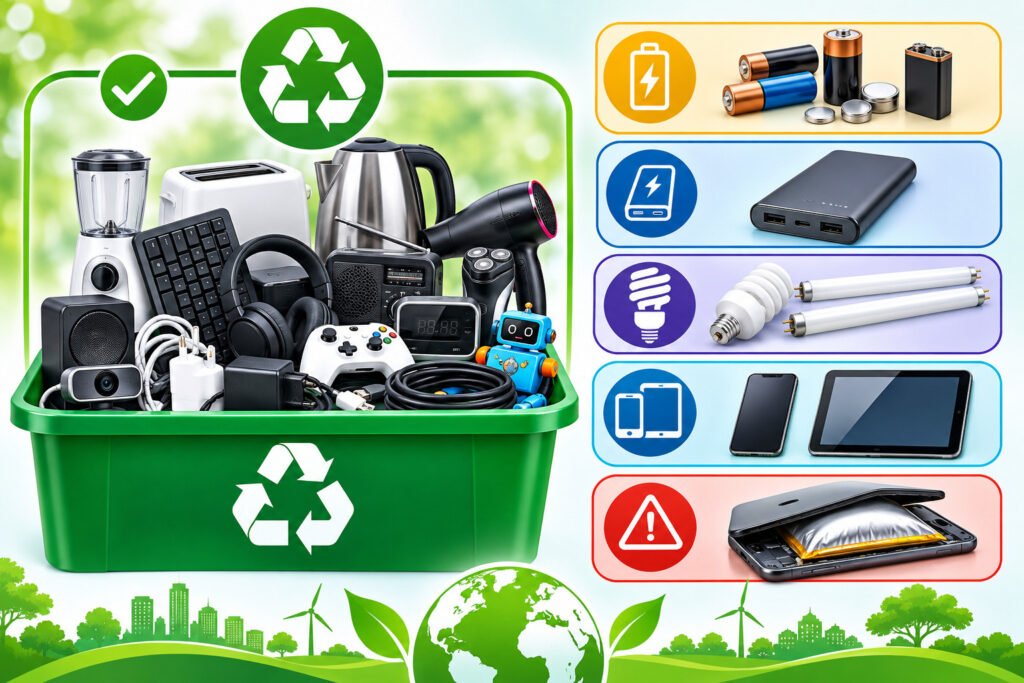
Not every small electrical item belongs in a mixed e-waste container. Some require special collection or handling.
1. Batteries and power banks
Loose batteries and power banks should be kept separate from ordinary mixed electrical waste. Lithium-ion batteries can create fire risks if damaged or short-circuited.
Remove batteries only when they are designed to be safely removable. Do not force open sealed devices.
2. Light bulbs and fluorescent lamps
Fluorescent lamps and certain other lighting products require separate handling because they may contain hazardous substances or fragile components.
3. Phones, tablets, and data-storage devices
These devices are recyclable but may contain personal or confidential information. They should be identified for appropriate data sanitization or destruction before material recovery.
Learn more about secure data destruction before recycling data-bearing electronics.
4. Damaged or swollen battery-powered devices
Devices with swollen, leaking, overheating, or visibly damaged batteries require specialist handling. Inform the recycling provider about their condition rather than placing them with ordinary mixed electronics.
How Should You Prepare Small Electrical Items for Recycling?
Before arranging an e-waste collection, follow these simple steps:
- Identify unwanted electrical items. Check storage cupboards, drawers, offices, and equipment rooms.
- Separate loose batteries. Remove easily accessible batteries when safe, and follow the collector’s battery-handling instructions.
- Protect personal information. Back up and securely erase data from devices where appropriate.
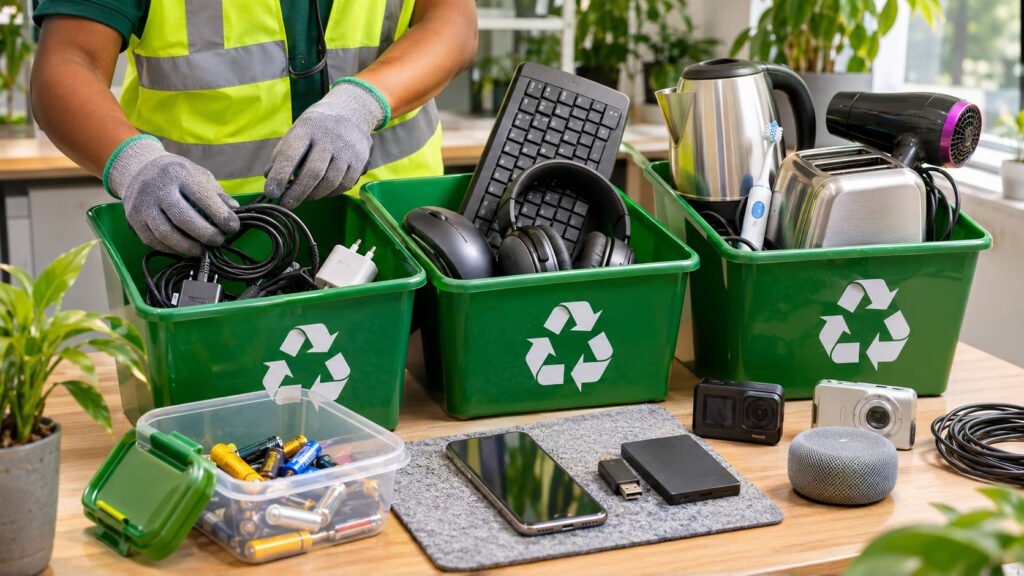
- Group similar items. Keep cables, accessories, and small appliances organised for easier identification.
- Confirm collection requirements. Ask the recycling provider which items can be packed together and which require separate handling.
Never place electrical equipment in ordinary household recycling bins unless your local collection programme specifically accepts it.
What Happens After Small Electrical Items Are Collected?
Once small electrical waste reaches an appropriate recycling facility, it is inspected and sorted. Batteries and components requiring special treatment are identified and managed through suitable recycling processes.
Equipment may then be dismantled to separate materials such as copper, aluminium, steel, plastics, and circuit boards.
Recoverable materials are directed into appropriate recycling streams, while unsuitable or hazardous components require controlled treatment.
Discover more in our article on the science behind electronics recycling.
Can Small Electrical Items Be Recycled Anywhere in the World?
Small electrical recycling is practised internationally, but collection rules differ between countries and regions.
For example, European WEEE systems provide for separate collection and treatment of electrical waste, while the United States has state and local recycling programmes with different acceptance requirements.
In African markets, available recycling infrastructure, collection arrangements, and national regulations also vary.
The most reliable approach is to contact an authorised local e-waste collection provider and confirm which equipment they accept.
For further guidance, consult the UK Government’s WEEE collection guidance and the US Environmental Protection Agency’s electronics recycling resources.
Frequently Asked Questions
Can old chargers and cables be recycled together?
Yes. Many electronic waste recyclers accept cables, chargers, and adapters together. However, collection requirements depend on the facility.
Can small kitchen appliances go in the same e-waste collection?
Often, yes. Toasters, kettles, and similar appliances may be accepted as small mixed electrical waste, provided they meet the collection programme’s requirements.
Can battery-powered electronics be recycled with other electrical items?
They can be recycled through appropriate e-waste programmes, but battery-containing devices may require separate identification, packaging, or handling. Loose batteries should not be mixed with ordinary electrical waste.
Do small electrical items belong in household recycling bins?
Generally, no. Electrical items should go to designated electronic waste collection services unless the local recycling programme explicitly accepts them.
Final Thoughts
Recycling small electrical items does not have to be complicated. Many everyday devices, cables, accessories, and small appliances can be collected together, making it easier to keep valuable materials out of landfill.
The important distinction is between collecting items together and processing them safely. Batteries, lamps, data-bearing devices, and potentially hazardous components may need separate handling.
At Nalabix Eco, we support responsible electronic waste collection, recycling, and secure data destruction for individuals, businesses, and institutions through our operations and recycling partnerships.
Explore our e-waste recycling and collection services or visit Nalabix Eco to discuss your recycling requirements.