
That old phone sitting in your drawer, the broken charger you no longer use, or the television that stopped working years ago—where should they go?
For many people, the household rubbish bin seems like the easiest answer. After all, if something no longer works, isn’t it just waste?
Not quite. Old electronics are different from ordinary household rubbish, and throwing them away can create environmental, safety, and data security risks.
Can You Throw Old Electronics in the Household Bin?
Generally, no. Old electronics should be collected separately and taken to an appropriate e-waste recycling facility, collection point, or approved take-back programme.
Electronic waste, commonly called e-waste or Waste Electrical and Electronic Equipment (WEEE), includes unwanted devices that operate using electricity, batteries, or electromagnetic fields.
Which Electronics Shouldn’t Go in Household Rubbish?
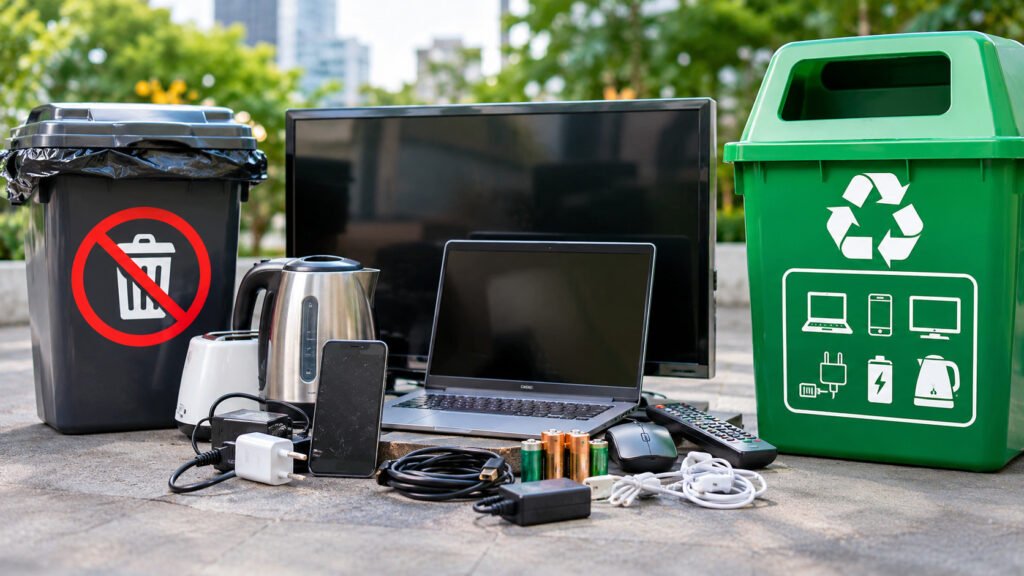
You might be surprised by how many everyday items count as electronic waste.
Common examples include:
- Phones and tablets: Smartphones, old mobile phones, tablets and smartwatches.
- Computers: Laptops, desktops, keyboards, mice and computer accessories.
- Entertainment equipment: Televisions, gaming consoles, radios and speakers.
- Small household appliances: Electric kettles, irons, hairdryers, toasters and electric toothbrushes.
- Power accessories: Chargers, cables, adapters and power banks.
- Office equipment: Printers, scanners, routers and monitors.
Even small devices that appear harmless can contain batteries, circuit boards, metals and other materials that require appropriate disposal.
For more information about handling unwanted devices, explore electronic waste pickup and recycling services.
Why Is Throwing Electronics in Household Rubbish a Problem?
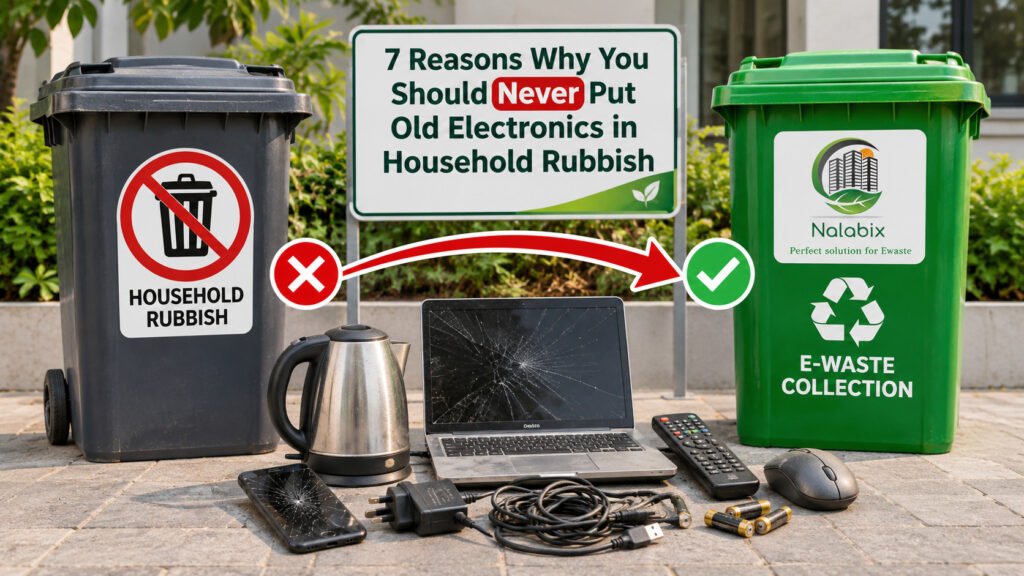
7 Reasons Why Old Electronics Shouldn’t Go in Household Rubbish
1. Electronics Can Contain Hazardous Substances
Unlike ordinary household rubbish, some electronics contain substances such as lead, mercury, cadmium, and certain flame retardants.
When electronic waste is dumped, broken apart, burned, or improperly processed, hazardous substances may be released into the environment.
The World Health Organization (WHO) identifies poorly managed electronic waste as a potential threat to human health and the environment.
Proper recycling helps ensure that hazardous components are identified, separated, and treated appropriately.
2. Batteries Can Cause Dangerous Fires
That old smartphone or power bank may look harmless, but its lithium-ion battery could become a serious fire hazard when damaged.
Inside rubbish collection vehicles and waste processing facilities, batteries can be crushed, punctured, or exposed to excessive heat. These conditions may cause them to overheat or catch fire.
According to the US Environmental Protection Agency (EPA), discarded lithium-ion batteries have caused fires in waste management facilities.
The safer option: Keep batteries and battery-powered electronics out of ordinary rubbish and mixed recycling bins. Use an appropriate battery or electronic waste collection service.
3. Improper Disposal Can Pollute Soil and Water
What happens to electronics after they leave your household?
When electronic waste ends up in uncontrolled dumpsites or poorly managed disposal facilities, hazardous components may deteriorate, release contaminants, or be exposed to rainwater.
Under these conditions, pollutants can enter surrounding soil and water, potentially affecting ecosystems and nearby communities.
Responsible electronic waste recycling helps reduce these risks by directing unwanted equipment into appropriate collection and treatment systems.
4. Poorly Managed E-Waste Can Affect Human Health
Electronic waste isn’t only an environmental issue. It can also affect people who collect, dismantle, burn, or process it without adequate protection.
Unsafe recycling practices can expose workers and nearby communities to contaminated dust, fumes, and toxic substances.
Children and pregnant women are particularly vulnerable to certain harmful exposures.
The WHO highlights the health risks associated with unsafe e-waste recycling, including respiratory problems and potential effects on children’s development.
Using responsible recycling facilities helps reduce unnecessary exposure to hazardous materials.
5. Valuable Materials Are Lost
Your old electronics aren’t entirely useless just because they no longer work.
Many devices contain recoverable materials, including copper, aluminium, steel, plastics, gold, and other valuable resources.
When electronics are mixed with ordinary household rubbish, recovering these materials becomes more difficult, and some may be permanently lost.
The Global E-waste Monitor 2024 reported that the world generated approximately 62 million tonnes of electronic waste in 2022, but only 22.3% was documented as formally collected and recycled.
These figures highlight the enormous opportunity to recover materials that would otherwise go to waste.
By recycling electronics, we can help conserve natural resources and support a more circular economy.
6. Old Electronics May Still Contain Personal Data
Before throwing away an old phone, computer, or storage device, ask yourself one question:
Have I completely removed my personal information?
Electronic devices can retain photographs, emails, passwords, financial records, and confidential business documents.
Even when a device no longer switches on, the information stored inside may still be recoverable.
Before recycling a data-bearing device, back up important files, sign out of accounts, and use an appropriate method to erase stored information.
For businesses and organizations handling sensitive records, professional secure data destruction can provide additional protection and documented handling.
7. Throwing Electronics in Household Rubbish May Be Against Local Regulations
Electronic waste disposal rules vary across countries and regions.
For example, the European Union’s WEEE Directive establishes requirements for separately collecting and properly treating electrical and electronic waste.
In the United Kingdom, dedicated collection and take-back arrangements help households dispose of unwanted electrical products.
In the United States, disposal requirements vary by state, with some states restricting particular electronic products from household rubbish.
Countries across Africa, Asia, and other regions also have different e-waste regulations and collection systems.
Because requirements differ, always check your local electronic waste disposal rules before discarding an electrical device.
What Should You Do With Old Electronics Instead?
There are several practical alternatives to throwing electronics away.
1. Repair or reuse them. If a device still works or can be repaired safely, extending its useful life may be preferable to immediate recycling.
2. Donate usable equipment. Working electronics can sometimes benefit schools, charities, community groups or individuals, provided they are suitable for reuse and personal data has been securely removed.
3. Use an electronics take-back programme. Some manufacturers and retailers accept unwanted electrical products through dedicated collection schemes.
4. Find a designated e-waste collection point. Local authorities, recycling facilities and community programmes may provide separate electronics collection services.
5. Contact a professional e-waste recycler. For larger quantities, damaged electronics or equipment containing sensitive information, an appropriate recycling service can arrange collection, safe handling and processing.
Before handing over any device, back up important files, sign out of accounts, remove SIM or memory cards where applicable, and use an appropriate data-erasure method.
For batteries, follow the recycler’s instructions. Remove them only if the manufacturer permits safe removal; never puncture, crush or forcibly extract a built-in battery.
Is Throwing Electronics in the Rubbish Illegal?
The legal position depends on where you live.
In the European Union, the WEEE Directive establishes requirements for separate collection and proper treatment of waste electrical and electronic equipment.
In the United Kingdom, dedicated electrical waste collection and retailer take-back arrangements help households dispose of unwanted equipment.
In the United States, rules vary between states and local authorities. Some states prohibit particular electronic products from being disposed of in ordinary household waste.
In Australia, national recycling programmes operate alongside state and local requirements, with some jurisdictions prohibiting e-waste disposal in household bins or landfills. The Australian Government’s e-waste guidance explains the country’s recycling approach.
In African countries, electronic waste collection and recycling systems vary according to national regulations, local infrastructure and available recycling services.
The safest approach worldwide is to check local disposal requirements and use an authorized or appropriately qualified electronics recycling provider.
Frequently Asked Questions
Can I put a broken phone in the rubbish bin?
No. A broken phone should be taken to an appropriate electronics recycling point. Its battery can pose a fire risk, and the device may still contain personal information.
Can chargers and electrical cables go in household rubbish?
They should be collected separately for electronics recycling. Chargers and cables contain recoverable materials, including copper and plastics.
Can I put a broken television in the bin?
Avoid placing televisions in ordinary household rubbish. Different display technologies require different handling methods, and some older televisions contain hazardous components.
Do I need to remove batteries before recycling electronics?
Remove batteries only when they are designed for safe removal. If a battery is built into the device, take the complete item to a recycler that accepts battery-powered electronics.
Is electronics recycling free?
Sometimes. Municipal programmes, retailer take-back services and certain collection schemes offer free recycling for eligible items. Charges may apply depending on your location, equipment type and required services.
Give Your Old Electronics a Better Ending
The next time you replace a phone, laptop, television or household appliance, remember that the rubbish bin is not necessarily the end of its useful life.
A device that no longer works may still contain recoverable resources. Separating it from household rubbish helps protect people, reduce pollution and support responsible material recovery.
At Nalabix Eco, we support responsible electronics collection, recycling and secure data destruction, helping households, businesses and institutions manage unwanted equipment appropriately.
Contact Nalabix Eco to discuss your electronic waste disposal needs and available collection arrangements.
The simple rule: If it has a plug, battery or circuit board, think twice before putting it in the bin.