
From an old laptop in an office drawer to a broken refrigerator at home, electrical and electronic products are part of everyday life. But when these products are no longer wanted or usable, what happens to them?
This is where WEEE — Waste Electrical and Electronic Equipment — comes in.
WEEE covers a wide range of electrical and electronic products that have reached the end of their useful life. Understanding what counts as WEEE helps households, businesses, and organizations make better decisions about collection, reuse, recycling, and responsible disposal.
What Is WEEE?
WEEE stands for Waste Electrical and Electronic Equipment.
In simple terms, it refers to electrical or electronic equipment that has been discarded or is intended to be discarded.
A product can become WEEE because it is:
- Broken or damaged
- Outdated or obsolete
- No longer needed
- Replaced by a newer model
- Too expensive or difficult to repair
- At the end of its useful life
WEEE can come from homes, offices, schools, factories, hospitals, retail businesses, government institutions, and other organizations.
What Items Are Considered WEEE?
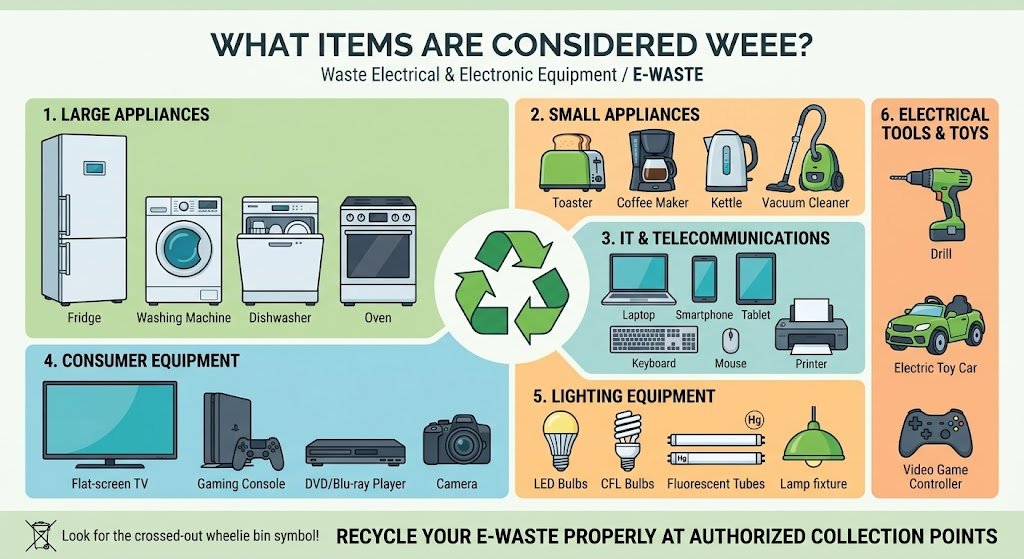
WEEE covers many different types of products. Some of the most common categories include the following.
1. Computers and IT Equipment
IT equipment is one of the most recognizable forms of WEEE, particularly in offices and organizations.
Examples include:
- Desktop computers
- Laptops
- Servers
- Monitors
- UPS systems
- Computer accessories
When organizations upgrade their technology, large quantities of IT equipment can quickly become end-of-life assets.
2. Mobile Phones and Consumer Electronics
Small electronic devices also contribute significantly to the WEEE stream.
These include:
- Mobile phones
- Tablets
- Digital cameras
- Radios
- Speakers
- Headphones
- Game consoles
- Electronic accessories
Although many of these products are small, they can contain valuable materials such as copper, aluminium, and other recoverable metals.
3. Televisions and Screens
Old televisions and display equipment are also considered WEEE.
Examples include:
- LED televisions
- LCD televisions
- Computer monitors
- Digital displays
- CRT televisions and monitors
- Electronic signage
Older equipment may contain components or substances that require specialized treatment, making proper recycling particularly important.
4. Large Household Appliances
Large electrical appliances are another major WEEE category.
Examples include:
- Refrigerators
- Freezers
- Washing machines
- Dryers
- Dishwashers
- Electric ovens
- Electric cookers
- Air-conditioning equipment
Some appliances may contain refrigerants or other components that need to be handled correctly during recycling.
5. Small Electrical Appliances
Many everyday household products can eventually become WEEE.
Examples include:
- Microwaves
- Vacuum cleaners
- Electric kettles
- Coffee machines
- Toasters
- Irons
- Electric fans
- Hair dryers
- Electric shavers
- Clocks and timers
If a product needs electricity or electronic components to perform its function and is discarded, it may fall within a WEEE stream depending on local regulations.
6. Lighting Equipment
Discarded electrical lighting products can also be WEEE.
Examples include:
- LED lamps
- Fluorescent lamps
- Compact fluorescent lamps
- Electronic lighting equipment
- Certain professional lighting systems
Different types of lamps may require different recycling and treatment processes.
7. Electrical and Power Tools
Equipment used for construction, maintenance, workshops, and gardening can become WEEE.
Examples include:
- Electric drills
- Power saws
- Grinders
- Sanders
- Electric screwdrivers
- Electric lawn equipment
- Welding equipment
- Other powered tools
These products should be separated from ordinary waste when they reach the end of their useful life.
8. Medical and Laboratory Electronics
Healthcare and laboratory facilities also generate electronic waste.
Examples may include:
- Patient monitoring equipment
- Diagnostic equipment
- Laboratory instruments
- Electronic medical devices
- Certain treatment equipment
These items may require specialized handling because of their design, components, contamination considerations, or the information they may contain.
9. Cables, Chargers and Power Supplies
WEEE is not limited to complete electronic devices.
Discarded:
- Electrical cables
- USB cables
- Chargers
- Adapters
- Power supplies
- Extension leads
- Electronic connectors
can also enter electronic waste streams.
These materials can contain valuable metals and plastics that may be recovered through appropriate recycling processes.
10. Batteries and Battery-Powered Equipment
Batteries are often regulated separately from general WEEE, but they are closely connected to electronic waste management.
Examples include:
- Laptop batteries
- Mobile phone batteries
- Rechargeable batteries
- UPS batteries
- Batteries from electronic equipment
Batteries require particular care because damaged or improperly handled batteries can create safety and fire risks.
What Makes an Item WEEE?
A useful way to think about WEEE is:
Electrical or electronic equipment + discarded or unwanted = potential WEEE
However, the exact legal definition and categories can differ between countries. Some jurisdictions have specific rules for batteries, vehicles, medical equipment, refrigerants, and other specialized products.
Therefore, businesses should always follow the WEEE and waste-management requirements that apply in their country or region.
What Should You Do With WEEE?
WEEE should not simply be thrown into general waste where appropriate recycling or collection systems are available.
A responsible approach is:
Identify → Separate → Collect → Secure → Reuse or Refurbish → Recycle → Recover Materials
For businesses handling computers, servers, phones, storage devices, and other data-bearing equipment, data security should also be part of the process.
Before equipment is recycled, organizations should ensure that sensitive information is properly sanitized or destroyed.
Why Is Proper WEEE Recycling Important?
Responsible WEEE management provides both environmental and economic benefits.
It reduces landfill waste
Recycling keeps valuable electronic materials out of landfill and reduces the volume of waste requiring disposal.
It recovers valuable resources
Electronics can contain materials such as copper, aluminium, steel, plastics, and other recoverable resources.
It supports the circular economy
Recycling and refurbishment allow materials and components to remain in productive use rather than being treated as waste.
It reduces environmental risks
Some electronic equipment contains substances that require controlled handling. Proper recycling helps prevent inappropriate disposal and environmental contamination.
It protects business data
IT equipment can contain confidential information. Secure data sanitization or destruction helps prevent sensitive information from being exposed when devices are retired.
The Bottom Line
Understanding what items are considered WEEE is an important part of responsible electronic waste management.
Old computers, mobile phones, televisions, appliances, printers, lighting equipment, power tools, cables, medical electronics, and many other products can become WEEE when they are discarded.
Instead of sending these items to general waste, they should be assessed for reuse, refurbishment, secure disposal, and recycling through appropriate channels.
Better WEEE management means less waste, greater resource recovery, improved data security, and a more sustainable approach to the electronics we use every day.
Frequently Asked Questions
Are laptops considered WEEE?
Yes. Discarded laptops are a common example of WEEE.
Are mobile phones WEEE?
Yes. Unwanted or discarded mobile phones generally fall within electronic waste streams.
Are cables considered WEEE?
Discarded electrical and electronic cables can be considered WEEE, depending on the applicable regulations.
Are refrigerators WEEE?
Yes. Refrigerators and other electrical appliances can fall within WEEE categories, although they may require specialized treatment.
Can WEEE be recycled?
Yes. Many WEEE items can be dismantled and processed to recover metals, plastics, glass, and other materials.
Does WEEE contain hazardous substances?
Some electrical and electronic equipment can contain substances or components that require controlled handling. Proper collection and recycling help manage these risks responsibly.
Is WEEE the same as e-waste?
The terms are often used interchangeably, although their precise legal definitions and scope can vary by country and regulatory framework.