
WEEE / E-Waste Trends in Africa
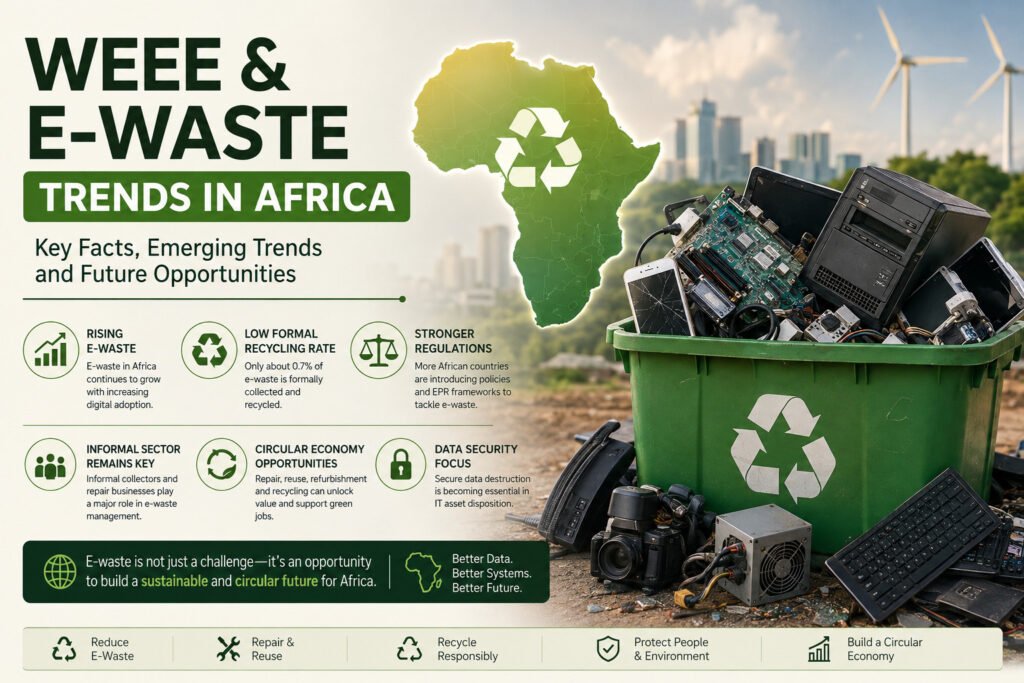
Africa is becoming increasingly connected to the digital economy. Smartphones, computers, televisions, appliances, networking equipment, solar technologies and other electrical products are becoming more common across homes, businesses and institutions. However, the growth in electronic equipment also creates a growing waste challenge. WEEE (Waste Electrical and Electronic Equipment), commonly referred to as e-waste, includes electrical and electronic products that have reached the end of their useful life or are no longer wanted. As technology adoption increases, the volume of discarded electronics is also rising. According to the Global E-waste Monitor 2024, Africa generated approximately 3.5 million tonnes of e-waste in 2022, equivalent to about 2.5 kg per person. Yet only about 0.7% was formally documented as collected and recycled. These figures highlight both the scale of the challenge and the significant opportunity to improve e-waste management across the continent. 1. E-Waste Generation Is Increasing One of the biggest trends is the continued growth in electronic consumption. Digitalisation, urbanisation, population growth and greater access to consumer electronics are increasing the number of electrical and electronic products in circulation. Africa’s total e-waste generation reached approximately 3.5 million tonnes in 2022, compared with lower volumes in previous years. Globally, e-waste generation reached 62 million tonnes in 2022 and is projected to reach 82 million tonnes by 2030. The trend means governments, businesses and consumers will need better systems for collecting, repairing, refurbishing and recycling electronics. 2. Formal Recycling Remains Very Low Perhaps the most important African e-waste trend is the gap between the amount of e-waste generated and the amount formally recycled. The Global E-waste Monitor estimates that only 0.7% of Africa’s e-waste was formally collected and recycled in 2022. This compares with a global formal collection and recycling rate of 22.3%. This does not mean that no electronics are being recovered or reused. Electronics can move through informal collection, repair, resale and material recovery channels that are not fully captured in official statistics. Nevertheless, the low documented rate shows the need for stronger formal collection networks, recycling infrastructure, reporting systems and environmentally sound processing. 3. Informal E-Waste Recycling Remains Important Across many African countries, informal businesses and individuals play a significant role in collecting, repairing, dismantling and recovering materials from discarded electronics. This activity can help recover valuable materials and extend the useful life of equipment. However, informal processing may involve unsafe dismantling, uncontrolled burning or inadequate handling of hazardous components. The challenge is therefore not simply to eliminate informal activity, but to create systems that can connect informal collectors and repair businesses with safer, regulated recycling networks. A stronger formal-informal sector relationship can help improve collection while protecting workers, communities and the environment. 4. E-Waste Regulations Are Expanding Another important trend is the development of national policies, legislation and Extended Producer Responsibility (EPR) systems. The Global E-waste Monitor 2024 identified 11 African countries with a national e-waste policy, legislation or regulation in 2022. Nine used the EPR principle, while only one had a collection target and none had a national recycling target at that time. EPR can make manufacturers, importers and other producers more responsible for the environmental impacts associated with products throughout their life cycle. As African countries strengthen these frameworks, businesses are likely to face greater expectations around responsible electronics management, documentation and end-of-life handling. 5. Electronics Are Becoming More Diverse E-waste is no longer limited to old computers and televisions. Modern WEEE streams can include: The growth of digital infrastructure and renewable-energy technologies is likely to create new categories of electronic waste that require specialised collection and recycling systems. For example, the Global E-waste Monitor projects that retired photovoltaic panels will reach 2.4 million tonnes annually by 2030, compared with about 600,000 tonnes in 2022. 6. E-Waste Is Becoming an Urban Mining Opportunity Electronic waste is not only a waste-management problem. It is also a source of valuable secondary raw materials. E-waste contains materials such as copper, aluminium, iron, plastics and precious metals that can potentially be recovered and returned to productive use. Globally, the metals contained in e-waste generated in 2022 were estimated to be worth around US$91 billion. For Africa, improving formal recycling could therefore support a more circular economy by keeping valuable materials in circulation while reducing dependence on virgin resource extraction. This concept is often described as urban mining. 7. Data Security Is Becoming Part of E-Waste Management As organisations replace computers, servers, hard drives, smartphones and other data-bearing equipment, e-waste management increasingly overlaps with information security. Simply throwing away an old device does not necessarily remove the information stored on it. Businesses are therefore paying greater attention to: This is particularly important for organisations handling confidential customer, employee, financial or business information. Responsible IT asset disposition can therefore combine data security, asset management and environmental responsibility. 8. Collection Infrastructure Is a Major Opportunity A major barrier to better e-waste recycling is not necessarily the absence of recyclable materials. It is often the difficulty of getting discarded electronics into appropriate collection and recycling systems. Effective e-waste management requires convenient collection points, transport networks, aggregation systems and reliable recycling facilities. Businesses can contribute by establishing clear internal procedures for separating unwanted electronics from ordinary waste and using responsible recycling providers. For consumers, convenient collection points can make responsible disposal much easier. 9. Businesses Will Have a Bigger Role Businesses are among the major generators of IT and electronic waste. Office computers, monitors, printers, networking equipment, servers, UPS systems and other devices eventually require replacement or disposal. As sustainability, environmental compliance and information security become more important, organisations are increasingly expected to demonstrate what happens to their retired equipment. This is creating demand for structured services such as: Collection → Data Destruction → Sorting → Refurbishment/Reuse → Recycling → Reporting and Certification A documented process can help organisations manage both environmental and information-security risks. 10. The Circular Economy Will Shape the Future The future of e-waste management is unlikely to depend on recycling alone. A circular approach focuses on keeping products and materials useful for
What Items Are Considered WEEE? A Simple Guide
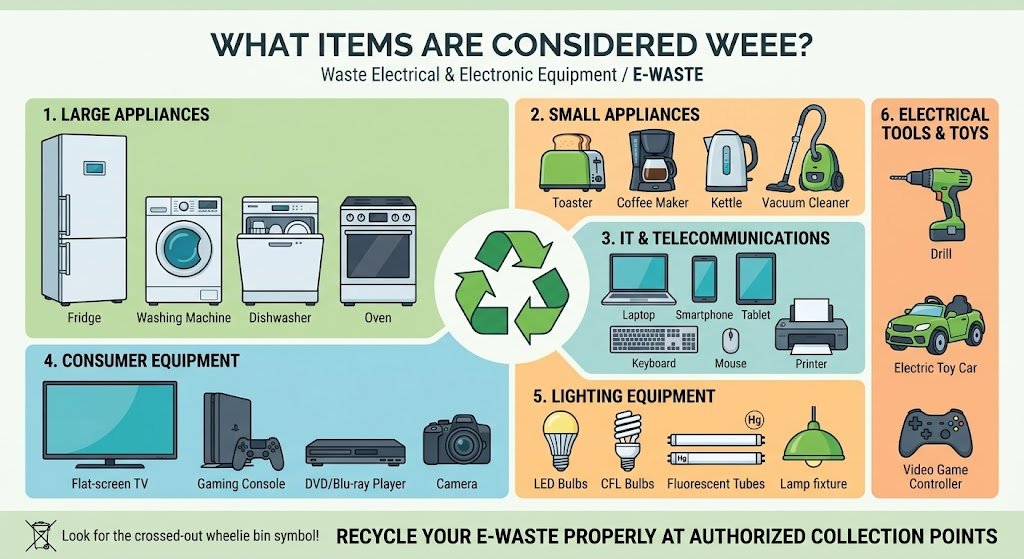
From an old laptop in an office drawer to a broken refrigerator at home, electrical and electronic products are part of everyday life. But when these products are no longer wanted or usable, what happens to them? This is where WEEE — Waste Electrical and Electronic Equipment — comes in. WEEE covers a wide range of electrical and electronic products that have reached the end of their useful life. Understanding what counts as WEEE helps households, businesses, and organizations make better decisions about collection, reuse, recycling, and responsible disposal. What Is WEEE? WEEE stands for Waste Electrical and Electronic Equipment. In simple terms, it refers to electrical or electronic equipment that has been discarded or is intended to be discarded. A product can become WEEE because it is: WEEE can come from homes, offices, schools, factories, hospitals, retail businesses, government institutions, and other organizations. What Items Are Considered WEEE? WEEE covers many different types of products. Some of the most common categories include the following. 1. Computers and IT Equipment IT equipment is one of the most recognizable forms of WEEE, particularly in offices and organizations. Examples include: When organizations upgrade their technology, large quantities of IT equipment can quickly become end-of-life assets. 2. Mobile Phones and Consumer Electronics Small electronic devices also contribute significantly to the WEEE stream. These include: Although many of these products are small, they can contain valuable materials such as copper, aluminium, and other recoverable metals. 3. Televisions and Screens Old televisions and display equipment are also considered WEEE. Examples include: Older equipment may contain components or substances that require specialized treatment, making proper recycling particularly important. 4. Large Household Appliances Large electrical appliances are another major WEEE category. Examples include: Some appliances may contain refrigerants or other components that need to be handled correctly during recycling. 5. Small Electrical Appliances Many everyday household products can eventually become WEEE. Examples include: If a product needs electricity or electronic components to perform its function and is discarded, it may fall within a WEEE stream depending on local regulations. 6. Lighting Equipment Discarded electrical lighting products can also be WEEE. Examples include: Different types of lamps may require different recycling and treatment processes. 7. Electrical and Power Tools Equipment used for construction, maintenance, workshops, and gardening can become WEEE. Examples include: These products should be separated from ordinary waste when they reach the end of their useful life. 8. Medical and Laboratory Electronics Healthcare and laboratory facilities also generate electronic waste. Examples may include: These items may require specialized handling because of their design, components, contamination considerations, or the information they may contain. 9. Cables, Chargers and Power Supplies WEEE is not limited to complete electronic devices. Discarded: can also enter electronic waste streams. These materials can contain valuable metals and plastics that may be recovered through appropriate recycling processes. 10. Batteries and Battery-Powered Equipment Batteries are often regulated separately from general WEEE, but they are closely connected to electronic waste management. Examples include: Batteries require particular care because damaged or improperly handled batteries can create safety and fire risks. What Makes an Item WEEE? A useful way to think about WEEE is: Electrical or electronic equipment + discarded or unwanted = potential WEEE However, the exact legal definition and categories can differ between countries. Some jurisdictions have specific rules for batteries, vehicles, medical equipment, refrigerants, and other specialized products. Therefore, businesses should always follow the WEEE and waste-management requirements that apply in their country or region. What Should You Do With WEEE? WEEE should not simply be thrown into general waste where appropriate recycling or collection systems are available. A responsible approach is: Identify → Separate → Collect → Secure → Reuse or Refurbish → Recycle → Recover Materials For businesses handling computers, servers, phones, storage devices, and other data-bearing equipment, data security should also be part of the process. Before equipment is recycled, organizations should ensure that sensitive information is properly sanitized or destroyed. Why Is Proper WEEE Recycling Important? Responsible WEEE management provides both environmental and economic benefits. It reduces landfill waste Recycling keeps valuable electronic materials out of landfill and reduces the volume of waste requiring disposal. It recovers valuable resources Electronics can contain materials such as copper, aluminium, steel, plastics, and other recoverable resources. It supports the circular economy Recycling and refurbishment allow materials and components to remain in productive use rather than being treated as waste. It reduces environmental risks Some electronic equipment contains substances that require controlled handling. Proper recycling helps prevent inappropriate disposal and environmental contamination. It protects business data IT equipment can contain confidential information. Secure data sanitization or destruction helps prevent sensitive information from being exposed when devices are retired. The Bottom Line Understanding what items are considered WEEE is an important part of responsible electronic waste management. Old computers, mobile phones, televisions, appliances, printers, lighting equipment, power tools, cables, medical electronics, and many other products can become WEEE when they are discarded. Instead of sending these items to general waste, they should be assessed for reuse, refurbishment, secure disposal, and recycling through appropriate channels. Better WEEE management means less waste, greater resource recovery, improved data security, and a more sustainable approach to the electronics we use every day. Frequently Asked Questions Are laptops considered WEEE?Yes. Discarded laptops are a common example of WEEE. Are mobile phones WEEE?Yes. Unwanted or discarded mobile phones generally fall within electronic waste streams. Are cables considered WEEE?Discarded electrical and electronic cables can be considered WEEE, depending on the applicable regulations. Are refrigerators WEEE?Yes. Refrigerators and other electrical appliances can fall within WEEE categories, although they may require specialized treatment. Can WEEE be recycled?Yes. Many WEEE items can be dismantled and processed to recover metals, plastics, glass, and other materials. Does WEEE contain hazardous substances?Some electrical and electronic equipment can contain substances or components that require controlled handling. Proper collection and recycling help manage these risks responsibly. Is WEEE the same as e-waste?The terms are often used interchangeably, although their precise