Have you ever wondered where your old computers, phones, printers, or other electronic devices go after collection?
Electronic waste (e-waste) does not simply disappear. It goes through several stages of handling, sorting, data protection, dismantling, and recycling to recover valuable materials and prevent environmental harm.
Here’s what typically happens behind the scenes.
Here’s what typically happens behind the scenes.
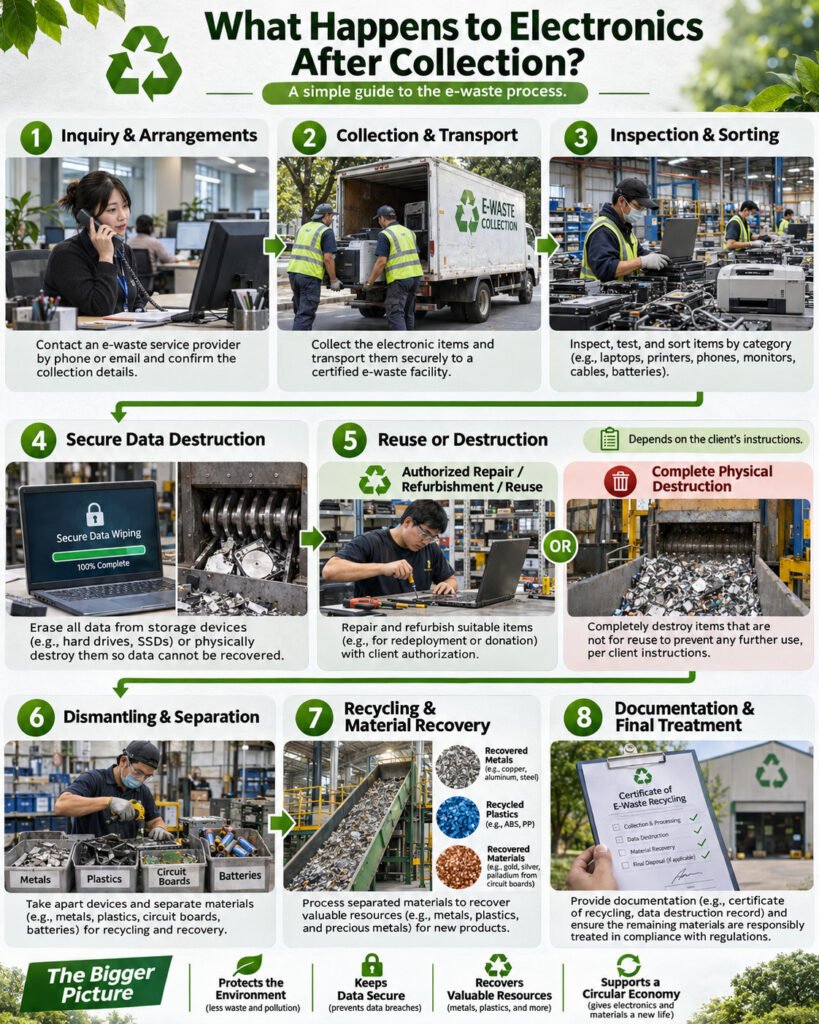
1. E-Waste Collection Inquiry and Arrangements
The electronic waste recycling journey begins when individuals, households, businesses, or institutions contact an e-waste management service provider to arrange collection of unwanted electronics.
During the inquiry, details such as the type of equipment, quantity, collection location, and special handling requirements are discussed.
Once the arrangements are confirmed, a collection is scheduled. The electronic waste is then collected from the agreed location and transported to a designated collection center or processing facility.
For organizations, this stage may also involve asset inventories, handover records, and chain-of-custody documentation to ensure accountability.
2. Inspection and Sorting of Electronic Waste
Upon arrival at the processing facility, collected electronics are inspected and sorted according to their type, condition, and handling requirements.
Computers, smartphones, batteries, printers, circuit boards, and other electronic components may require different recycling methods.
Sorting helps identify equipment suitable for authorized reuse, materials that can be recovered, and components requiring specialized treatment.able components, recoverable materials, hazardous substances, and equipment designated for destruction.
3. Secure Data Destruction
Many electronic devices contain personal, financial, or confidential business information.
Before data-bearing equipment is reused or recycled, appropriate measures should be taken to protect sensitive information.
Depending on the device, client requirements, and security needs, data may be securely erased using specialized sanitization procedures or destroyed through physical methods such as crushing or cutting.
Secure data destruction is particularly important for businesses, financial institutions, healthcare providers, and organizations handling confidential information.
4. Refurbishment, Reuse, or Complete Destruction
Not all collected electronics follow the same recycling pathway.
The decision to refurbish, reuse, or destroy equipment depends on its condition, the client’s instructions, contractual obligations, and applicable regulations.
Where authorized, functional electronics may be repaired or refurbished to extend their useful life.
However, some clients require complete physical destruction of their electronic equipment, with no reuse, resale, or refurbishment permitted.
In such cases, the equipment is directed for appropriate physical destruction, after which recoverable materials may be separated for recycling.
This ensures that the handling process respects the client’s disposal and security requirements.
5. Dismantling and Material Separation
Electronics designated for recycling are dismantled or mechanically processed to separate their components.
Common materials include:
- Metals: Copper, aluminum, steel, and other recoverable metals.
- Plastics: Suitable plastic components for further recycling.
- Circuit boards: Components containing recoverable metals.
- Batteries and hazardous materials: Items requiring specialized treatment.
Proper separation improves material recovery and supports safer downstream processing.
6. Recycling and Material Recovery
Separated materials are transferred to appropriate recycling and recovery processes.
Metals may be refined and returned to manufacturing supply chains. Suitable plastics can be reprocessed, while circuit boards may be treated by specialized facilities to recover valuable metals.
This process supports the circular economy by recovering resources from discarded electronics instead of relying entirely on newly extracted materials.
Not every component is recyclable, so residual and hazardous materials must be managed using suitable treatment or disposal methods.
7. Final Disposal and Documentation
Some electronic components contain substances that require specialized handling to prevent environmental contamination and health risks.
For example, lithium-ion batteries can present fire hazards, while certain older electronic devices may contain lead, mercury, or other hazardous substances.
These materials must be separated and directed to suitable treatment or disposal facilities in accordance with applicable environmental regulations.
Proper handling helps prevent pollution caused by unsafe dumping, burning, or dismantling practices.
Frequently Asked Questions
Are all collected electronics recycled?
No. Depending on their condition and the client’s instructions, electronics may be reused, refurbished, physically destroyed, recycled for material recovery, or sent for appropriate final treatment.
What happens to electronics that must be completely destroyed?
Equipment designated for destruction is processed using suitable physical destruction methods to prevent further use. Recoverable materials may then be separated and recycled.
Can valuable materials be recovered from broken electronics?
Yes. Even non-functional electronics may contain recoverable copper, aluminum, steel, and precious metals.
Bottom line
The journey of electronic waste begins with a collection inquiry and continues through transportation, sorting, secure data handling, dismantling, material recovery, and responsible final treatment.
Whether equipment is refurbished, recycled, or completely destroyed, the process should follow the client’s requirements and appropriate environmental and security practices.
Responsible e-waste management is not just about collecting unwanted electronics. It is about ensuring they are properly handled from the initial inquiry to their final destination.
At Nalabix Eco, we support responsible electronic waste management through e-waste collection, recycling, secure data destruction, and IT asset disposal services.
Recycle responsibly. Protect your data. Preserve valuable resources.