Which Electronic Items Need Special Handling? A Guide to Hazardous E-Waste
Not all electronic waste can be handled the same way. An old keyboard, a damaged lithium battery, and a broken television may all be electronic waste, but the risks associated with each are very different.
Some electronic devices contain hazardous substances such as lead, mercury, cadmium, and potentially harmful chemicals. Others contain batteries that can catch fire or components that require specialized recycling.
Knowing which electronic items need special handling is an important step toward safer recycling, responsible disposal, and protecting the environment.
What Is Hazardous E-Waste?
Hazardous electronic waste refers to discarded electrical and electronic equipment that contains substances or presents properties capable of harming human health or the environment if improperly handled.
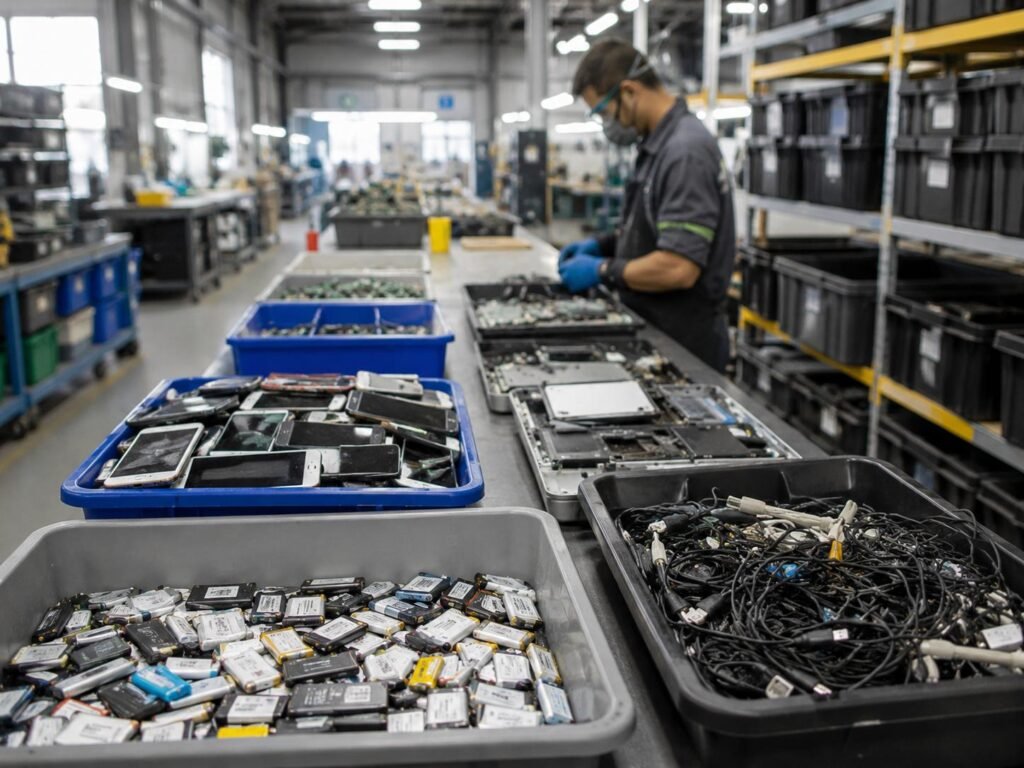
According to the World Health Organization (WHO), unsafe e-waste recycling can release toxic substances into the air, soil, and water.
However, not every electronic item is legally classified as hazardous waste. Classification depends on its components, condition, and applicable local regulations.
Which Electronic Items Require Special Handling?
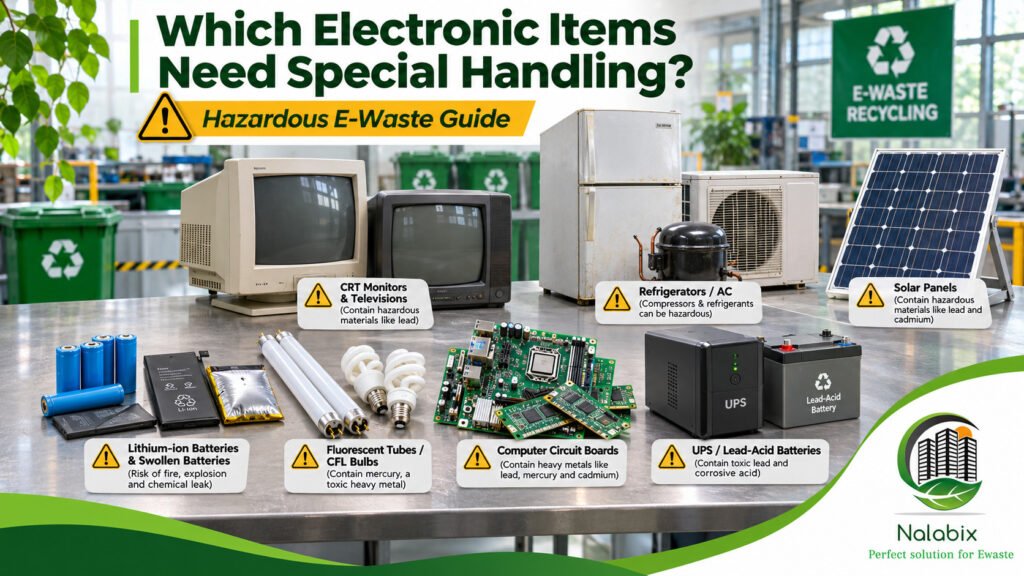
1. Lithium Batteries and Battery-Powered Electronics
Lithium-ion batteries are commonly found in smartphones, laptops, tablets, power banks, rechargeable tools, and other portable electronics.
These batteries can present fire risks when crushed, punctured, overheated, or improperly stored.
Safe handling: Keep batteries away from heat and metal objects that could cause short circuits. Protect exposed terminals when appropriate, and never place damaged or swollen batteries into ordinary recycling bins.
The US Environmental Protection Agency’s battery recycling guidance explains why lithium batteries require separate collection and careful handling.
Other batteries, including lead-acid batteries from UPS systems and certain industrial equipment, also require specialized recycling.
2. Old Televisions and CRT Monitors
Older televisions and computer monitors that use cathode ray tubes (CRTs) contain leaded glass and other components requiring careful management.
Breaking or improperly dismantling these screens can expose workers to hazardous materials.
Safe handling: Keep CRT screens intact, avoid crushing their glass, and arrange collection through a recycling facility equipped to handle them.
For information about modern screens, explore LED and LCD disposal and recycling.
3. Fluorescent Lamps and Mercury-Containing Electronics
Certain lighting products and older electronic equipment may contain mercury.
Examples include:
- Fluorescent tubes and compact fluorescent lamps (CFLs)
- Certain older LCD screens with fluorescent backlights
- Mercury-containing switches and thermostats
Mercury can be harmful when released through breakage or improper disposal.
Safe handling: Store these items carefully to prevent breakage and use an appropriate mercury-containing waste collection or recycling service. Modern LED lighting should not automatically be assumed to contain mercury.
4. Refrigerators, Freezers, and Air Conditioners
Cooling appliances can contain refrigerants, compressor oils, and other components requiring controlled handling.
Releasing refrigerants can contribute to environmental damage, while some refrigerants also present flammability risks.
Safe handling: Do not cut refrigerant pipes or attempt to release gases yourself. Use qualified appliance recycling or refrigerant recovery professionals.
The US EPA’s appliance disposal guidance explains the importance of recovering refrigerants and managing hazardous components before recycling.
5. Circuit Boards and Electronic Components
Circuit boards are found in computers, servers, printers, televisions, networking equipment, and many other devices.
Depending on their age and composition, they may contain lead-based solder, certain flame retardants, and other substances that require controlled recycling.
Burning circuit boards or using uncontrolled chemical extraction methods can release harmful pollutants.
Safe handling: Send circuit boards to responsible electronic waste recycling facilities rather than burning them or attempting chemical metal recovery at home.
6. Solar Panels and Specialized Electrical Equipment
Some end-of-life solar panels contain materials such as lead or cadmium. Their composition and hazardous-waste classification vary by technology and local rules.
Large electrical equipment may also contain batteries, capacitors, oils, or other components requiring assessment before dismantling.
Safe handling: Keep panels intact where possible and consult a recycler that handles photovoltaic equipment or the relevant industrial electrical waste category.
How Should Hazardous Electronic Waste Be Handled Safely?
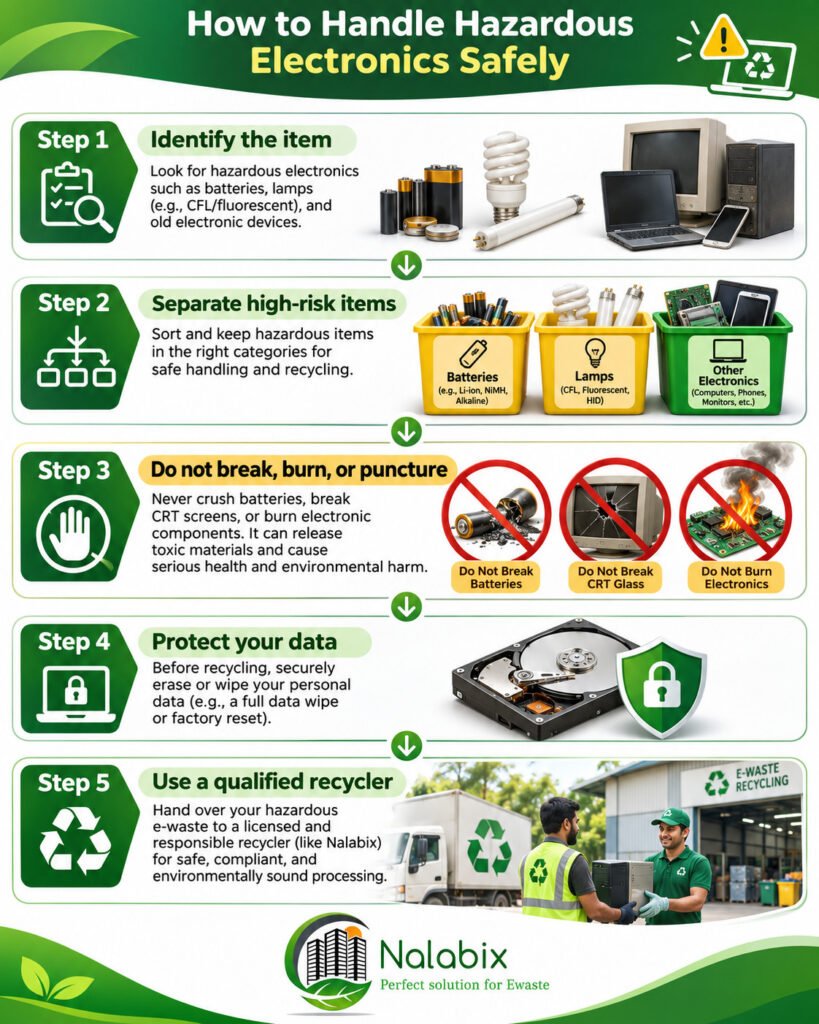
Before sending unwanted electronics for recycling, follow these practical precautions:
- Identify the equipment: Check for batteries, mercury-containing lamps, damaged screens, and other potentially hazardous parts.
- Separate high-risk items: Keep batteries, broken lamps, leaking equipment, and other hazardous components out of ordinary mixed e-waste boxes.
- Avoid unnecessary dismantling: Never burn electronics, puncture batteries, break CRTs, or open refrigerant systems.
- Protect sensitive information: Ensure personal or organizational data is securely erased or destroyed before data-bearing devices are reused or recycled.
- Use a suitable recycling provider: Confirm that the facility accepts the specific items and can manage hazardous components safely.
Organizations disposing of computers, servers, and storage devices can also explore secure data destruction services to address information security alongside responsible recycling.
Why Does Proper Handling of Hazardous E-Waste Matter?
Improper handling can expose people and ecosystems to toxic substances, cause battery fires, and contaminate surrounding environments.
Responsible recycling reduces these risks while making it possible to recover useful materials such as copper, aluminium, and other metals.
Proper handling is also important for regulatory compliance. Waste requirements differ internationally, and cross-border movements may be controlled under the Basel Convention.
Frequently Asked Questions
Are all electronic devices hazardous waste?
No. Many electronics contain materials requiring careful recovery, but their legal classification depends on the device, its components, and applicable regulations. All unwanted electronics should still be directed toward suitable reuse or recycling channels.
Can hazardous e-waste be recycled?
Yes. Many hazardous electronic items can be recycled through facilities equipped to separate, treat, and manage their components safely. Some materials require specialized treatment or disposal rather than conventional recycling.
Can damaged batteries be collected with ordinary electronics?
They should not be placed loosely among other electronics. Swollen, leaking, overheated, or physically damaged batteries require specific precautions and should be reported to the collection provider before pickup.
Final Thoughts
Electronic waste does not have to become an environmental hazard. The difference often begins with recognizing which devices require extra care.
From lithium batteries and old televisions to circuit boards and cooling appliances, safe handling protects people, prevents pollution, and supports responsible material recovery.
When in doubt, identify the electronic item, avoid dismantling it, and consult a qualified recycling provider before disposal.
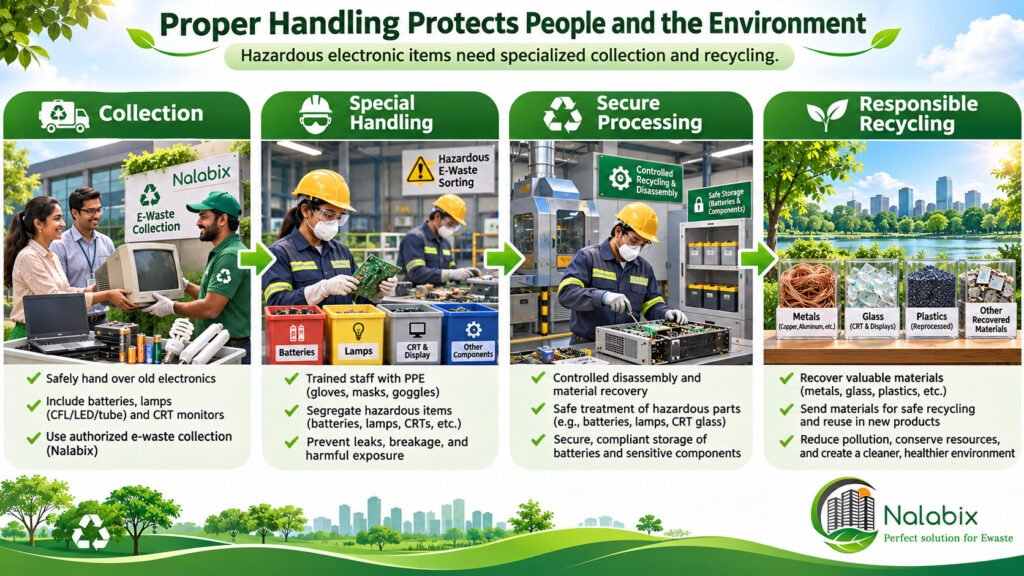
For responsible collection and recycling arrangements, explore Nalabix Eco’s e-waste pickup and recycling services.