What Materials Are Inside Electronic Waste
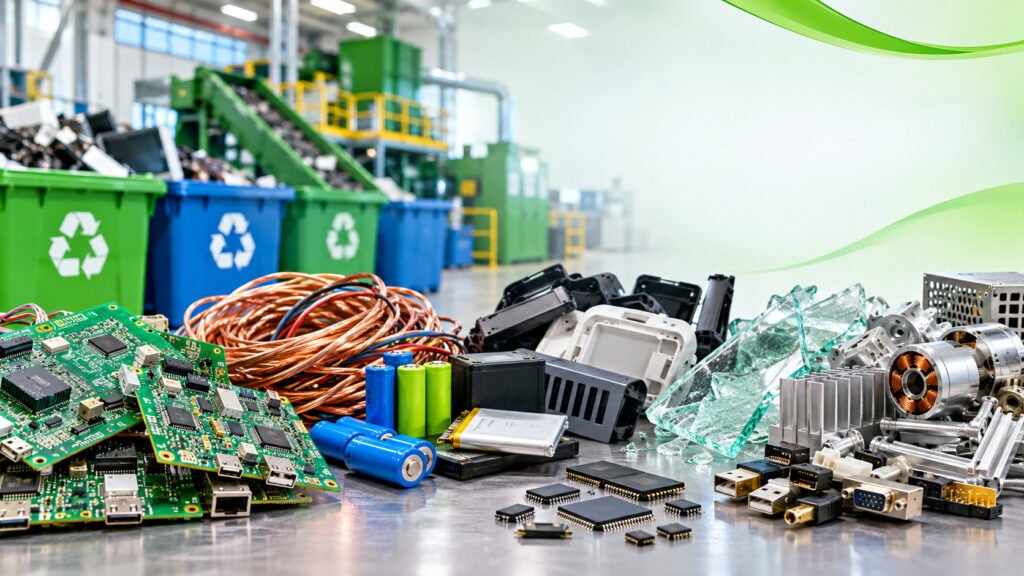
Have you ever wondered what is actually inside an old smartphone, broken laptop, television, or computer? What looks like a useless electronic device is actually a mixture of valuable metals, plastics, glass, electrical components, and sometimes hazardous substances. Some materials can be recovered and used again, while others require special handling to prevent environmental pollution. Understanding what electronic waste is made of helps explain why recycling electronics is more complicated than simply throwing them away. What Are the Main Components of Electronic Waste? Electronic waste (e-waste) contains a combination of metals, plastics, glass, circuit boards, batteries, wiring, and electronic components. The exact materials depend on the type, age, and design of the equipment. According to the Global E-waste Monitor 2024, the 62 million tonnes of e-waste generated worldwide in 2022 contained approximately: These materials serve different purposes inside electronic equipment and require different recycling processes. 1. Metals: The Valuable Materials Hidden Inside Electronics Metals are among the most important materials found in electronic waste. They conduct electricity, provide structural support, and help electronic components function. Common metals include: Metal Where It Is Found Copper Electrical wiring, motors, circuit boards Aluminium Device casings, heat sinks, frames Iron and steel Computer cases, screws, appliance frames Gold Selected electronic connectors and circuit boards Silver Electrical contacts, solder, electronic components Palladium Certain connectors and electronic components Gold, silver, and palladium are typically present in small quantities, but they can make electronic waste an important source of recoverable resources. The US Environmental Protection Agency explains that recovering materials from electronics can reduce demand for newly extracted raw materials. This is closely connected to urban mining, the recovery of useful materials from discarded products rather than extracting them entirely from natural deposits. 2. Printed Circuit Boards: The Electronic Control Centres Printed circuit boards (PCBs), also called electronic boards, are found in computers, smartphones, televisions, printers, servers, and many other devices. They connect and support electronic components, allowing electricity and signals to travel through a device. A typical circuit board may contain: Circuit boards are particularly interesting in electronic recycling because several different materials are tightly combined. Their recovery requires specialised processing rather than ordinary household recycling. Learn more about the science behind electronics recycling. 3. Plastics: More Than Just Electronic Casings Plastics are widely used in electronic equipment because they are lightweight, durable, and can provide electrical insulation. They are commonly found in laptop covers, television housings, keyboards, computer mice, cable insulation, and internal connectors. Common plastic types include ABS, polycarbonate, polypropylene, and polyethylene. However, not every electronic plastic can be recycled together. Different polymers must often be separated, and some older electronic plastics contain additives such as brominated flame retardants. Proper sorting helps identify suitable recycling pathways and materials requiring additional treatment. 4. Glass and Display Components Televisions, computer monitors, smartphones, and other display devices contain glass and specialised screen components. The materials vary depending on the display technology. Modern screens may contain glass, liquid crystal materials, polarising films, and conductive coatings. Older cathode-ray tube (CRT) televisions and monitors can contain leaded glass, while some older LCD displays use mercury-containing backlights. These differences explain why certain screens require specialised dismantling and treatment rather than being processed as ordinary glass. 5. Batteries: Energy Storage Components That Need Careful Handling Batteries are found in smartphones, laptops, tablets, power tools, UPS systems, and numerous portable devices. Depending on their chemistry, batteries can contain materials such as lithium, cobalt, nickel, manganese, lead, and graphite. Some of these materials can be recovered through specialised recycling processes. However, batteries also present safety risks. Damaged lithium-ion batteries can overheat or catch fire, while lead-acid and other battery types may contain corrosive or hazardous substances. Batteries should never be crushed, punctured, burned, or mixed carelessly with general electronic scrap. They need appropriate collection, storage, and recycling arrangements. 6. Wires, Motors, Magnets, and Storage Devices Not all valuable electronic components are found on circuit boards. Electrical cables contain conductive metals, commonly copper or aluminium, surrounded by insulating materials. Motors and transformers contain copper windings and magnetic materials. Certain speakers, motors, and hard drives also contain magnets that may incorporate rare-earth elements. Hard disk drives (HDDs) and solid-state drives (SSDs) contain electronic components and recoverable materials, but they introduce another important consideration: data security. Before recycling storage devices, personal or confidential information must be securely sanitised or the storage media appropriately destroyed. Read more about secure data destruction and its role in responsible electronics disposal. Which Materials in E-Waste Can Be Hazardous? Although electronic waste contains valuable resources, certain devices also contain substances that can be harmful when improperly handled. Examples include lead in some older electronics, mercury in certain lamps and displays, cadmium in some batteries and components, and hazardous flame-retardant substances in selected plastics. Unsafe practices such as open burning, uncontrolled dismantling, and crude chemical processing can release harmful substances into the environment. The World Health Organization identifies improperly managed electronic waste as a significant health concern, particularly for children and communities exposed to unsafe recycling activities. Importantly, not every electronic device contains every hazardous substance. Its composition depends on its technology, manufacturing period, and materials. How Are Materials Separated During E-Waste Recycling? Electronic recycling involves identifying, separating, and directing different materials into suitable treatment streams. A typical process begins with collection and inspection. Equipment is then assessed for reuse where permitted, data-bearing devices receive appropriate security treatment, and hazardous components are identified for safe handling. The remaining equipment may be dismantled, sorted, and processed to recover metals, plastics, and other materials. Specialised downstream facilities may carry out additional refining and recovery. The goal is not simply to break electronics apart, but to recover useful resources while preventing hazardous substances from entering the environment. Frequently Asked Questions What are the most common materials in electronic waste? The main materials are metals, plastics, glass, circuit boards, and composite materials. Batteries, cables, magnets, and other components may also be present. Do all electronic devices contain gold? No. Gold is used in certain electronic contacts,
Which Electronic Items Need Special Handling?
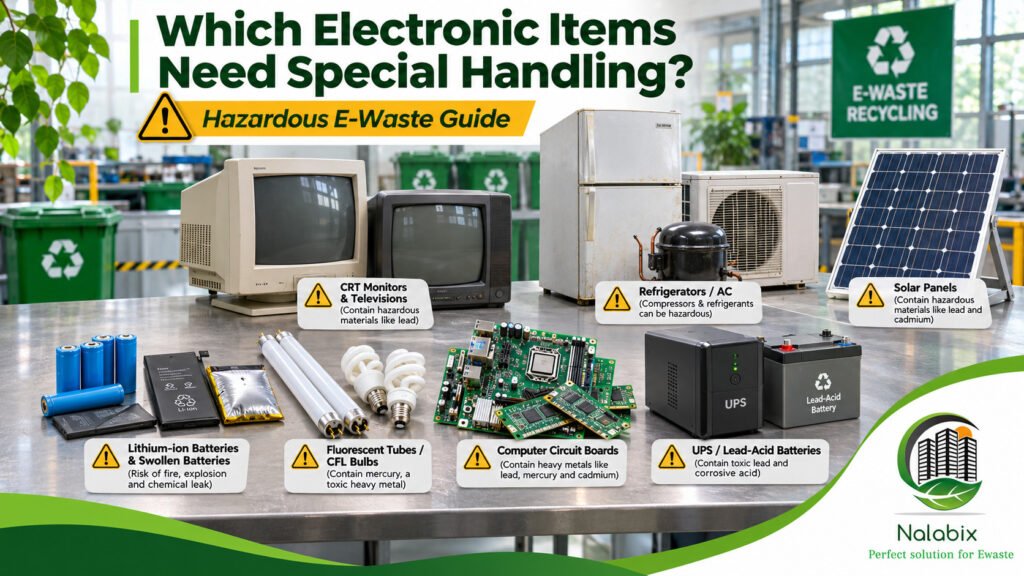
Which Electronic Items Need Special Handling? A Guide to Hazardous E-Waste Not all electronic waste can be handled the same way. An old keyboard, a damaged lithium battery, and a broken television may all be electronic waste, but the risks associated with each are very different. Some electronic devices contain hazardous substances such as lead, mercury, cadmium, and potentially harmful chemicals. Others contain batteries that can catch fire or components that require specialized recycling. Knowing which electronic items need special handling is an important step toward safer recycling, responsible disposal, and protecting the environment. What Is Hazardous E-Waste? Hazardous electronic waste refers to discarded electrical and electronic equipment that contains substances or presents properties capable of harming human health or the environment if improperly handled. According to the World Health Organization (WHO), unsafe e-waste recycling can release toxic substances into the air, soil, and water. However, not every electronic item is legally classified as hazardous waste. Classification depends on its components, condition, and applicable local regulations. Which Electronic Items Require Special Handling? 1. Lithium Batteries and Battery-Powered Electronics Lithium-ion batteries are commonly found in smartphones, laptops, tablets, power banks, rechargeable tools, and other portable electronics. These batteries can present fire risks when crushed, punctured, overheated, or improperly stored. Safe handling: Keep batteries away from heat and metal objects that could cause short circuits. Protect exposed terminals when appropriate, and never place damaged or swollen batteries into ordinary recycling bins. The US Environmental Protection Agency’s battery recycling guidance explains why lithium batteries require separate collection and careful handling. Other batteries, including lead-acid batteries from UPS systems and certain industrial equipment, also require specialized recycling. 2. Old Televisions and CRT Monitors Older televisions and computer monitors that use cathode ray tubes (CRTs) contain leaded glass and other components requiring careful management. Breaking or improperly dismantling these screens can expose workers to hazardous materials. Safe handling: Keep CRT screens intact, avoid crushing their glass, and arrange collection through a recycling facility equipped to handle them. For information about modern screens, explore LED and LCD disposal and recycling. 3. Fluorescent Lamps and Mercury-Containing Electronics Certain lighting products and older electronic equipment may contain mercury. Examples include: Mercury can be harmful when released through breakage or improper disposal. Safe handling: Store these items carefully to prevent breakage and use an appropriate mercury-containing waste collection or recycling service. Modern LED lighting should not automatically be assumed to contain mercury. 4. Refrigerators, Freezers, and Air Conditioners Cooling appliances can contain refrigerants, compressor oils, and other components requiring controlled handling. Releasing refrigerants can contribute to environmental damage, while some refrigerants also present flammability risks. Safe handling: Do not cut refrigerant pipes or attempt to release gases yourself. Use qualified appliance recycling or refrigerant recovery professionals. The US EPA’s appliance disposal guidance explains the importance of recovering refrigerants and managing hazardous components before recycling. 5. Circuit Boards and Electronic Components Circuit boards are found in computers, servers, printers, televisions, networking equipment, and many other devices. Depending on their age and composition, they may contain lead-based solder, certain flame retardants, and other substances that require controlled recycling. Burning circuit boards or using uncontrolled chemical extraction methods can release harmful pollutants. Safe handling: Send circuit boards to responsible electronic waste recycling facilities rather than burning them or attempting chemical metal recovery at home. 6. Solar Panels and Specialized Electrical Equipment Some end-of-life solar panels contain materials such as lead or cadmium. Their composition and hazardous-waste classification vary by technology and local rules. Large electrical equipment may also contain batteries, capacitors, oils, or other components requiring assessment before dismantling. Safe handling: Keep panels intact where possible and consult a recycler that handles photovoltaic equipment or the relevant industrial electrical waste category. How Should Hazardous Electronic Waste Be Handled Safely? Before sending unwanted electronics for recycling, follow these practical precautions: Organizations disposing of computers, servers, and storage devices can also explore secure data destruction services to address information security alongside responsible recycling. Why Does Proper Handling of Hazardous E-Waste Matter? Improper handling can expose people and ecosystems to toxic substances, cause battery fires, and contaminate surrounding environments. Responsible recycling reduces these risks while making it possible to recover useful materials such as copper, aluminium, and other metals. Proper handling is also important for regulatory compliance. Waste requirements differ internationally, and cross-border movements may be controlled under the Basel Convention. Frequently Asked Questions Are all electronic devices hazardous waste? No. Many electronics contain materials requiring careful recovery, but their legal classification depends on the device, its components, and applicable regulations. All unwanted electronics should still be directed toward suitable reuse or recycling channels. Can hazardous e-waste be recycled? Yes. Many hazardous electronic items can be recycled through facilities equipped to separate, treat, and manage their components safely. Some materials require specialized treatment or disposal rather than conventional recycling. Can damaged batteries be collected with ordinary electronics? They should not be placed loosely among other electronics. Swollen, leaking, overheated, or physically damaged batteries require specific precautions and should be reported to the collection provider before pickup. Final Thoughts Electronic waste does not have to become an environmental hazard. The difference often begins with recognizing which devices require extra care. From lithium batteries and old televisions to circuit boards and cooling appliances, safe handling protects people, prevents pollution, and supports responsible material recovery. When in doubt, identify the electronic item, avoid dismantling it, and consult a qualified recycling provider before disposal. For responsible collection and recycling arrangements, explore Nalabix Eco’s e-waste pickup and recycling services.