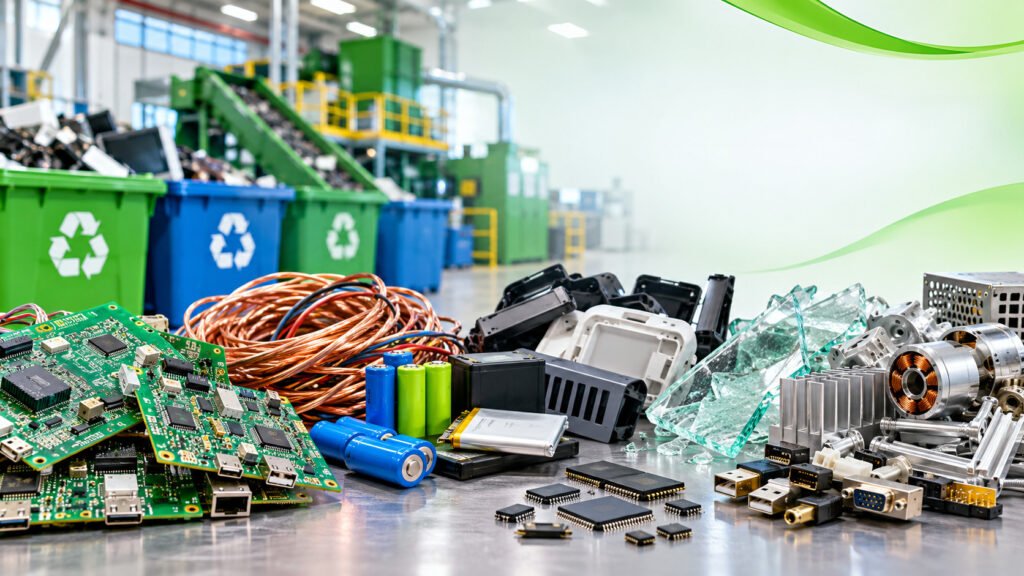
Have you ever wondered what is actually inside an old smartphone, broken laptop, television, or computer?
What looks like a useless electronic device is actually a mixture of valuable metals, plastics, glass, electrical components, and sometimes hazardous substances. Some materials can be recovered and used again, while others require special handling to prevent environmental pollution.
Understanding what electronic waste is made of helps explain why recycling electronics is more complicated than simply throwing them away.
What Are the Main Components of Electronic Waste?
Electronic waste (e-waste) contains a combination of metals, plastics, glass, circuit boards, batteries, wiring, and electronic components. The exact materials depend on the type, age, and design of the equipment.
According to the Global E-waste Monitor 2024, the 62 million tonnes of e-waste generated worldwide in 2022 contained approximately:
- 31 million tonnes of metals
- 17 million tonnes of plastics
- 14 million tonnes of other materials, including glass, minerals, and composites.
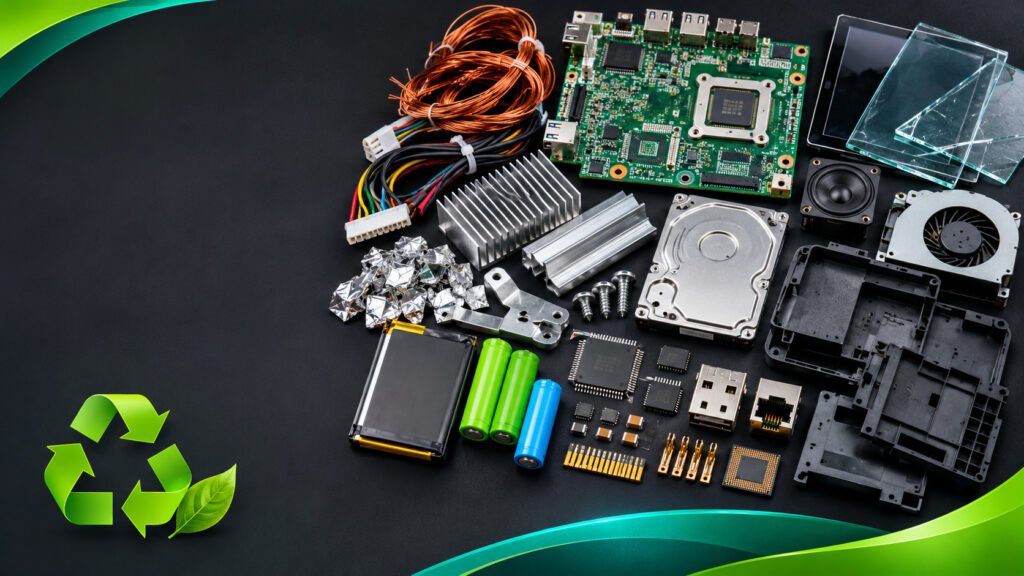
These materials serve different purposes inside electronic equipment and require different recycling processes.
1. Metals: The Valuable Materials Hidden Inside Electronics
Metals are among the most important materials found in electronic waste. They conduct electricity, provide structural support, and help electronic components function.
Common metals include:
| Metal | Where It Is Found |
|---|---|
| Copper | Electrical wiring, motors, circuit boards |
| Aluminium | Device casings, heat sinks, frames |
| Iron and steel | Computer cases, screws, appliance frames |
| Gold | Selected electronic connectors and circuit boards |
| Silver | Electrical contacts, solder, electronic components |
| Palladium | Certain connectors and electronic components |
Gold, silver, and palladium are typically present in small quantities, but they can make electronic waste an important source of recoverable resources.
The US Environmental Protection Agency explains that recovering materials from electronics can reduce demand for newly extracted raw materials.
This is closely connected to urban mining, the recovery of useful materials from discarded products rather than extracting them entirely from natural deposits.
2. Printed Circuit Boards: The Electronic Control Centres
Printed circuit boards (PCBs), also called electronic boards, are found in computers, smartphones, televisions, printers, servers, and many other devices.
They connect and support electronic components, allowing electricity and signals to travel through a device.
A typical circuit board may contain:
- Copper conductive pathways
- Microchips and integrated circuits
- Capacitors, resistors, and transistors
- Solder and electrical connectors
- Fibreglass and resin materials
- Small quantities of precious metals
Circuit boards are particularly interesting in electronic recycling because several different materials are tightly combined.
Their recovery requires specialised processing rather than ordinary household recycling.
Learn more about the science behind electronics recycling.
3. Plastics: More Than Just Electronic Casings
Plastics are widely used in electronic equipment because they are lightweight, durable, and can provide electrical insulation.
They are commonly found in laptop covers, television housings, keyboards, computer mice, cable insulation, and internal connectors.
Common plastic types include ABS, polycarbonate, polypropylene, and polyethylene.
However, not every electronic plastic can be recycled together. Different polymers must often be separated, and some older electronic plastics contain additives such as brominated flame retardants.
Proper sorting helps identify suitable recycling pathways and materials requiring additional treatment.
4. Glass and Display Components
Televisions, computer monitors, smartphones, and other display devices contain glass and specialised screen components.
The materials vary depending on the display technology.
Modern screens may contain glass, liquid crystal materials, polarising films, and conductive coatings. Older cathode-ray tube (CRT) televisions and monitors can contain leaded glass, while some older LCD displays use mercury-containing backlights.
These differences explain why certain screens require specialised dismantling and treatment rather than being processed as ordinary glass.
5. Batteries: Energy Storage Components That Need Careful Handling
Batteries are found in smartphones, laptops, tablets, power tools, UPS systems, and numerous portable devices.
Depending on their chemistry, batteries can contain materials such as lithium, cobalt, nickel, manganese, lead, and graphite.
Some of these materials can be recovered through specialised recycling processes.
However, batteries also present safety risks. Damaged lithium-ion batteries can overheat or catch fire, while lead-acid and other battery types may contain corrosive or hazardous substances.
Batteries should never be crushed, punctured, burned, or mixed carelessly with general electronic scrap. They need appropriate collection, storage, and recycling arrangements.
6. Wires, Motors, Magnets, and Storage Devices
Not all valuable electronic components are found on circuit boards.
Electrical cables contain conductive metals, commonly copper or aluminium, surrounded by insulating materials.
Motors and transformers contain copper windings and magnetic materials. Certain speakers, motors, and hard drives also contain magnets that may incorporate rare-earth elements.
Hard disk drives (HDDs) and solid-state drives (SSDs) contain electronic components and recoverable materials, but they introduce another important consideration: data security.
Before recycling storage devices, personal or confidential information must be securely sanitised or the storage media appropriately destroyed.
Read more about secure data destruction and its role in responsible electronics disposal.
Which Materials in E-Waste Can Be Hazardous?
Although electronic waste contains valuable resources, certain devices also contain substances that can be harmful when improperly handled.
Examples include lead in some older electronics, mercury in certain lamps and displays, cadmium in some batteries and components, and hazardous flame-retardant substances in selected plastics.
Unsafe practices such as open burning, uncontrolled dismantling, and crude chemical processing can release harmful substances into the environment.
The World Health Organization identifies improperly managed electronic waste as a significant health concern, particularly for children and communities exposed to unsafe recycling activities.
Importantly, not every electronic device contains every hazardous substance. Its composition depends on its technology, manufacturing period, and materials.
How Are Materials Separated During E-Waste Recycling?
Electronic recycling involves identifying, separating, and directing different materials into suitable treatment streams.
A typical process begins with collection and inspection. Equipment is then assessed for reuse where permitted, data-bearing devices receive appropriate security treatment, and hazardous components are identified for safe handling.
The remaining equipment may be dismantled, sorted, and processed to recover metals, plastics, and other materials.
Specialised downstream facilities may carry out additional refining and recovery.
The goal is not simply to break electronics apart, but to recover useful resources while preventing hazardous substances from entering the environment.
Frequently Asked Questions
What are the most common materials in electronic waste?
The main materials are metals, plastics, glass, circuit boards, and composite materials. Batteries, cables, magnets, and other components may also be present.
Do all electronic devices contain gold?
No. Gold is used in certain electronic contacts, connectors, and circuit boards, but its presence and quantity vary considerably between devices.
Can all components of electronic waste be recycled?
Many materials can be recovered, but not every component is technically or economically recyclable. Some hazardous substances and mixed materials require specialised treatment or controlled disposal.
Why should electronic waste be separated before recycling?
Separating materials improves recycling efficiency, helps recover valuable resources, prevents contamination, and allows hazardous components to receive appropriate treatment.
Conclusion: Electronic Waste Is More Than Just Waste
Every discarded electronic device contains a combination of materials that once served an important purpose.
From copper wiring and aluminium frames to circuit boards, batteries, and specialised plastics, these components tell the story of how modern technology is built.
Understanding what is inside electronic waste helps individuals, businesses, and communities make better recycling decisions.
Responsible recycling can recover valuable resources, reduce environmental risks, and support a more circular economy.
At Nalabix Eco, we support responsible electronic waste collection, recycling, and secure data destruction, helping keep end-of-life electronics out of inappropriate disposal streams.