E-Waste Disposal in Kenya: A Business Guide to Safe Disposal and Licensed Providers
An old computer sitting in an office storeroom may seem harmless. However, it could still contain confidential business information, sensitive customer records and materials that require specialized environmental handling.
For businesses in Kenya, disposing of electronic waste is more than clearing unwanted equipment. It is a responsibility involving environmental protection, data security and regulatory compliance.
So, how can a business plan its e-waste disposal and ensure that its recycling provider is properly authorized?
A responsible approach starts with identifying obsolete equipment, protecting stored data, verifying the service provider’s licences and maintaining records of how the equipment was handled.
1. Identify the electronic waste your business generates
Before arranging collection, establish what equipment needs to be retired and how it should be handled.
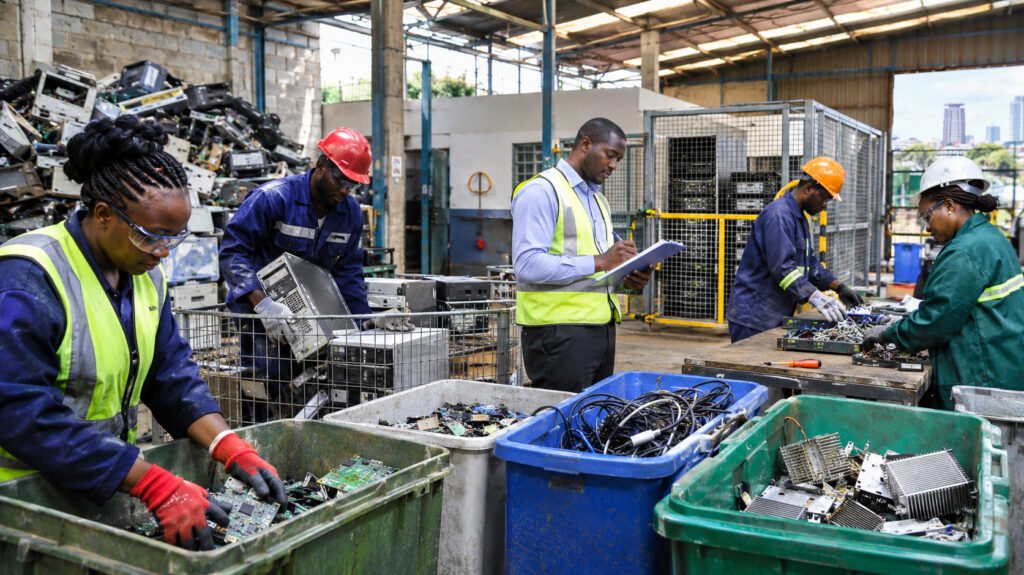
Common types of commercial electronic waste include:
- Desktop computers, laptops and monitors.
- Servers, hard drives and solid-state drives (SSDs).
- Printers, scanners and photocopiers.
- Routers, switches and telecommunications equipment.
- UPS systems, batteries and power supplies.
- Mobile phones, tablets and other electronic accessories.
Create an inventory documenting quantities, equipment condition, serial numbers where necessary and whether the devices contain sensitive information.
This helps determine whether equipment is suitable for reuse, recycling or complete destruction, depending on its condition and the organization’s disposal policy.
Businesses managing large volumes of equipment can benefit from a structured IT Asset Disposal (ITAD) process.
2. Understand Kenya’s e-waste disposal regulations
Electronic waste management in Kenya falls within the country’s environmental and waste management framework, overseen by the National Environment Management Authority (NEMA).
Businesses should be familiar with the following:
| Regulation or legislation | Relevance to businesses |
|---|---|
| Environmental Management and Co-ordination Act (EMCA) | Environmental protection and waste management responsibilities. |
| Sustainable Waste Management Act, 2022 | Responsible waste management and resource recovery. |
| Waste Management Regulations, 2024 | Waste segregation, transportation, treatment and disposal requirements. |
| Extended Producer Responsibility Regulations, 2024 | Additional obligations for applicable producers and importers. |
| Data Protection Act, 2019 | Protection of personal information stored on electronic equipment. |
Organizations should consult NEMA’s official regulations and e-waste management guidelines for applicable requirements.
Not every business has the same obligations. Manufacturers, importers and organizations that introduce electronic products into the Kenyan market may have additional responsibilities under Extended Producer Responsibility (EPR).
3. How can you verify an e-waste disposal company’s authorization in Kenya?
Before handing over electronic equipment, request evidence that the service provider is authorized to perform the proposed activities.
A registered business is not necessarily a licensed waste management operator.
E-waste provider verification checklist
| What to check | What to look for |
|---|---|
| NEMA licence | Valid licence covering the relevant waste management activities. |
| Licence validity | Current status, expiry date and applicable conditions. |
| Company identity | Legal company name matching the licence. |
| Waste transportation | Appropriate authorization for the vehicles or transport contractors involved. |
| Processing facility | Authorization for the facility receiving and processing the waste. |
| Data protection | ODPC registration where required and appropriate information security safeguards. |
| Downstream recyclers | Traceability of materials transferred to other processing facilities. |
| Disposal documentation | Clear records and certificates confirming the services performed. |
Request the relevant licence numbers and confirm their authenticity and scope through NEMA or its environmental licensing services.
If a licence cannot be independently verified, contact NEMA directly before proceeding.
An environmental licence does not automatically demonstrate that a provider has adequate data destruction capabilities. Both areas should be evaluated separately.
4. Protect business data before recycling electronics
Discarded computers, servers, phones and storage devices may still contain financial records, passwords, employee information and customer data.
Simply deleting files or formatting a hard drive does not necessarily make the information unrecoverable.
Depending on the storage technology, equipment condition and security requirements, appropriate data sanitization methods may include:
- Secure data wiping.
- Cryptographic erasure.
- Physical destruction through shredding or crushing.
- A combination of sanitization and physical destruction.
Internationally recognized guidance, such as NIST SP 800-88 Revision 2, helps organizations develop suitable media sanitization procedures.
Kenyan businesses must also consider their responsibilities under the Data Protection Act, 2019. Further guidance is available from the Office of the Data Protection Commissioner (ODPC).
Learn more about secure data destruction and professional data wiping.
5. Plan collection and responsible recycling
Once the inventory, security requirements and provider authorization have been confirmed, the business can arrange collection.
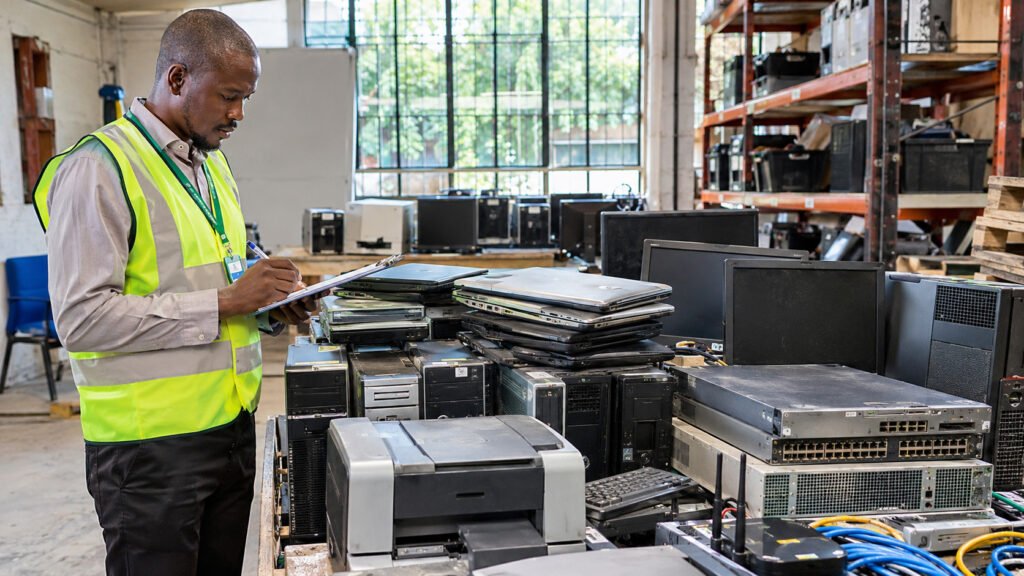
A well-managed e-waste disposal process typically follows these stages:
- Equipment inventory and disposal approval.
- Collection arrangements and secure transportation.
- Equipment identification and sorting.
- Data sanitization or destruction where required.
- Dismantling, material separation and recycling.
- Issuance of relevant disposal documentation.
Recoverable materials such as copper, aluminium, steel and suitable plastics can be directed into recycling streams, while hazardous components require appropriate specialized treatment.
The final processing method should reflect the equipment’s condition, regulatory requirements and the client’s instructions.
Explore Nalabix Eco’s e-waste collection and recycling services.
6. Keep evidence of responsible disposal
Collection alone does not demonstrate that electronic waste has been properly processed.
Businesses should agree on the documentation required before collection takes place. Depending on the project, this may include collection records, asset inventories, chain-of-custody documentation, waste tracking records, Certificates of Destruction and E-Waste Disposal Certificates.
These records support internal audits, environmental reporting, information security reviews and ESG objectives.
A certificate should accurately reflect the work completed and should not replace verification of the provider’s authorization.
Read more about e-waste compliance and reporting.
Frequently asked questions
Do businesses in Kenya need to use a NEMA-licensed e-waste handler?
Businesses should use appropriately licensed operators for regulated waste transportation, processing and disposal activities. Verify that the provider’s authorization covers the electronic waste being handled.
Can businesses dispose of old computers with general office waste?
Electronic equipment should be segregated from ordinary waste and directed to appropriate collection and recycling channels, particularly when it contains hazardous materials or sensitive information.
Is corporate e-waste collection free in Kenya?
Collection costs depend on location, equipment quantity, transportation requirements, processing methods and data destruction needs. Some collections may qualify for free pickup, while specialized services may attract charges.
Is a Certificate of Destruction the same as an E-Waste Disposal Certificate?
No. A Certificate of Destruction documents the destruction of specified equipment or storage media, while an E-Waste Disposal Certificate generally documents the handling and disposal of electronic waste within its stated scope.
Responsible e-waste disposal starts before collection
A successful e-waste management strategy begins long before outdated equipment leaves an organization’s premises.
By verifying service providers, protecting confidential information, selecting appropriate recycling methods and maintaining disposal records, businesses can reduce environmental and information security risks.
Although environmental regulations differ between countries, these principles remain relevant to organizations worldwide.
Nalabix Eco supports businesses with responsible electronics recycling, secure data destruction and documented IT asset disposal.
Contact Nalabix Eco to discuss your organization’s electronic waste disposal requirements.