Why Can One E-Waste Drop-Off Site Be Free While Another Charges
You have an old laptop, a broken television, or a box of unwanted electronics. You find two recycling locations nearby. One accepts your items for free, while the other charges a disposal fee.
Why should you pay to recycle something another facility accepts for free?
The answer is not necessarily about which recycling site is better. It often comes down to who pays for collection, the types of electronics accepted, and the cost of processing them safely.
Understanding these differences can help you choose a responsible recycling option without paying unnecessary fees.
1. Why Do Some E-Waste Recycling Sites Offer Free Drop-Off?
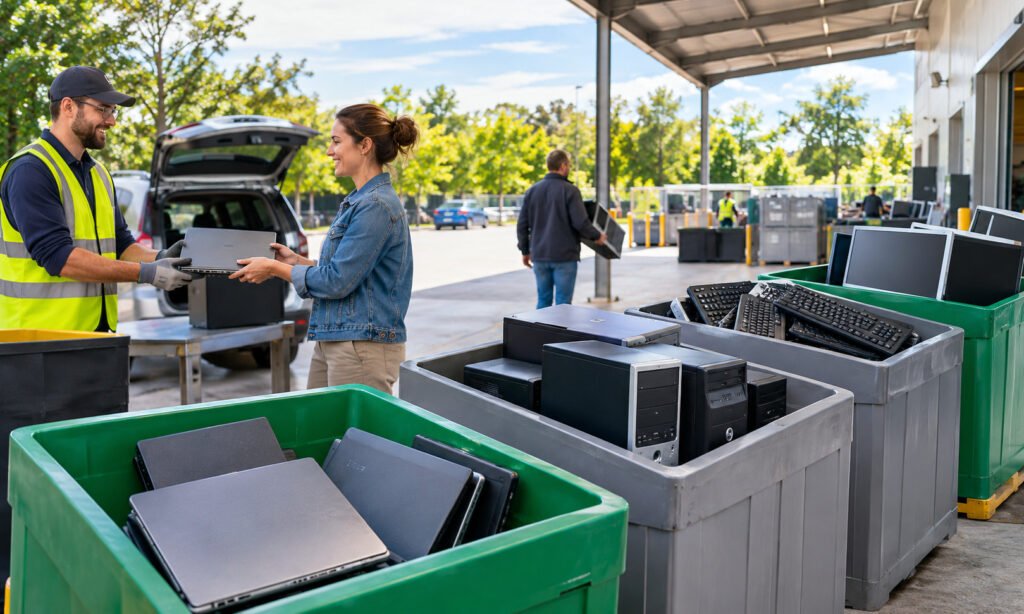
Free e-waste drop-off usually means the person bringing in the electronics does not pay a fee at the collection point. However, collecting, transporting, sorting, and recycling electronics still costs money.
Several arrangements can make free collection possible.
Government-funded recycling programs
Some local authorities fund electronic waste collection through public budgets, waste management fees, or environmental programs. Residents can therefore bring eligible electronics to designated facilities without paying at the point of disposal.
Manufacturer and retailer take-back programs
Electronics manufacturers and retailers may operate or finance collection programs. These arrangements can be part of extended producer responsibility (EPR), which places certain waste management responsibilities on product producers.
Recycling and material recovery
Electronic devices contain materials such as copper, aluminium, steel, plastics, and precious metals. Recovering these materials can help offset processing expenses, although not every device generates enough value to cover its recycling costs.
Learn more about the importance of electronic waste recycling.
2. Why Do Other Electronics Recycling Sites Charge Fees?
Not all electronic waste is equally easy or economical to recycle.
Some items require specialised treatment, additional safety precautions, or expensive downstream processing.
Common reasons for recycling charges include:
- Difficult-to-recycle materials: Older CRT televisions and monitors contain specialised glass that requires appropriate handling.
- Hazardous components: Certain batteries, lamps, and electronic components need separate treatment.
- Transport and processing: Collection, sorting, storage, labour, and transportation all contribute to operating costs.
- Limited funding: Some private recycling facilities operate without sufficient manufacturer or government financial support.
- Additional services: Secure data destruction, detailed inventory records, and specialised handling may involve separate charges.
For example, recycling an old keyboard may cost less than processing a large television containing materials that require specialist treatment.
The US Environmental Protection Agency’s guidance on CRTs explains some of the challenges associated with recycling older display technology.
3. Does Free E-Waste Drop-Off Mean Lower Recycling Quality?
No. Free recycling does not automatically mean poor-quality recycling, and charging a fee does not guarantee responsible handling.
A free collection site may be supported by public funding or manufacturer partnerships and follow appropriate environmental procedures.
Similarly, a fee-charging recycler may use the revenue to cover safe handling, compliant processing, and specialised material recovery.
What matters is whether the recycling operator:
- Accepts the specific electronics you want to dispose of.
- Follows applicable environmental and waste management requirements.
- Handles batteries and hazardous components appropriately.
- Provides clear information about downstream recycling.
- Offers suitable documentation when required.
For organisations disposing of computers, servers, or storage devices, secure data destruction is another important consideration.
4. How Do Free E-Waste Recycling Programs Differ Around the World?
Electronics recycling systems vary between countries and even between cities.
Europe: The European Union’s WEEE framework establishes requirements for separate collection and treatment of electrical and electronic waste. Producer-funded collection and retailer take-back arrangements can make eligible returns free to consumers, subject to national rules and program conditions.
Read more about the European Commission’s WEEE framework.
United States: Electronics recycling requirements differ between states and local authorities. Residents may find free municipal collection events, retailer take-back programs, or recycling facilities that charge for particular items.
The US EPA’s electronics recycling guide provides information on finding suitable options.
Africa and other developing recycling markets: Access to collection infrastructure, producer-funded programs, and formal recycling facilities can differ significantly. Transportation distances, processing capacity, and available recycling markets may influence whether collection is free or fee-based.
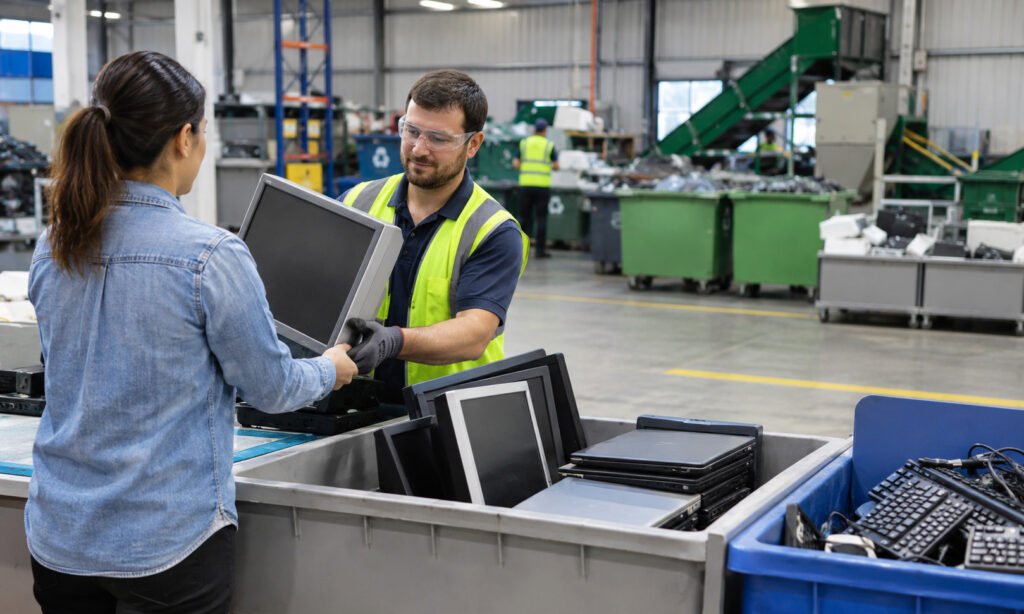
These differences show why recycling costs cannot be compared fairly without considering local conditions and available services.
5. What Should You Check Before Visiting an E-Waste Drop-Off Site?
A little preparation can help avoid unexpected charges or rejected items.
- Confirm accepted electronics. Some facilities accept computers and phones but exclude televisions, batteries, or large appliances.
- Ask about charges. Check whether fees apply per item, by weight, or for specialised processing.
- Protect personal information. Back up important files and properly erase personal data before handing over devices.
- Check battery requirements. Loose, damaged, or lithium-ion batteries may need separate handling.
- Verify the recycling process. Choose a provider that can explain how electronics are handled after collection.
Remember that free drop-off and free collection from your home or business are different services. A recycling company may provide one without offering the other.
For organisations managing larger quantities of electronics, scheduled e-waste pickup and recycling may be a more practical alternative.
Frequently Asked Questions
Is e-waste recycling always free?
No. Some recycling programs accept eligible electronics without charging users, while others require fees depending on the device, location, funding arrangements, and processing requirements.
Why do some recycling centres charge for televisions and monitors?
Certain televisions and monitors, especially older CRT models, contain materials that require specialised handling. Processing and downstream treatment costs can lead to additional charges.
Can businesses dispose of electronic waste for free?
Sometimes. Free business recycling or collection may be available depending on the provider, location, type of equipment, and quantity. Services such as secure data destruction or specialised reporting may have separate costs.
Final Thoughts
Free e-waste drop-off and paid electronics recycling can both support responsible waste management.
The real difference often lies in how recycling costs are funded, what materials are being processed, and which services are included.
Before choosing a collection site, look beyond the price. Understanding where your electronics go and how they are handled is more important than whether the service is advertised as free.
At Nalabix Eco, we support responsible electronic waste collection, recycling, and secure data destruction. Collection arrangements and applicable service charges depend on the equipment, location, and specific requirements.
For assistance with electronic waste disposal, contact Nalabix Eco to discuss the appropriate collection and recycling solution.