
Electronic equipment is essential to modern organizations. Computers, servers, printers, mobile phones, and other devices support daily operations, but eventually become outdated, damaged, or no longer needed.
Without a proper management plan, these electronics may accumulate in storage, expose sensitive information, or end up in inappropriate waste streams.
An effective e-waste management plan helps organizations manage unwanted electronics safely, protect confidential data, meet applicable regulations, and support responsible recycling.
So, how can an organization develop a practical e-waste management plan?
What Is an E-Waste Management Plan?
An e-waste management plan is a documented process that guides how an organization identifies, collects, stores, reuses, recycles, or disposes of unwanted electrical and electronic equipment.
It defines who is responsible for handling electronic waste, how equipment should be managed, and which procedures must be followed before final disposal.
A good plan covers the entire equipment lifecycle, from identifying obsolete electronics to documenting their final treatment.
Why Is E-Waste Management Important for Organizations?
According to the Global E-waste Monitor 2024, approximately 62 million tonnes of electronic waste were generated worldwide in 2022, with only 22.3% documented as formally collected and recycled.
Organizations have an important role in addressing this challenge because they regularly replace computers, networking devices, office equipment, and other electronics.
Proper e-waste management helps organizations:
- Prevent environmental pollution from improperly discarded electronics.
- Protect confidential business and personal information.
- Reduce unnecessary electronic waste through repair and reuse.
- Recover valuable materials through responsible recycling.
- Comply with applicable environmental and data protection requirements.
- Maintain accurate records of retired electronic assets.
8 Steps to Build an Effective E-Waste Management Plan
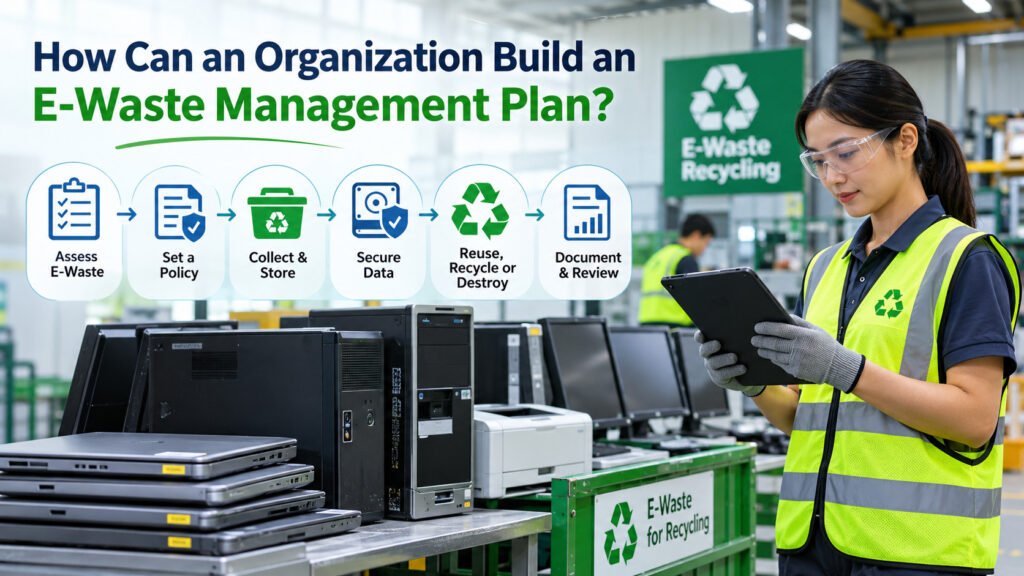
1. Identify and Assess Electronic Waste
The first step is understanding what electronic equipment an organization owns and which devices are approaching the end of their useful lives.
Conduct an inventory across offices, departments, warehouses, and other facilities.
Common electronic waste includes computers, laptops, monitors, printers, servers, phones, batteries, networking equipment, and electronic storage devices.
Record important information such as equipment type, quantity, location, condition, and asset identification number.
This assessment helps distinguish equipment that can remain in use from devices requiring repair, replacement, recycling, or disposal.
Learn more about what counts as electronic waste.
2. Establish an E-Waste Management Policy
An organization should have a clear policy explaining how electronic equipment is managed when it is no longer required.
The policy should define who can authorize equipment disposal, how obsolete assets are identified, and the procedures employees must follow.
Responsibilities may be shared among IT, procurement, facilities, sustainability, and compliance departments.
For example, the IT department may oversee data security, while facilities personnel coordinate storage and collection.
Clear responsibilities help prevent unauthorized disposal and ensure consistent handling across departments.
3. Organize Collection and Safe Storage
Once obsolete electronics have been identified, they should be collected and stored in designated areas.
Electronic waste should not be mixed with ordinary household or office waste.
Storage areas should be secure, organized, and protected from weather exposure and unauthorized access.
Different equipment categories may require different handling procedures. Batteries, damaged electrical components, and devices containing sensitive data deserve particular attention.
Organizations with multiple offices can arrange scheduled collections to avoid unnecessary accumulation.
Proper e-waste collection and recycling establishes an accountable process for moving equipment from its original location to an appropriate treatment facility.
4. Protect Data Before Recycling or Disposal
Many retired electronic devices contain sensitive information, even when they are no longer functional.
Computers, servers, hard drives, solid-state drives, and mobile devices may retain financial information, customer records, employee details, or confidential business files.
Before releasing these devices for reuse, recycling, or disposal, organizations should implement suitable data sanitization or destruction procedures.
These may include secure data wiping, cryptographic erasure, or physical destruction, depending on the storage technology and security requirements.
The NIST Guidelines for Media Sanitization provide a recognized framework for selecting and verifying appropriate sanitization methods.
Organizations should maintain records confirming that the required data security procedures were completed.
Read more about secure data destruction.
5. Determine Whether Equipment Should Be Reused, Recycled, or Destroyed
Not every obsolete electronic device needs to be immediately recycled.
Equipment that remains functional may be repaired, refurbished, redeployed, or donated if the organization authorizes it and appropriate data security measures are completed.
Devices that cannot be reused may be dismantled and recycled to recover materials such as copper, aluminium, steel, and certain plastics.
However, some organizations require the complete destruction of particular electronic assets because of confidentiality, contractual obligations, or internal security policies.
The appropriate treatment depends on the equipment’s condition, the owner’s instructions, data security requirements, and applicable regulations.
For organizations managing large quantities of retired IT equipment, a structured IT asset disposal (ITAD) process can help maintain accountability.
6. Choose a Qualified E-Waste Recycling Partner
A reliable recycling partner is essential for responsible electronic waste management.
Before selecting a service provider, organizations should verify that the company has the necessary permits, technical capabilities, and suitable procedures for handling the relevant equipment.
A recycling provider should be able to explain how electronics are collected, processed, and transferred to downstream facilities.
Organizations should also establish how data-bearing devices and potentially hazardous components will be handled.
Depending on the services provided, collection records, recycling reports, and destruction certificates may be available to support accountability.
The US Environmental Protection Agency’s guidance on certified electronics recyclers provides useful information on evaluating electronics recycling practices.
7. Follow Environmental and Data Protection Regulations
Electronic waste is subject to different environmental and data protection regulations around the world.
Organizations must understand the requirements that apply in the countries where they operate.
For example, the European Union has established rules under its Waste Electrical and Electronic Equipment (WEEE) framework.
International movements of certain electronic waste are also regulated under the Basel Convention.
Depending on the jurisdiction, organizations may need to follow rules covering waste handling, transportation, hazardous materials, data protection, and disposal documentation.
Understanding these obligations helps organizations select suitable service providers and reduce compliance risks.
8. Maintain Records and Review Performance
The final step is documenting what happens to electronic equipment after it has been approved for disposal.
Useful records include asset inventories, collection documentation, chain-of-custody forms, data destruction records, and applicable recycling or disposal certificates.
These documents help organizations account for retired equipment and support internal reviews or compliance audits.
Organizations should also periodically examine how much e-waste they generate, how much equipment is reused, and how much is sent for recycling.
Reviewing this information can reveal opportunities to extend equipment lifespans, improve collection practices, and reduce waste.
Learn more about e-waste compliance and reporting.
Example of an Organizational E-Waste Management Plan
The following table illustrates how responsibilities can be organized.
| Activity | Responsible team |
|---|---|
| Identify obsolete electronics | IT / Asset Management |
| Approve equipment retirement | Authorized management |
| Arrange secure storage | Facilities |
| Manage data sanitization | IT / Approved service provider |
| Coordinate collection and recycling | E-waste management provider |
| Maintain disposal records | Compliance / Administration |
| Review e-waste performance | Management / Sustainability |
The exact structure will depend on the organization’s size, industry, and operational requirements.
Frequently Asked Questions
How often should an organization collect e-waste?
Collection frequency depends on the quantity of electronic waste generated, available storage, and local requirements. Some organizations arrange regular collections, while others schedule collection when sufficient equipment has accumulated.
Should organizations recycle or donate old computers?
Functional computers may be suitable for reuse or donation after appropriate data sanitization and authorization. Damaged or unusable equipment may be recycled. Some devices require physical destruction because of security or contractual requirements.
What happens to electronic waste after collection?
Collected electronics are typically received, recorded, sorted, and assessed. Depending on their condition and the owner’s instructions, they may undergo authorized reuse, data destruction, dismantling, material recovery, or other appropriate treatment.
What documents should an organization keep after e-waste disposal?
Organizations should retain relevant collection records, asset inventories, handover documents, data destruction evidence, and applicable recycling or disposal certificates.
Can small businesses develop an e-waste management plan?
Yes. A small business can establish a basic plan covering equipment inventory, secure storage, disposal authorization, data security, and collection through a qualified recycling provider.
Key Takeaways
Building an effective e-waste management plan involves more than arranging occasional electronic waste collections.
Organizations need a clear process for identifying obsolete equipment, protecting sensitive data, selecting appropriate disposal methods, working with qualified recyclers, and maintaining accurate records.
By integrating these practices into everyday operations, organizations can reduce environmental risks, improve accountability, and contribute to a more sustainable and circular economy.
Effective e-waste management begins with responsible decisions about how electronic equipment is used, maintained, and handled at the end of its useful life.