
How Do You Prepare a Mixed Box of Electronics for Collection?
Have you ever opened a drawer or storage box and discovered old phones, tangled chargers, broken headphones, unused cables, and electronic devices you no longer need?
You’re not alone. Electronics accumulate in homes, offices, schools, and businesses, often ending up together in one box.
But before handing that box over for recycling, there are a few important steps you should take to protect your personal data, prevent damage, and ensure safe e-waste collection.
What Is the Best Way to Prepare Electronics for Collection?
The best way to prepare a mixed box of electronics for collection is to sort the devices, protect personal information, separate loose batteries, pack items securely, and confirm collection requirements with an authorized e-waste recycler.
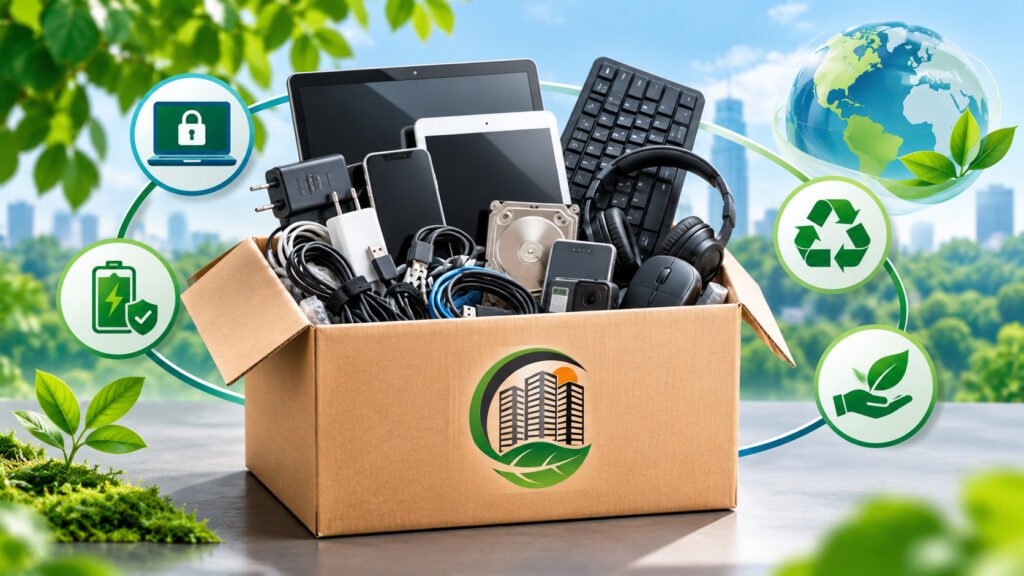
These simple precautions make electronic waste safer to transport and easier to process responsibly.
1. Identify What’s Inside Your Box
Start by checking which electronic items you want to dispose of.
A typical mixed box of e-waste might contain:
- Old mobile phones and tablets
- Chargers, adapters, and power cables
- Computer keyboards and mice
- Headphones, speakers, and small electronics
- Hard drives, USB drives, and memory cards
- Small electronic accessories and circuit boards
Most of these items can enter appropriate electronic waste recycling streams, but not every collection program accepts every category.
If you’re unsure whether an item qualifies, read our guide on what is considered electronic waste.
2. Separate Electronics by Type
Although your electronics may have accumulated in one box, organizing them into smaller groups makes handling easier.
Keep phones and other data-bearing devices together, place cables and chargers in a separate bag or compartment, and protect fragile equipment from heavier items.
Pay particular attention to batteries, broken screens, fluorescent lamps, printer cartridges, and damaged equipment, which may require separate handling.
Avoid dismantling electronics yourself. Breaking devices apart can expose sharp components, hazardous substances, or batteries that may be damaged accidentally.
3. Protect Personal and Business Data
Your old electronics may still contain photographs, documents, passwords, financial records, or confidential company information.
Before handing over any data-bearing device:
- Back up important files and information.
- Sign out of accounts and disconnect linked services where appropriate.
- Remove SIM cards and external memory cards.
- Use appropriate data-erasure procedures before recycling.
A factory reset may be useful for preparing some consumer devices, but it does not guarantee secure sanitization in every situation.
For equipment containing sensitive information, professional secure data destruction is a safer option.
Organizations can also refer to the NIST Guidelines for Media Sanitization for guidance on appropriate sanitization methods and verification.
4. Handle Batteries With Extra Care
Batteries deserve special attention when preparing electronic waste for collection.
Loose lithium-ion batteries can create a fire hazard if their terminals contact metal objects or if they are crushed or damaged.
For removable batteries, follow the collection provider’s instructions. Where appropriate, protect exposed terminals using non-conductive tape or place individual batteries in separate protective bags.
Do not force open devices to remove built-in batteries. Keep them intact and tell your recycler that the devices contain batteries.
Swollen, leaking, overheating, or visibly damaged batteries should not be placed inside an ordinary mixed electronics box. Contact a qualified battery collection or hazardous waste service for appropriate handling instructions.
For additional guidance, see the US Environmental Protection Agency’s lithium-ion battery safety recommendations.
5. Pack Your Electronics Safely
Once you’ve sorted the contents, choose a strong, dry box or another container recommended by your collection provider.
Place heavier electronics at the bottom, protect fragile items using suitable cushioning, and avoid overfilling the container.
Keep cables organized so they don’t become tangled around smaller devices.
For larger or delicate electronics, such as monitors, printers, and televisions, separate packaging or collection arrangements may be necessary.
The goal is simple: prevent avoidable damage and make the box safe to lift, move, and transport.
6. Make a Simple List of the Items
You don’t necessarily need a detailed inventory for a small household collection. However, a basic list helps communicate what you are handing over.
For example, your box may contain:
- 3 old mobile phones
- 2 computer keyboards
- 5 charging cables
- 1 external hard drive
- 4 computer mice
For businesses and institutions, maintaining an inventory can also support internal asset tracking, accountability, and disposal records.
Where secure disposal is required, ask the service provider about chain-of-custody documentation and applicable recycling or data destruction certificates.
7. Arrange Collection With a Responsible E-Waste Recycler
Your electronics are now ready for collection arrangements.
Before booking, confirm which items the recycler accepts, whether special packaging is required, and whether collection is available in your area.
Let the provider know if the box contains data-bearing devices, batteries, broken equipment, or other items requiring special handling.
Choose a reputable provider that follows applicable environmental regulations and can explain how collected electronics will be handled.
At Nalabix Eco, we support responsible electronic waste collection, recycling, and secure data destruction. Explore our e-waste collection and recycling services to learn more about available solutions and collection arrangements.
Frequently Asked Questions
Can you put different electronic devices in one box for recycling?
Yes, many everyday electronic items can be grouped in one container when a recycling provider accepts them. However, loose batteries, damaged devices, and certain hazardous components may need separate packaging or collection.
Do you need to remove batteries before e-waste collection?
Not always. Easily removable batteries may require separate handling, while built-in batteries should generally remain inside the device unless a qualified professional advises otherwise.
Can broken electronics still be collected?
Yes. Many electronics recycling services accept broken and non-working devices. Inform the collector about shattered glass, damaged batteries, or other safety concerns before collection.
Do electronics need to be cleaned before recycling?
Electronics do not need to look new. Removing ordinary dust and loose debris is helpful, but avoid washing electronic devices, exposing them to liquids, or opening their internal components.
Why is sorting electronic waste before collection important?
Sorting helps protect workers, reduce transport hazards, identify data-bearing devices, and direct different materials into appropriate recycling and treatment processes.
Final Thoughts: A Little Preparation Makes a Big Difference
A box of unwanted electronics might seem insignificant, but the way its contents are handled matters.
From protecting sensitive information to preventing battery-related hazards, proper preparation is an important first step toward responsible electronic waste recycling.
Before your next e-waste collection, remember: sort it, secure it, pack it safely, and choose a responsible recycler.
Every properly managed device contributes to reducing unnecessary waste and recovering valuable resources for future use.