
What Happens to Plastics From Electronic Equipment?
When people think about electronic waste, they often picture valuable metals such as copper, gold, and aluminium. But what about the plastic surrounding our computers, televisions, printers, and other electronic devices?
A significant amount of electronic equipment contains plastic, and what happens to that plastic after disposal depends on its composition, condition, and potential chemical contaminants.
Some plastics can be recovered and transformed into new products. Others require specialized treatment to prevent harmful substances from entering the recycling chain.
What Are WEEE Plastics?
WEEE plastics are plastic materials recovered from Waste Electrical and Electronic Equipment (WEEE), commonly known as electronic waste or e-waste.
These plastics are found in everyday electronics, including:
- Computer and laptop casings
- Television and monitor housings
- Printers, scanners, and keyboards
- Electrical switches and connectors
- Household appliances
- Cables and electronic accessories
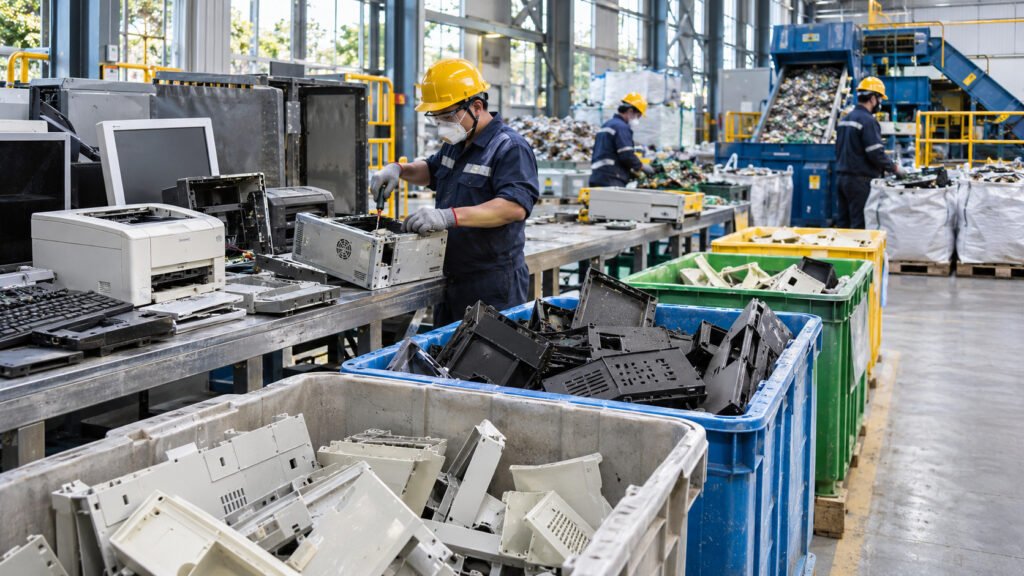
Common plastics used in electronic equipment include ABS (acrylonitrile butadiene styrene), HIPS (high-impact polystyrene), polypropylene (PP), and polycarbonate (PC).
Each material has different properties, which affect how it can be separated, processed, and recycled.
For a broader understanding of the materials found inside electronics, explore The Science Behind Electronics Recycling.
What Happens to Plastics During E-Waste Recycling?
Once unwanted electronics reach an appropriate recycling facility, their plastic components may pass through several processing stages.
1. Collection and Dismantling
Electronic equipment is collected and assessed before processing.
Recyclers remove or separate relevant components, including batteries, circuit boards, cables, metals, and plastic housings. Components requiring special treatment must be managed appropriately.
This helps prevent contamination and prepares different materials for further recovery.
2. Sorting Different Plastics
Not all electronic plastics can be recycled together.
Recycling facilities may use manual sorting, identification technologies, and density-based separation to distinguish different plastic types and identify potentially contaminated materials.
Effective separation is essential because mixing incompatible plastics can reduce the quality of recycled products.
3. Shredding and Cleaning
Suitable plastic materials may be shredded into smaller pieces.
Depending on the recycling process, the shredded material can then be cleaned to remove dust, metal fragments, and other impurities.
Additional sorting may be required to achieve the quality needed for recycling.
4. Processing Into Recycled Material
Plastic fractions that meet the necessary safety and quality requirements can be melted, filtered, and processed into pellets or other reusable raw materials.
These recycled materials may be used to manufacture items such as equipment housings, industrial components, and other plastic products, depending on applicable product standards.
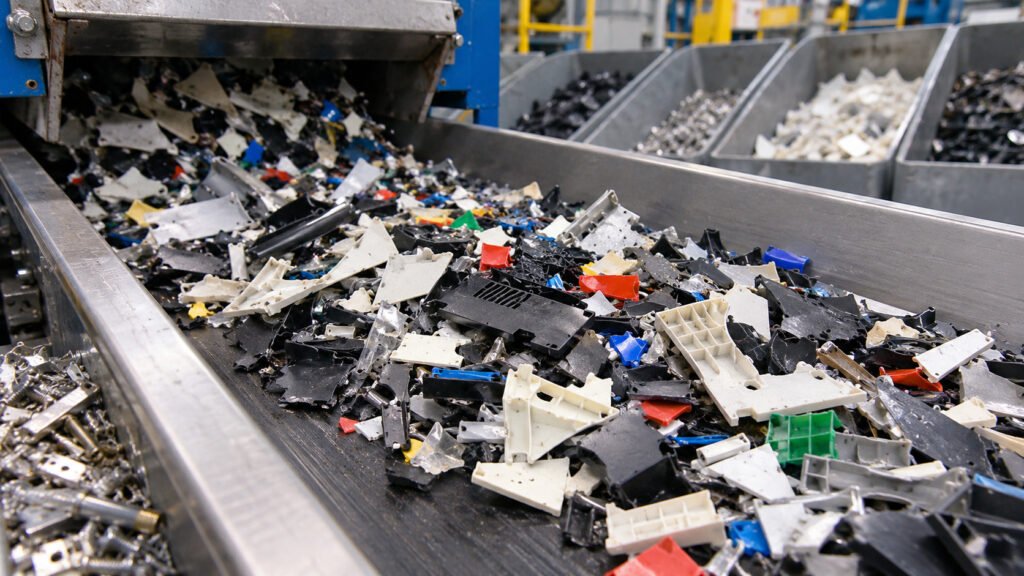
However, not every plastic recovered from electronic waste is suitable for recycling into new products.
Why Do Some Electronic Plastics Require Special Handling?
One of the biggest challenges in WEEE plastic recycling is the presence of chemical additives.
Some electronic plastics contain brominated flame retardants (BFRs), which have been used to reduce the flammability of electrical and electronic products.
Certain flame retardants are regulated because they can persist in the environment and present risks to human health and ecosystems.
If contaminated plastics are recycled without adequate identification and separation, restricted substances could enter new products.
For example, the European Union’s WEEE Directive requires plastics containing brominated flame retardants to be removed during specified treatment operations.
The UK’s WEEE Treatment Guidance also explains how plastic fractions containing persistent organic pollutants must be identified and managed.
This does not mean all electronic plastics are hazardous. It means that proper identification and separation are necessary before determining whether a plastic is safe to recycle.
What Happens to Plastics That Cannot Be Recycled?
Some WEEE plastics cannot be recycled through conventional methods because of contamination, incompatible material mixtures, poor material quality, or hazardous substances.
These materials require an appropriate alternative treatment or disposal route.
Where regulated persistent organic pollutants are present above applicable limits, treatment may need to destroy or irreversibly transform those substances rather than return them to circulation.
The Basel Convention provides an international framework for the environmentally sound management and transboundary movement of relevant hazardous wastes, including certain electronic waste materials.
The appropriate treatment method depends on the material and the laws of the country concerned.
Why Is Recycling WEEE Plastics Important?
Responsible recycling of plastics from electronic equipment can deliver several environmental and economic benefits:
- Resource conservation: Recovered plastics can reduce demand for virgin plastic materials.
- Waste reduction: Suitable plastics can be diverted from disposal and returned to productive use.
- Pollution prevention: Controlled treatment helps prevent hazardous substances from spreading through unsafe recycling practices.
- Circular economy: Recovered materials can support manufacturing instead of being treated solely as waste.
However, these benefits depend on proper collection, separation, contamination control, and responsible downstream processing.
Learn more about how material recovery contributes to sustainability in The Economics of Electronics Recycling.
Frequently Asked Questions
Can plastic from electronic waste be recycled?
Yes. Many electronic plastics can be recycled when they are correctly identified, separated, and shown to meet applicable safety and quality requirements.
Are all plastics from electronic equipment hazardous?
No. Some contain hazardous additives, while others can be safely recovered. Their composition and contamination levels determine the appropriate treatment.
Can recycled electronic plastics be used to make new electronics?
Yes. Suitable recycled plastics can be used in new electronic equipment and other manufactured products when they meet the relevant technical and chemical safety standards.
Can WEEE plastics go into normal household plastic recycling?
Generally, they should not. Plastics attached to discarded electronics should enter an appropriate e-waste collection system, where they can be assessed and separated.
Final Thoughts
The plastic casing around an old computer or television may appear insignificant, but it represents a recoverable resource that requires careful management.
From dismantling and sorting to recycling and specialized treatment, every stage helps determine whether WEEE plastics can safely return to manufacturing or require another controlled waste-management route.
The goal is not simply to recycle more plastic, but to recover materials safely without carrying hazardous substances into the next generation of products.
At Nalabix Eco, we support responsible electronic waste management, material separation, and recycling through appropriate downstream channels.
Discover our E-Waste Recycling Services to learn more about responsible electronics disposal.