
Where Can You Take Electronics for Recycling?
Old phones, broken laptops, televisions, printers, and other unwanted electronics often end up stored in drawers, offices, or storerooms because people are unsure where to take them.
Fortunately, there are several ways to recycle electronics responsibly, whether you are disposing of one device or managing electronic waste from an entire organization.
Quick answer: You can take unwanted electronics to authorized e-waste recycling centres, municipal collection facilities, participating electronics retailers, manufacturer take-back programmes, or designated community collection points. Professional e-waste recyclers may also arrange collection directly from homes, businesses, and institutions.
The right option depends on your location, the type of equipment, and the recycling services available.
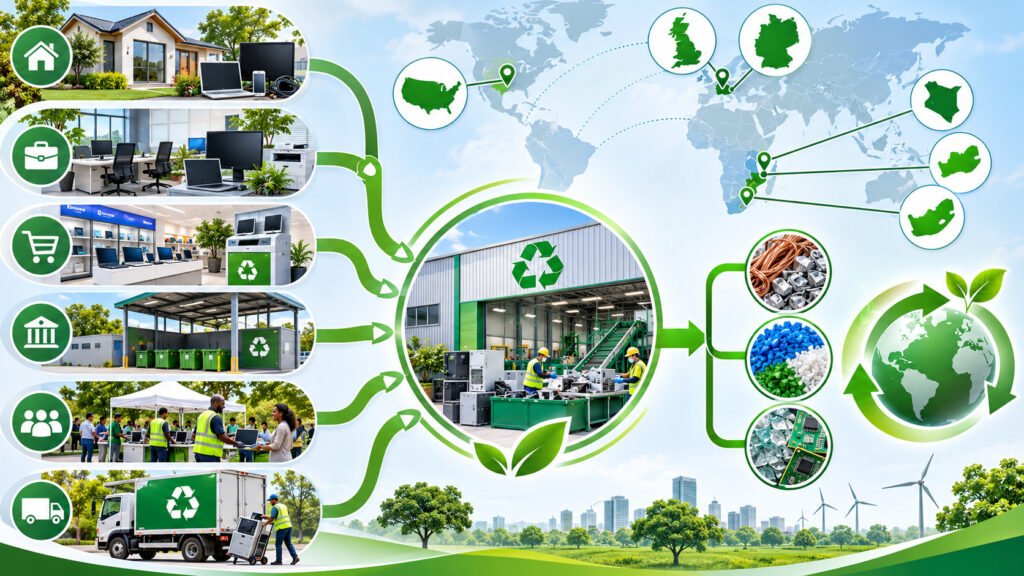
1. Where Can You Recycle Old Electronics?
Authorized E-Waste Recycling Centres
Specialized electronic waste recycling centres are among the most suitable places to take unwanted electronics.
These facilities collect and process electronic equipment, separating recoverable materials such as copper, aluminium, steel, plastics, and circuit boards. Components requiring special treatment are handled through appropriate recycling or disposal processes.
Before visiting, confirm which devices the facility accepts and whether an appointment is necessary.
Learn more about how electronic recycling works.
Municipal Recycling and Waste Collection Centres
In many cities, local authorities provide designated electronic waste collection points or periodic collection services.
Depending on local arrangements, these may accept computers, televisions, printers, small appliances, and other household electronics.
However, not every municipal recycling centre accepts electrical equipment. Check with your city council, municipality, or local waste management authority before visiting.
Electronics Retailers and Manufacturers
Some electronics shops and manufacturers operate take-back programmes for used devices.
These programmes may accept old phones, computers, batteries, or appliances, sometimes when customers purchase replacements.
Within the European Union, the Waste Electrical and Electronic Equipment (WEEE) Directive establishes collection and take-back responsibilities, including certain retailer obligations.
Important: Retailer acceptance rules vary by country, product category, and programme. Always confirm eligibility before bringing your equipment.
Community E-Waste Collection Events
Local governments, schools, environmental organizations, and recycling companies sometimes organize electronic waste collection drives.
These events can provide convenient opportunities for households and communities to dispose of unwanted electronics without travelling to a permanent recycling facility.
Look for announcements from reputable local authorities or authorized recycling partners.
Professional E-Waste Collection Services
Transporting large quantities of obsolete electronics can be difficult, particularly for offices, schools, hospitals, and businesses.
Professional e-waste management companies can arrange scheduled collection and suitable transportation to recycling or treatment facilities.
Depending on the service agreement, they may also provide:
- Electronic waste sorting and responsible recycling.
- Secure data sanitization or physical destruction.
- Asset tracking and chain-of-custody records.
- Recycling or destruction certificates.
For example, Nalabix Eco’s e-waste pickup and recycling services support electronic waste collection and responsible processing in Kenya.
2. How Do You Find an Electronics Recycling Centre Near You?
Finding a suitable recycling service usually begins with checking local government resources and recognized recycling programmes.
You can search online using phrases such as “electronics recycling near me,” “e-waste drop-off centre,” or “where to recycle old computers in [your city].”
Depending on your region, these resources may help:
| Region | Where to look |
|---|---|
| United States | US EPA electronics recycling guidance |
| European Union | European Commission WEEE guidance and national collection systems |
| United Kingdom | Recycle Your Electricals recycling locator |
| Africa, Asia and other regions | Local environmental regulators, municipal authorities, producer take-back schemes, and authorized recycling providers |
These resources are starting points rather than a complete worldwide directory. Availability and acceptance requirements vary by location.
3. What Types of Electronics Can You Take for Recycling?
Many everyday electrical and electronic products can enter specialist recycling programmes.
Common examples include:
| Category | Examples |
|---|---|
| Computers | Laptops, desktops, servers, keyboards |
| Mobile devices | Smartphones, tablets, chargers |
| Office equipment | Printers, scanners, photocopiers |
| Entertainment devices | Televisions, monitors, speakers |
| Networking equipment | Routers, switches, modems |
| Household appliances | Microwaves, kettles, electric fans |
| Storage devices | Hard drives, SSDs, USB drives |
| Accessories | Cables, adapters, power supplies |
Acceptance does not necessarily mean that every component can be recycled. Some parts require specialist treatment, while others may have limited recovery options.
Certain equipment, including refrigerators, damaged batteries, and older cathode-ray-tube displays, may need dedicated handling arrangements.
For more examples, see What Is Considered E-Waste?.
4. What Should You Do Before Taking Electronics for Recycling?
Before handing over electronic equipment, take a few precautions to protect personal information and ensure safe handling.
Protect your data. Back up important files, sign out of accounts, remove SIM cards and memory cards where appropriate, and securely erase personal information from devices.
For business computers, hard drives, and other storage equipment containing confidential information, use appropriate verified sanitization or physical destruction methods.
Read more about secure data wiping.
Check batteries. Battery-powered electronics may have separate collection requirements. Do not force open devices or attempt to remove built-in batteries if doing so could damage them.
Lithium-ion batteries should not go into ordinary household rubbish or mixed recycling bins because they can create fire hazards. Swollen or damaged batteries require specialist handling. See the US EPA’s lithium-ion battery safety guidance.
Confirm collection requirements. Ask the recycler whether equipment must be packed separately, whether collection charges apply, and whether documents will be provided.
5. How Can You Tell Whether an Electronics Recycler Is Responsible?
Not every business collecting discarded electronics has the facilities or arrangements necessary to manage them properly.
Before choosing a recycler, consider whether the organization:
- Holds the relevant environmental permits or authorizations required in its jurisdiction.
- Explains how electronics are processed and where separated materials go.
- Has appropriate arrangements for hazardous components and downstream recycling.
- Offers suitable data protection measures for information-bearing devices.
- Provides collection records or certificates when required.
In the United States, R2 and e-Stewards are recognized third-party electronics recycling certification standards. The US Environmental Protection Agency provides more information about certified electronics recyclers.
Certification schemes differ internationally, so always check the local regulatory requirements and verify any certifications claimed.
6. Can You Donate Electronics Instead of Recycling Them?
Yes. If an electronic device still works and can be used safely, repairing or donating it may extend its useful life.
Schools, community organizations, charities, and refurbishment programmes may accept suitable working devices.
However, donation is not always appropriate. Devices containing sensitive data must be securely sanitized, and equipment that is unsafe, beyond repair, or subject to a destruction requirement should follow the appropriate recycling or destruction process.
Reuse and recycling serve different purposes, but both can help reduce unnecessary disposal when performed responsibly.
7. Why Does Choosing the Right Recycling Location Matter?
Electronics contain recoverable materials, but some also contain substances that require careful management.
Improper handling can contribute to pollution, unsafe working conditions, and the loss of useful resources.
According to the Global E-waste Monitor 2024, the world generated approximately 62 million tonnes of electronic waste in 2022, but only 22.3% was documented as formally collected and recycled.
Improving access to responsible collection and recycling services is therefore an important part of managing electronic waste worldwide.
Read more about what happens when electronics end up in landfills.

Frequently Asked Questions
Where can I recycle electronics for free?
Some municipal facilities, retailer take-back programmes, and community recycling events accept certain electronics without charge. Free collection depends on the location, equipment type, and provider’s conditions.
Can I put electronics in my household recycling bin?
Generally, electronic devices should be kept out of ordinary mixed recycling bins unless your local collection programme specifically accepts them. Use designated e-waste collection services instead.
Where can I recycle a broken laptop?
You can contact an authorized electronics recycler, a municipal e-waste centre, or a participating retailer. Remember to protect any personal data stored on the laptop before handing it over.
Can businesses arrange electronic waste collection?
Yes. Professional e-waste recyclers can arrange collections from offices, schools, institutions, and other facilities. Businesses should also confirm their requirements for asset records, data destruction, and recycling documentation.
What happens after electronics are collected?
Depending on their condition and the owner’s instructions, electronics may undergo testing, secure data destruction, dismantling, material separation, recycling, or specialist treatment. Not all devices follow the same process.