When an old computer reaches the end of its useful life, not all its components are recycled in the same way. One important component that requires special attention is the motherboard, the main circuit board connecting a computer’s processor, memory, storage and other hardware.
Unlike ordinary metal or plastic scrap, motherboards contain a complex mixture of recoverable metals, electronic components and potentially hazardous substances.
So why are old motherboards handled separately? The main reasons are to recover valuable materials, prevent environmental contamination and ensure that electronic components receive appropriate recycling treatment.
1. Motherboards Contain Valuable Recoverable Metals
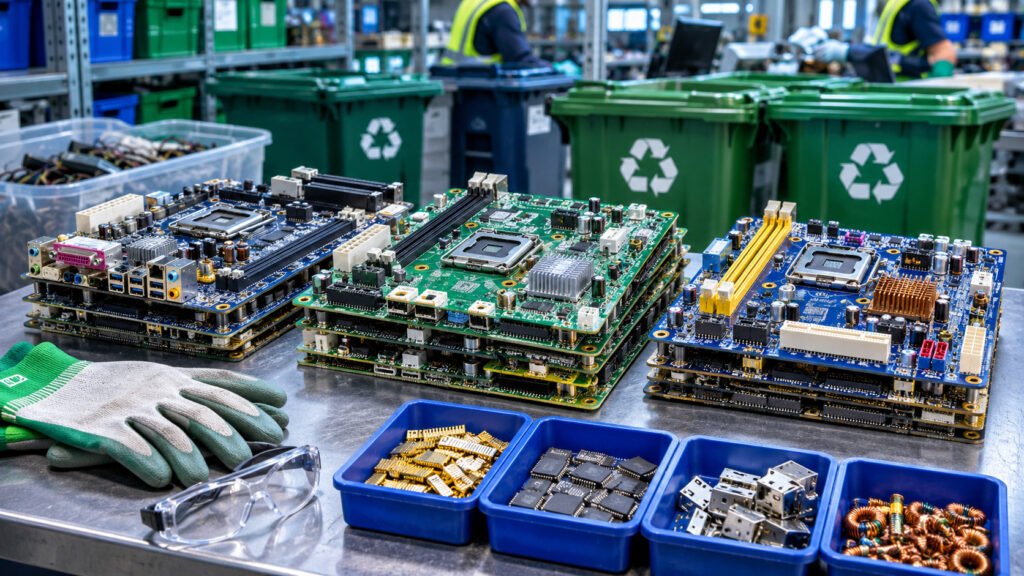
Old motherboards are more than discarded electronic components. They contain materials that can be recovered and used in manufacturing new products.
Common metals found in motherboards include:
- Copper: Used in electrical pathways and connections.
- Gold: Found in small quantities in certain contacts and connectors.
- Silver: Used in some electronic connections and components.
- Tin: Commonly found in solder.
- Nickel and other metals: Used in various electronic components and finishes.
The quantities and concentrations vary depending on the motherboard’s age and design.
Separating motherboards makes it easier to direct these materials to specialized recovery facilities instead of mixing them with ordinary scrap.
This process is closely related to urban mining, which involves recovering useful materials from discarded products rather than relying entirely on newly mined resources.
2. Some Motherboards Contain Hazardous Substances
Motherboards can contain substances that require careful management.
Older circuit boards may contain lead-based solder, while certain circuit board materials contain brominated flame retardants. Improper processing can expose workers and the surrounding environment to harmful substances.
Unsafe practices such as open burning, uncontrolled heating or informal chemical extraction can release pollutants into the air, soil and water.
The UK Environment Agency’s guidance on electronic waste classification explains why printed circuit boards require particular attention during waste treatment.
Separating motherboards helps recyclers control these risks and direct the boards to facilities equipped for appropriate treatment.
3. Motherboards Require Specialized Recycling Processes
Motherboards are made from several materials tightly combined into one structure. They cannot be recycled as easily as a piece of steel or aluminium.
Depending on the recycling facility and board composition, treatment may involve removing selected components, mechanical separation and specialized metal recovery processes.
These processes help separate valuable metals from resins, fiberglass and other materials.
For a closer look at these technologies, read The Science Behind Electronics Recycling.
Keeping motherboards separate from other recyclable materials improves sorting and helps recyclers choose suitable processing methods.
4. Separate Handling Supports Responsible E-Waste Management
Separating motherboards also helps recycling facilities organize materials, track waste streams and manage downstream processing.
For example, batteries attached to motherboards may need removal and a separate recycling route. Other components may require assessment before processing.
International guidance, including the Basel Convention’s work on e-waste, emphasizes environmentally sound management of discarded electronics.
However, waste classification and recycling requirements differ between countries, so facilities must follow their applicable local regulations.
What Happens to Motherboards After Collection?
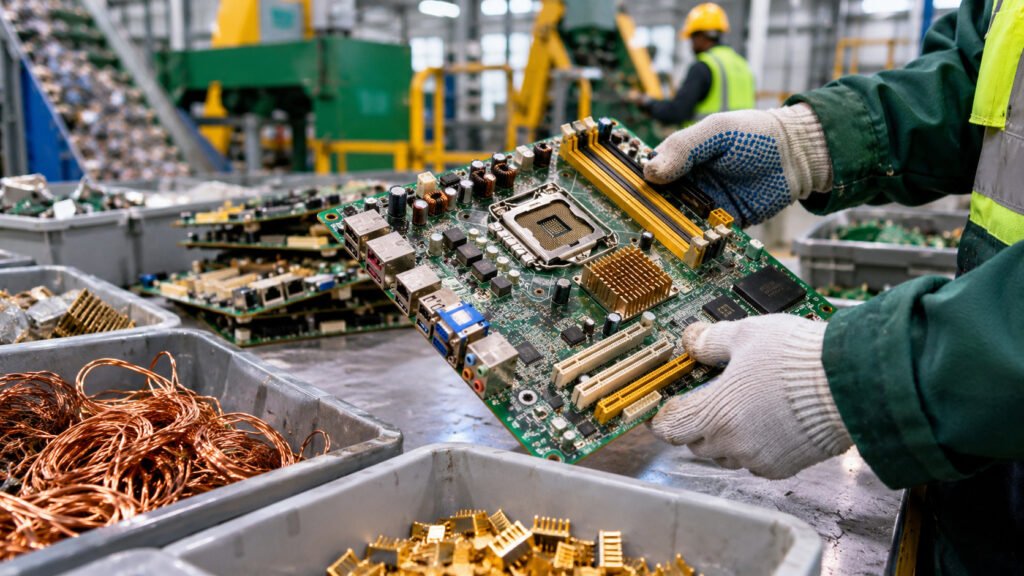
During responsible computer recycling, motherboards typically pass through several stages.
1. Collection and inspection: Computers and electronic equipment are collected, inspected and assessed for reuse, component recovery or recycling.
2. Controlled dismantling: Motherboards are removed from computers. Batteries, storage devices and other components requiring separate handling are identified.
3. Sorting and segregation: Circuit boards are sorted according to their type, composition and appropriate downstream processing route.
4. Material recovery: Boards are transferred to suitable recycling facilities, where recoverable materials can be separated and processed.
Whether equipment is reused or destroyed depends on its condition, the owner’s authorization and applicable requirements. Some organizations require complete destruction rather than refurbishment.
Learn more about the overall process through Nalabix Eco’s Computer Recycling Services.
Frequently Asked Questions
Do old motherboards contain gold?
Yes, many motherboards contain small quantities of gold, particularly in certain connectors and electrical contacts. However, the amount varies, and recovery generally requires specialized industrial processes.
Can motherboards go into regular household waste?
Motherboards should be directed to an appropriate electronic waste collection or recycling service rather than ordinary household rubbish. Local disposal regulations may also prohibit mixing them with general waste.
Do motherboards store personal information?
Most computer files are stored on HDDs or SSDs rather than the motherboard itself. However, some systems contain onboard non-volatile memory or embedded storage. Data-bearing components should be identified and handled securely before recycling.
Can old motherboards be reused instead of recycled?
Yes. Functional motherboards may be suitable for repair or reuse when authorized by their owners. Damaged, obsolete or destruction-designated boards can instead be directed to appropriate recycling processes.
Key Takeaway
Old motherboards are handled separately because they contain both valuable recoverable materials and substances that require controlled treatment.
Proper separation supports safer recycling, improves material recovery and reduces the risks associated with poorly managed electronic waste.
At Nalabix Eco, we support responsible electronic waste collection, dismantling, secure data destruction and recycling through appropriate downstream channels.
Have old computers, motherboards or other electronic equipment requiring responsible disposal? Contact Nalabix Eco to discuss suitable e-waste management arrangements for your location.