Electronic waste, commonly known as e-waste or Waste Electrical and Electronic Equipment (WEEE), is becoming an important environmental issue across Africa. As access to smartphones, computers, household appliances, solar equipment, and digital infrastructure expands, more electronic products eventually reach the end of their useful lives.
But what happens to these electronics once they are no longer needed?
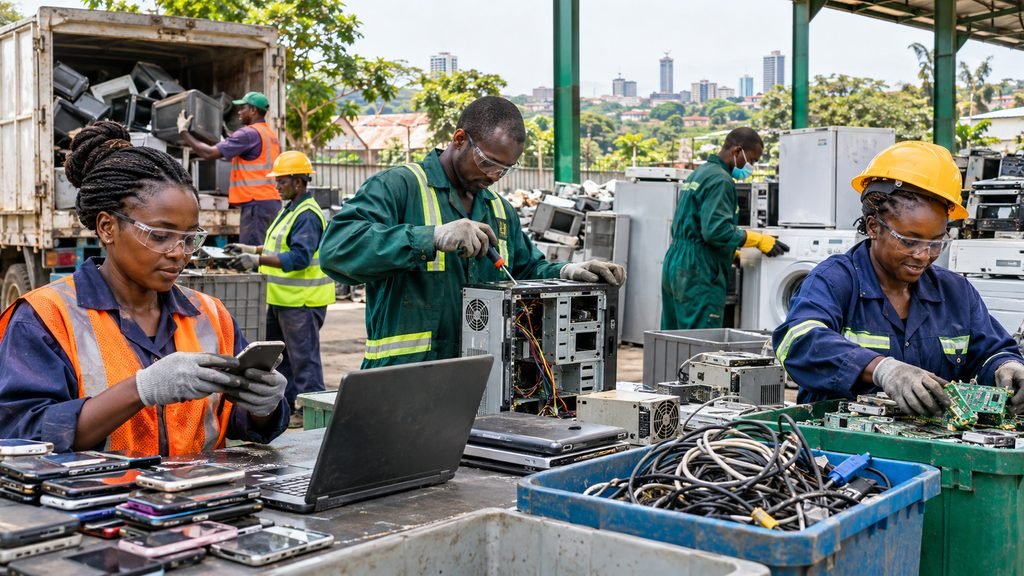
Across African markets, e-waste is collected through informal collectors, recycling companies, designated collection centres, producer take-back programmes, and organised institutional pickups. After collection, electronic equipment may be assessed for reuse, securely processed, dismantled, recycled, or transferred for specialised treatment.
The methods differ between countries, depending on regulations, available infrastructure, collection networks, and recycling capacity.
How Much E-Waste Does Africa Generate?
According to the Global E-waste Monitor 2024, Africa generated approximately 3.5 million metric tonnes of electronic waste in 2022, equivalent to about 2.5 kilograms per person.
Yet only 0.7% was documented as formally collected and recycled during that year.
This does not mean the remaining electronics were all dumped. Many devices circulate through informal repair, second-hand markets, reuse networks, and material recovery activities that are not fully captured in official recycling statistics.
The figures nevertheless highlight the need for better collection systems, safer processing practices, and more reliable recycling records.
For a broader understanding, explore WEEE and e-waste trends in Africa.
How Is Electronic Waste Collected in Africa?
E-waste collection takes several forms across African countries.
1. Informal Collection and Repair Networks
Informal collectors, local repair technicians, and scrap dealers play a significant role in recovering unwanted electronics.
They may collect devices from households, businesses, repair workshops, and second-hand markets.
These networks help extend the lives of electronic products and recover reusable materials. However, where collectors lack appropriate equipment or access to safe treatment facilities, hazardous components may be handled improperly.
The opportunity is to connect existing collection networks with trained handlers and regulated recycling facilities rather than overlooking their contribution.
2. Formal Recycling and Collection Centres
Formal e-waste collection involves businesses, collection centres, and recycling operators working within applicable environmental requirements.
Depending on local arrangements, households and organisations can arrange collection services or deliver unwanted electronics to designated facilities.
Professional collection may include equipment identification, sorting, safe packaging, transportation, inventory recording, and transfer to appropriate processing facilities.
Learn more about e-waste pickup and recycling services.
3. Manufacturer and Retailer Take-Back Programmes
Some manufacturers, importers, retailers, and producer responsibility organisations operate systems for collecting electronics after use.
These arrangements may allow consumers to return certain products through participating stores, authorised partners, or collection campaigns.
Such programmes are often associated with Extended Producer Responsibility (EPR), which makes producers responsible for specified aspects of managing products at the end of their lives.
The availability and requirements of these programmes vary by country.
4. Corporate and Institutional E-Waste Collection
Businesses, schools, hospitals, government institutions, telecommunications providers, and data centres often generate larger quantities of obsolete electronics.
Their collection requirements may include secure transportation, inventory management, data destruction, and documented disposal.
These activities are commonly managed through IT Asset Disposition (ITAD) and reverse logistics services.
Unlike ordinary household collection, institutional projects may require serial-number tracking, chain-of-custody records, and certificates confirming completed services.
What Happens to E-Waste After Collection?
Responsible electronic waste management involves more than gathering unwanted devices. Equipment should follow a controlled process appropriate to its condition, composition, and intended outcome.
Step 1: Collection Arrangements
The process begins when an individual, business, or institution contacts a collection service or uses an approved drop-off point.
For scheduled collections, the type of equipment, estimated quantity, location, and handling requirements are confirmed before collection takes place.
Step 2: Transportation and Receiving
Collected electronics are transported to an appropriate facility, with particular care given to batteries, fragile equipment, damaged devices, and potentially hazardous components.
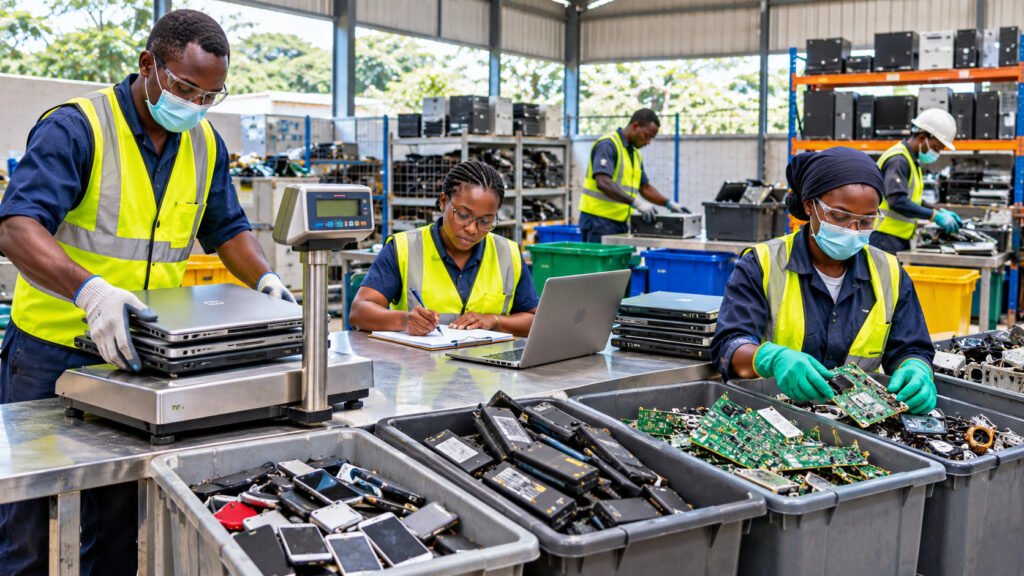
Upon arrival, equipment may be weighed, registered, and separated according to type and condition.
Step 3: Assessment and Sorting
Devices are assessed to determine the appropriate next stage.
Depending on their condition, the owner’s instructions, and local requirements, electronic equipment may be directed towards repair, refurbishment, reuse, dismantling, or recycling.
Reuse is not always permitted. Some organisations specifically require obsolete equipment to be completely destroyed rather than repaired or redistributed. Such instructions must be respected.
Step 4: Secure Data Handling
Computers, servers, smartphones, hard drives, and solid-state drives may contain confidential information even when they are no longer operational.
Before reuse, recycling, or destruction, data-bearing equipment should undergo an appropriate, documented data sanitisation or destruction process.
Methods can include verified data wiping or physical destruction, depending on the storage technology and security requirements.
The NIST SP 800-88 Revision 2 Guidelines for Media Sanitization provide internationally recognised guidance.
Read more about secure data destruction.
Step 5: Dismantling and Material Recovery
Electronics designated for recycling may be carefully dismantled to separate recoverable materials, including steel, aluminium, copper, plastics, and circuit boards.
Hazardous fractions, such as certain batteries, mercury-containing components, and other regulated materials, require appropriate handling and treatment.
Not every recycling facility can process every material. Some components must be transferred to specialised downstream facilities.
Step 6: Documentation and Final Treatment
Depending on the service and local requirements, the final stage may involve providing collection records, recycling reports, asset inventories, or certificates of destruction.
These documents help organisations demonstrate how their electronic waste was managed.
A collection receipt alone should not be confused with proof that all materials have completed recycling or final treatment.
How Does E-Waste Management Differ Across African Countries?
Africa does not operate under one unified e-waste management system. Every country has its own regulatory framework, infrastructure, and collection challenges.
Kenya and Rwanda: Developing Organised Collection Networks
In Kenya, formal electronic waste management includes dedicated collection services, recycling facilities, and environmental oversight by the National Environment Management Authority (NEMA).
The Kenyan NEMA e-waste guidelines address the identification, collection, sorting, recycling, and disposal of electrical and electronic waste.
Rwanda has developed dedicated collection and recycling arrangements, including initiatives supporting public participation and formal processing.
The Government of Rwanda’s e-waste collection initiative demonstrates efforts to connect consumers with designated collection facilities.
Ghana and Nigeria: Informal Collection and Producer Responsibility
In Ghana, informal collection and material recovery have historically played important roles in the e-waste economy.
The country has also developed legal and financial mechanisms to support safer recycling. Its earlier electronic waste legislation was incorporated into the Environmental Protection Act, 2025.
The Ghana E-Waste Fund supports environmentally sound electronic waste management.
Nigeria similarly has extensive repair, reuse, and informal collection networks alongside formal recycling operations.
Its National Environmental (Electrical and Electronic Sector) Regulations, 2022, provide a framework that includes extended producer responsibility and environmental management requirements.
South Africa: Producer Responsibility and Formal Recycling
South Africa has established an Extended Producer Responsibility framework covering electrical and electronic equipment.
The framework places defined responsibilities on relevant producers and supports collection, recycling, and reporting systems.
More information is available through South Africa’s government EPR programme.
Egypt: Connecting Informal and Formal Recycling
Egypt has been working to strengthen its formal electronic waste management systems while addressing the role of informal collection and treatment.
Initiatives focus on improved collection, recycling infrastructure, regulatory implementation, and better links between informal participants and formal processing facilities.
The Circular Electronics Initiative in Egypt provides further information about these efforts.
These examples show that African countries share several challenges but are developing different approaches to addressing them.
Why Is Proper E-Waste Handling Important?
Electronic products contain useful materials, but some also contain substances that can harm people and the environment when released through unsafe handling.
Open burning of electrical cables, uncontrolled chemical recovery, unsafe dismantling, and dumping can expose workers and surrounding communities to hazardous substances.
According to the World Health Organization, unsafe e-waste recycling can release toxic substances, including lead and mercury, and create significant health risks, particularly for children and pregnant women.
Responsible recycling helps reduce these risks while allowing valuable resources to be recovered for further use.
Can E-Waste Be Transported Between African Countries?
Yes, but cross-border movements of electronic waste are subject to applicable national laws and international controls.
Under the Basel Convention e-waste amendments, which took effect on 1 January 2025 for most Parties, transboundary movements of e-waste are subject to prior informed consent procedures.
This means that regulated shipments require the necessary notifications and approvals before movement.
Used electronics intended for direct reuse must also be correctly distinguished from waste, with supporting evidence where required.
Cross-border recycling should therefore be arranged through appropriately authorised operators rather than assuming electronic scrap can be shipped freely between countries.
What Are the Main Challenges Facing E-Waste Collection in Africa?
Despite increasing awareness, several obstacles continue to affect collection and recycling systems.
These include limited collection infrastructure outside major urban areas, high transportation and treatment costs, insufficient public awareness, unsafe recovery practices, and limited access to specialised recycling technology.
In some markets, poor recordkeeping also makes it difficult to determine how much e-waste is generated, collected, reused, or recycled.
Improving these systems requires collaboration between governments, electronics producers, collection operators, recycling businesses, repairers, and consumers.
Importantly, progress does not depend on recycling alone. Repair, responsible reuse, longer product lifespans, and safer material recovery are also part of a circular electronics economy.
Frequently Asked Questions
Who collects electronic waste in Africa?
Electronic waste is collected by informal collectors, authorised recycling companies, designated collection centres, producer take-back programmes, and institutional waste management providers. The available options depend on the country and location.
Is all e-waste collected in Africa recycled?
No. Collected electronics may be repaired, reused, dismantled, recycled, or transferred for specialised treatment. Some materials cannot be recovered using available technologies, while improperly managed waste may be dumped or processed unsafely.
Do African countries have e-waste recycling regulations?
Yes. Several countries, including Kenya, Ghana, Nigeria, Rwanda, and South Africa, have introduced policies, laws, regulations, or guidelines addressing electronic waste. Their scope and implementation differ.
How can businesses dispose of electronic waste responsibly?
Businesses should identify unwanted electronic assets, protect stored information, arrange collection through an appropriate service provider, and request relevant records confirming the collection, processing, or destruction carried out.
Conclusion: Building Better E-Waste Collection Systems Across Africa
Electronic waste collection across Africa is evolving as countries expand digital access, strengthen environmental frameworks, and develop more organised recycling systems.
Informal collectors, repair businesses, formal recyclers, governments, and electronics producers all have roles to play in improving how unwanted equipment is handled.
The priority is to make collection more accessible, protect workers and communities, recover useful materials, and ensure that hazardous components receive appropriate treatment.
Responsible e-waste management begins with proper collection and continues until equipment and its materials have reached a verified, appropriate destination.
Responsible E-Waste Collection with Nalabix Eco
Nalabix Eco supports responsible electronic waste collection, recycling, IT asset disposal, and secure data destruction in Kenya.
Individuals, businesses, and institutions can contact Nalabix Eco to discuss the collection and responsible handling of unwanted electrical and electronic equipment.
Email: info@nalabix.com
Phone: +254 715 728 355
Website: https://nalabix.com/