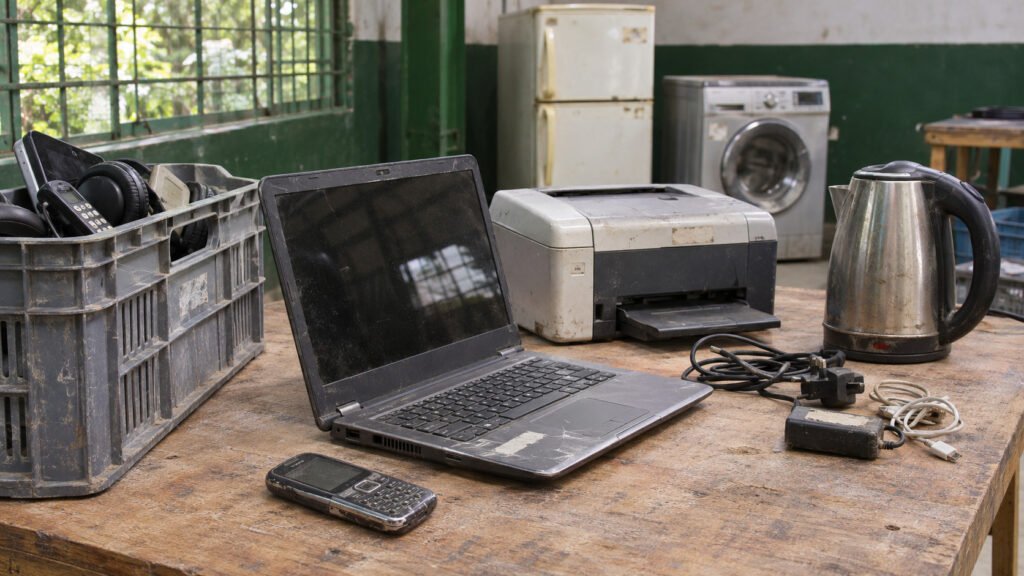
WEEE stands for Waste Electrical and Electronic Equipment. It means electrical or electronic equipment that has been discarded, such as old phones, laptops, refrigerators, televisions and washing machines. In everyday language, WEEE is commonly called e-waste or electronic waste.
A cracked phone, a broken kettle and a working printer your office has decided to discard can all become WEEE. What matters is what happens to the item. A laptop you still use, keep as a spare or pass on to someone who will use it can stay in service. Once you discard it, it enters the e-waste stream.
What counts as WEEE?
WEEE covers everyday appliances as well as computers and other electronic devices. The European Union’s WEEE Directive groups equipment into six categories. These categories are a handy way to recognise common types of e-waste. Local collection rules and classifications can vary.
| Equipment category | Common examples |
|---|---|
| Cooling and temperature-control equipment | Refrigerators, freezers, air conditioners and heat pumps |
| Screens and monitors | Televisions, computer monitors and laptops |
| Lamps | Fluorescent tubes, compact fluorescent bulbs and LED lamps |
| Large equipment | Washing machines, dishwashers and solar panels |
| Small equipment | Kettles, toasters, electric shavers and electronic toys |
| Small IT and telecom equipment | Mobile phones, routers and small printers |
What does the crossed-out wheelie bin mean?
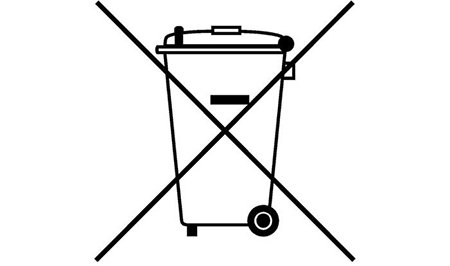
The crossed-out wheelie bin symbol means the equipment should be collected separately from ordinary household rubbish. If you see it on a device, look for a local electronics collection point, a retailer take-back programme or a specialist e-waste recycler. Check whether the programme accepts your item before taking it in.
Why does WEEE need separate collection?
A discarded device can contain materials worth recovering, such as metals, plastics and glass, alongside parts that need specialist handling. A refrigerator, for example, contains refrigerant that needs to be handled properly.
Separate collection allows recyclers to recover useful materials and manage hazardous components safely.The scale is significant. According to the Global E-waste Monitor 2024, the world generated 62 million tonnes of e-waste in 2022. Only 22.3% was documented as formally collected and recycled in an environmentally sound manner.
How do you dispose of old electronics responsibly?
- Check whether the item can still be used. If it works or can be repaired, keeping it in use or passing it on for reuse can extend its life. For workplace equipment, follow your organisation’s policy on reuse and disposal.
- Protect the data before handover. Back up anything you need and securely erase personal information from phones, laptops and other devices that store data. For retired business equipment, agree on the sanitisation or physical destruction method and the records you need before collection.
- Confirm the right collection route. Check with your local waste authority, retailer or recycler. Tell the provider what you have and ask about separate handling for loose batteries, equipment with damaged batteries, fluorescent lamps or cooling equipment.
What happens to WEEE after collection?
The recycler sorts equipment by type and determines how to process it. Suitable items may be prepared for reuse where the owner authorises it. If a client requires full destruction of retired equipment, agree on that before collection. Equipment sent for recycling is dismantled or otherwise processed to separate recoverable materials and direct components that need specialist treatment to the appropriate facility.
Frequently asked questions
Is WEEE the same as e-waste?
Yes, in everyday use. E-waste is the familiar term, while WEEE is the formal abbreviation used in electronics waste regulations and reporting. The specific rules depend on where you are.
Can a working device be WEEE?
Yes. A working device can become WEEE when it is discarded. A functioning laptop passed directly to someone for continued use is a different situation from a laptop handed over for disposal.
Are loose batteries WEEE?
Loose batteries typically go through a dedicated battery collection programme. For a device with a built-in battery, ask the electronics recycler how to hand it over. Keep lithium-ion batteries and devices containing them out of household rubbish and mixed recycling bins.
Arrange e-waste collection with Nalabix Eco
Nalabix Eco kenya can help with e-waste collection, responsible recycling and secure data destruction. Send us your location, the types of equipment, the estimated quantity and any destruction or documentation requirements. We’ll confirm the arrangements before collection. Contact Nalabix Eco · +254 715 728 355 · info@nalabix.com. Nalabix