
The Science Behind Electronics Recycling | How It Works
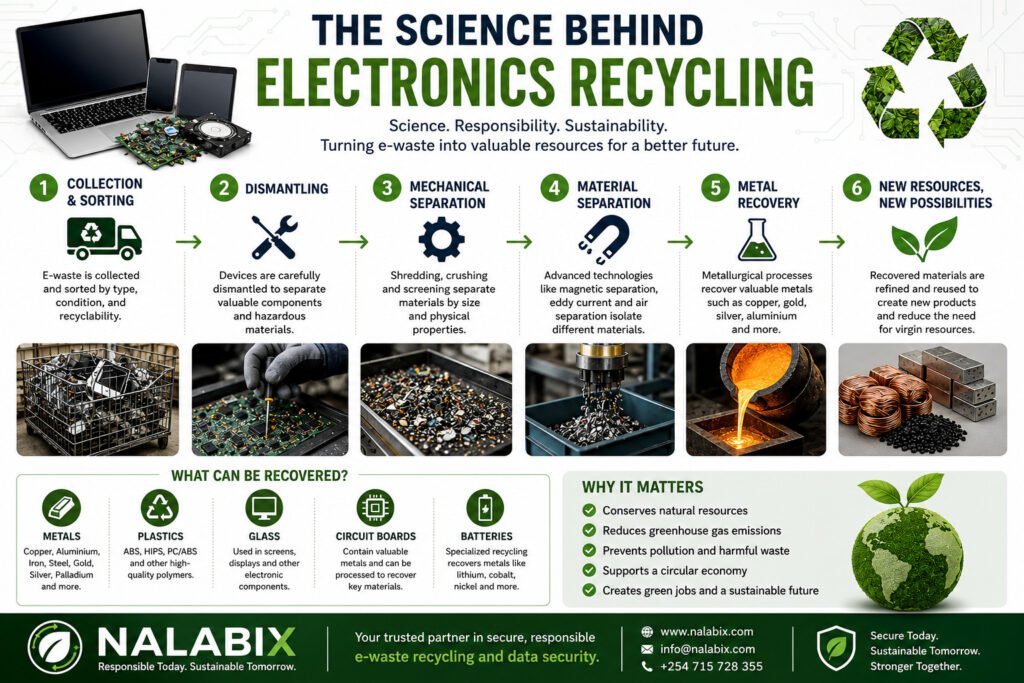
Inside electronic equipment is a complex mixture of metals, plastics, glass, circuit boards, and other materials. Some of these materials can be recovered and used again, while others require specialized handling. Electronics recycling is the science of separating these materials and recovering them safely and efficiently. What Is Inside Electronic Waste? Electronic equipment is made from many different materials because each component has a specific technical purpose. For example, cables are rich in copper, while circuit boards contain mixtures of metals, fiberglass and polymers. Screens and appliances have their own distinct material combinations. How Does Electronics Recycling Work? There is no single recycling process for every electronic device. However, responsible recycling commonly involves several connected stages. 1. Collection and Inspection The process starts with collection and assessment. Equipment is identified and sorted according to its type, condition, material composition, and potential for reuse or recycling. Devices that still have useful life may be directed toward reuse or refurbishment. Equipment that has reached the end of its useful life moves into recycling and material recovery. For businesses, this stage can also include identifying equipment that contains sensitive information. 2. Safe Removal of Batteries and Other Components Certain components require special handling before further processing. Batteries, for example, can present fire and safety risks if damaged or improperly processed. Other components may contain substances that require controlled treatment. Removing these components early helps protect workers, equipment, and downstream recycling processes. 3. Dismantling and Demanufacturing Next, electronic equipment can be dismantled into its major components. A computer, for example, may be separated into: Dismantling makes it easier to direct different materials into the appropriate recovery streams. It can also improve the recovery of valuable components compared with treating an entire device as one mixed material. 4. Size Reduction and Mechanical Processing Some materials are further processed using shredding, crushing, milling, screening, or other mechanical techniques. The objective is to liberate different materials from one another. For example, a circuit board contains metals bonded with polymers and fiberglass. Mechanical processing can break the material into smaller fractions, making subsequent separation easier. Research into printed circuit board recycling has demonstrated the use of crushing, screening, magnetic and electrostatic separation to concentrate metals and separate them from non-metallic materials. 5. Separating Metals Using Physics One of the fascinating parts of electronics recycling is that different physical properties can be used to separate materials. Magnetic Separation Magnetic separators can remove ferrous metals such as iron and steel from mixed material streams. Eddy-Current Separation Eddy-current systems can separate certain non-ferrous metals, such as aluminium, from other materials. Density and Air Separation Materials with different densities or aerodynamic properties can be separated using specialized equipment. Screening Screens can separate processed materials according to particle size. Together, these technologies allow recyclers to progressively separate complex mixtures into more concentrated material streams. 6. Recovering Metals From Circuit Boards Printed circuit boards are among the most technically interesting components in e-waste recycling. They contain a mixture of: After appropriate preprocessing, specialized metal recovery facilities can use different technologies to recover valuable metals. Two broad approaches include pyrometallurgy and hydrometallurgy. Pyrometallurgy Pyrometallurgical processes use controlled high temperatures to process material and recover metals through melting, smelting, and refining. Hydrometallurgy Hydrometallurgical processes use controlled chemical solutions to dissolve and separate particular metals from processed materials. These technologies require specialized facilities and environmental controls. They are not processes that should be attempted through informal or uncontrolled recycling. 7. What Happens to Recovered Metals? Once metals have been separated and sufficiently processed, they can become secondary raw materials. Recovered materials such as: can potentially re-enter manufacturing supply chains. Precious metals such as gold, silver, and palladium can also be recovered from appropriate electronic waste streams. The value of this recovery is not only financial. Using secondary materials can help reduce the need to extract and process additional virgin resources. 8. What Happens to Electronic Plastics? Plastics are another major part of the e-waste stream. The recycling process may involve identifying, sorting, cleaning, grinding, and processing plastics according to their properties. However, electronic plastics are not always straightforward to recycle. Different polymers, additives, flame retardants, contamination, and mixed materials can make some plastics more difficult to recover economically. Therefore, responsible recycling does not mean that every component will automatically become a new product. The objective is to maximize safe and technically viable recovery. 9. Glass and Other Materials Electronic equipment can also contain substantial quantities of glass and composite materials. Screens, for example, require specialized handling depending on their technology and composition. Some materials can be recovered into appropriate processing streams, while materials that cannot be economically or safely recycled may require controlled treatment or disposal. This is one reason why electronics should not simply be placed into ordinary household recycling systems unless the local program specifically accepts them. The Chemistry Behind E-Waste Recycling Chemistry becomes particularly important when physical separation alone cannot produce sufficiently pure materials. Chemical processes can help: However, chemical recovery must be carefully controlled. Poorly managed chemical processing can create serious environmental problems. Responsible recycling therefore requires appropriate technology, worker protection, waste treatment, and environmental controls. Why Electronics Are Sometimes Called “Urban Mines” Instead of extracting everything from new geological deposits, recycling allows society to recover some of these materials from products that have already been manufactured. This concept is known as urban mining. What Happens to Data-Bearing Devices? Electronics recycling also has a data security dimension. Computers, servers, hard drives, SSDs, smartphones, and other storage devices may contain sensitive information long after the device is no longer being used. Before recycling data-bearing equipment, organizations should use an appropriate data sanitization or physical destruction process based on their requirements and applicable standards. Only after data security requirements have been addressed should the remaining equipment proceed through the appropriate recycling pathway. This connects two important areas: Data security + Environmental responsibility A device should not be considered properly disposed of simply because it has left the office or been handed to a recycler.
Top Countries Producing E-Waste
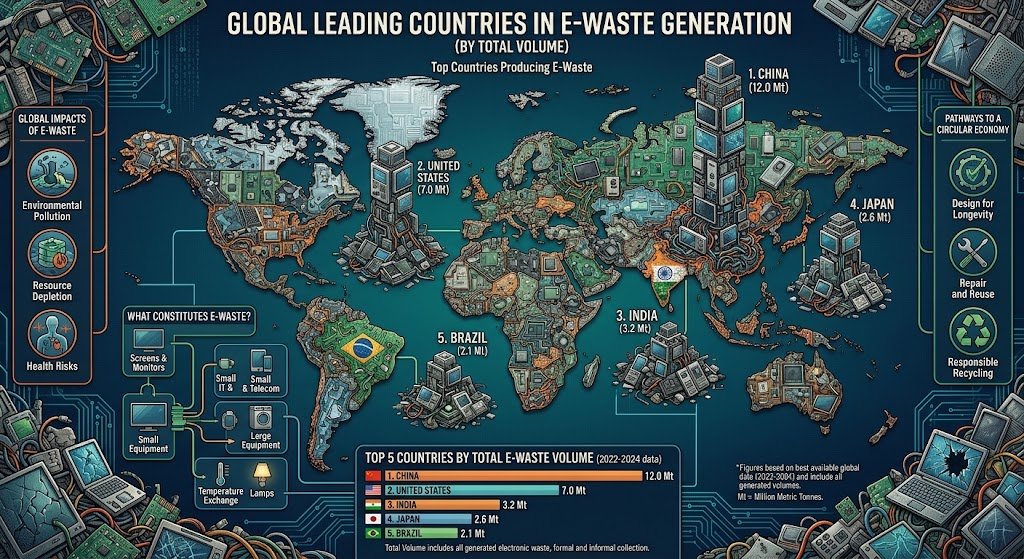
Electronic waste, or e-waste, is one of the fastest-growing waste streams in the world. Every year, households, businesses, governments, and industries replace millions of computers, phones, televisions, appliances, and other electronic devices. But which countries produce the most e-waste? The answer is closely linked to population size, technology use, consumer purchasing power, and how frequently electronic products are replaced. Understanding where the largest amounts of e-waste are generated helps governments, businesses, and recyclers develop better collection and recycling systems. What Is E-Waste? E-waste refers to discarded electrical and electronic equipment and its components. It includes products that are broken, obsolete, unwanted, or reaching the end of their useful life. Common examples include: Although these products contain valuable materials such as copper, aluminium, steel, gold, and other recoverable resources, some also contain substances that require careful handling and controlled recycling. Countries That Generate the Most E-Waste According to international e-waste assessments, China, the United States, India, Japan, and Brazil are among the world’s largest e-waste-generating countries by total volume. 1. China China generates the largest amount of e-waste globally in absolute terms. Its huge population, extensive electronics manufacturing industry, rapid technological development, and high domestic consumption all contribute to the country’s large e-waste stream. The country has also invested heavily in formal recycling infrastructure and policies designed to improve the management of discarded electronics. 2. United States The United States is another major generator of electronic waste. High levels of electronics ownership, frequent device replacement, and strong consumer demand for newer technology contribute significantly to its e-waste generation. Computers, smartphones, televisions, household appliances, and other consumer electronics make up a substantial portion of the waste stream. 3. India India’s rapidly growing economy, large population, increasing access to technology, and expanding use of electrical and electronic equipment have contributed to significant growth in e-waste generation. The country faces the challenge of expanding formal collection and recycling systems as more electronics reach the end of their useful lives. 4. Japan Japan is a highly developed and technology-intensive economy with widespread use of electrical and electronic products. Although its total e-waste volume is smaller than that of China, the United States, and India, Japan has developed structured systems for managing and recycling many categories of electronic products. 5. Brazil Brazil is one of the largest e-waste generators in Latin America. Its large population, growing electronics market, and increasing consumption of electrical and electronic equipment contribute to substantial e-waste generation. Improving collection networks and increasing public participation in formal recycling remain important parts of managing the growing waste stream. Why Do Some Countries Produce More E-Waste? E-waste generation is not determined by population alone. Several factors influence how much electronic waste a country produces. Population Size Countries with large populations naturally have more consumers using electronic products. Even a relatively small amount of e-waste per person can result in a large national total. Consumer Electronics Use Countries where computers, smartphones, televisions, appliances, and other electronics are widely used tend to generate more discarded equipment. Device Replacement Rates Technology changes quickly. Consumers and organizations may replace functioning equipment because newer products offer improved performance, features, energy efficiency, or compatibility. Economic Development Higher-income economies generally have greater access to electrical and electronic equipment. As ownership increases, so does the amount of equipment eventually reaching end of life. Business and Industrial Activity Businesses, data centers, telecommunications companies, financial institutions, manufacturers, and other organizations can generate significant quantities of obsolete IT equipment and electronic components. Total E-Waste vs E-Waste Per Person There is an important difference between total e-waste generation and e-waste generated per person. A country with a very large population may generate the most e-waste overall, even if the amount generated per person is relatively moderate. Meanwhile, smaller and wealthier countries can generate comparatively high amounts of e-waste per capita. This distinction is important when comparing countries because total volume shows the scale of the national waste challenge, while per-capita figures provide insight into consumption and disposal patterns. Where Does All This E-Waste Go? Not all discarded electronics are managed in the same way. Depending on the country and waste management system, e-waste may be: Formal recycling is important because electronic equipment contains both valuable resources and potentially hazardous components. Proper processing allows materials to be recovered while reducing environmental and occupational risks. Why E-Waste Recycling Matters Recycling electronics is not simply about getting rid of old devices. It is also about recovering resources and reducing the environmental impact associated with producing new materials. Responsible e-waste recycling can help: For businesses, proper electronic waste management can also support environmental compliance, responsible asset disposal, and secure handling of data-bearing equipment. The Global E-Waste Challenge The countries generating the most e-waste demonstrate the scale of the global electronics challenge. However, e-waste is not only a problem for the largest generators. As access to technology continues to expand across Africa, Asia, Latin America, and other emerging markets, more countries are expected to face growing volumes of discarded electrical and electronic equipment. The solution requires more than simply recycling more devices. Countries need effective collection systems, responsible product design, reuse and refurbishment programs, formal recycling infrastructure, public awareness, and policies that support a circular economy. Final Thoughts China, the United States, India, Japan, and Brazil are among the world’s major e-waste-generating countries by total volume. Their experiences highlight how population, economic development, technology adoption, and consumer behavior influence electronic waste generation. But the global lesson is broader: every country that uses electronics must also plan for what happens when those products reach the end of their useful lives. Responsible e-waste management can turn discarded electronics from a growing environmental challenge into an opportunity to recover resources, protect the environment, and build a more circular economy. Have obsolete electronics that need responsible handling? Businesses and organizations can use professional e-waste collection, recycling, data destruction, and IT asset disposal services to ensure unwanted electronics are managed responsibly.
Future Predictions for Electronic Waste: What to Expect
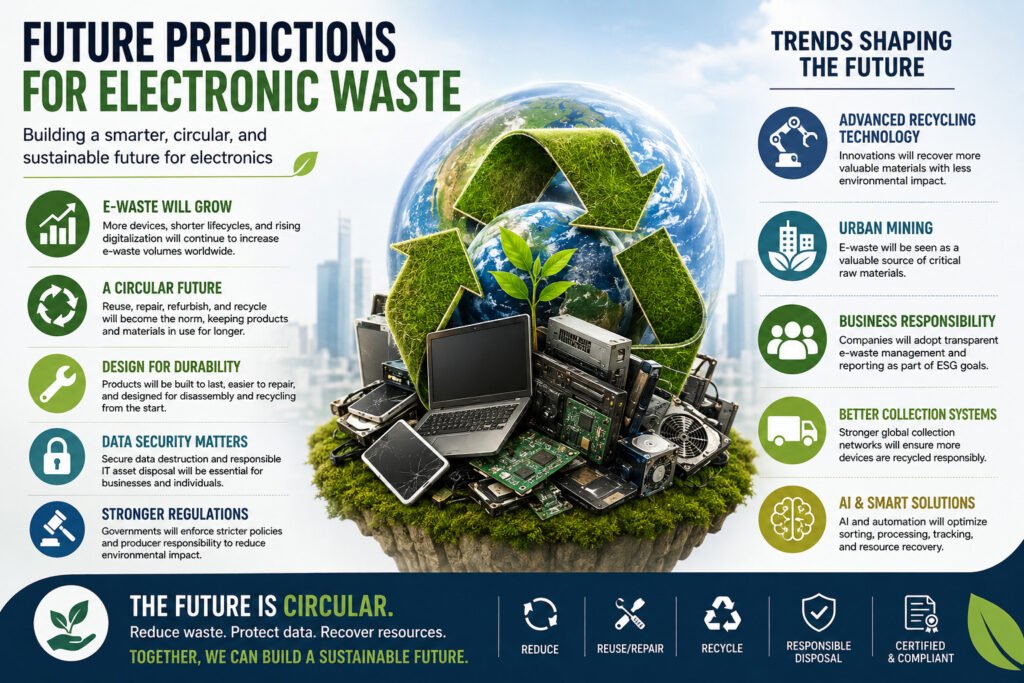
Technology is advancing faster than ever. New smartphones, computers, appliances, electric devices, networking equipment, and connected technologies are entering our homes and workplaces every year. But there is another side to this technological progress: what happens when these devices become obsolete? Electronic waste, commonly known as e-waste, is already one of the world’s fastest-growing waste streams. According to the Global E-waste Monitor 2024, the world generated approximately 62 million tonnes of e-waste in 2022, while only 22.3% was documented as formally collected and recycled. The same report projects global e-waste generation to reach 82 million tonnes by 2030 if current trends continue. These figures highlight an important question: What will the future of electronic waste look like? 1. E-Waste Will Continue to Grow The amount of electronic equipment in use worldwide is unlikely to decline. Digital transformation, expanding internet access, connected devices, technological upgrades, and rising consumption are all contributing to greater demand for electronics. As more products reach the end of their useful lives, more e-waste will be generated. The challenge is not simply producing more recycling capacity. It is building systems that can keep pace with the growth of electronic products from the moment they are manufactured to the moment they reach end of life. 2. The Electronics Industry Will Move Toward a Circular Economy The traditional model of make, use, and discard is becoming increasingly difficult to sustain. The future is likely to place greater emphasis on a circular electronics economy, where products and materials remain useful for as long as possible. This means giving greater attention to: Instead of treating an obsolete device as worthless waste, the circular economy looks at what can still be used, repaired, recovered, or recycled. 3. Longer Product Lifespans Will Matter More One of the simplest ways to reduce e-waste is to keep electronic products in use for longer. Future sustainability efforts are therefore likely to focus more strongly on product durability, repairability, software support, replacement parts, and maintenance. A device that remains functional for several additional years does not immediately become another item requiring collection and recycling. This makes extending product life an important part of future e-waste management. 4. Repair and Refurbishment Will Become More Important Not every old electronic device needs to be recycled immediately. Some equipment can be repaired, upgraded, refurbished, or reused. This can preserve the value already invested in the product and delay the need for new materials and manufacturing. As businesses and consumers become more conscious of electronic waste, repair and refurbishment are likely to become increasingly important parts of the electronics lifecycle. However, equipment that cannot be safely or economically reused should still enter an appropriate recycling or disposal process. 5. E-Waste Will Become an Increasingly Valuable Source of Materials Electronic devices contain valuable materials, including metals and other recoverable resources. The Global E-waste Monitor 2024 estimated that e-waste generated in 2022 contained approximately 31 million tonnes of metals, alongside significant quantities of plastics and other materials. This creates an opportunity for urban mining—recovering useful materials from discarded products rather than relying entirely on newly extracted resources. As demand for raw materials grows, responsible e-waste recycling could become increasingly important to resource security and the circular economy. 6. Recycling Technology Will Become More Advanced The future of e-waste recycling will depend partly on better technology. Improved sorting, dismantling, material separation, automated processing, and recovery technologies can help recyclers extract useful materials more efficiently. Artificial intelligence, robotics, sensors, and data systems may also play a greater role in identifying equipment, improving sorting processes, tracking materials, and optimizing recycling operations. Technology will therefore be both a driver of e-waste growth and an important part of the solution. 7. Data Security Will Become a Bigger Part of E-Waste Management Electronic waste is not only an environmental issue. Computers, servers, smartphones, hard drives, SSDs, and other storage devices may contain sensitive information long after an organization stops using them. As businesses increasingly rely on digital information, secure data sanitization and physical data destruction will become even more important when equipment reaches end of life. Future IT asset disposal programs will increasingly need to combine: Asset management + data security + environmental responsibility. Properly managing an old device should therefore involve both protecting the information stored on it and ensuring the equipment is handled responsibly. 8. Businesses Will Face Greater End-of-Life Responsibility Organizations are likely to become more accountable for what happens to their electronic equipment after it leaves the workplace. This is especially important for companies managing large quantities of: Businesses will increasingly need documented processes for asset tracking, secure data destruction, responsible recycling, and environmental reporting. E-waste management is therefore likely to become more closely connected with corporate sustainability, risk management, compliance, and governance. 9. E-Waste Regulations Will Continue to Develop Governments are increasingly recognizing that e-waste requires dedicated policies, infrastructure, and enforcement. The Global E-waste Monitor 2024 reported that 81 countries had an e-waste policy, legislation, or regulation in place in 2023, although enforcement and implementation remain significant challenges. Future policies may place greater emphasis on areas such as: Regulatory requirements will vary between countries, but stronger accountability is likely to remain an important global trend. 10. Product Design Will Help Determine How Much E-Waste We Create The future of e-waste begins before a product reaches the consumer. Manufacturers can influence the eventual waste generated by designing products that are: This approach is sometimes described as designing for circularity. If products are designed with their entire lifecycle in mind, recycling and resource recovery can become easier at the end of their useful life. 11. Collection Infrastructure Will Need to Catch Up A recycling system is only effective when discarded electronics can reach appropriate collection and processing facilities. Many parts of the world still face challenges involving collection points, transportation, public awareness, recycling infrastructure, and access to formal e-waste management. The future will therefore require stronger connections between consumers, businesses, manufacturers, retailers, governments, collection providers, and recyclers. Better collection means more electronics can enter formal
WEEE / E-Waste Trends in Africa
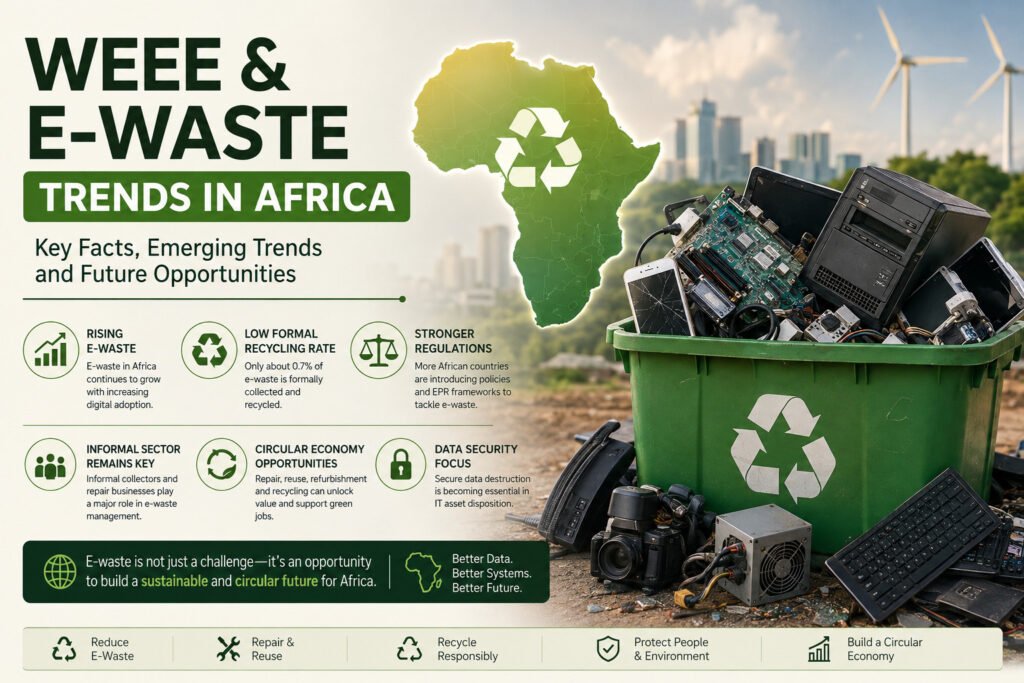
Africa is becoming increasingly connected to the digital economy. Smartphones, computers, televisions, appliances, networking equipment, solar technologies and other electrical products are becoming more common across homes, businesses and institutions. However, the growth in electronic equipment also creates a growing waste challenge. WEEE (Waste Electrical and Electronic Equipment), commonly referred to as e-waste, includes electrical and electronic products that have reached the end of their useful life or are no longer wanted. As technology adoption increases, the volume of discarded electronics is also rising. According to the Global E-waste Monitor 2024, Africa generated approximately 3.5 million tonnes of e-waste in 2022, equivalent to about 2.5 kg per person. Yet only about 0.7% was formally documented as collected and recycled. These figures highlight both the scale of the challenge and the significant opportunity to improve e-waste management across the continent. 1. E-Waste Generation Is Increasing One of the biggest trends is the continued growth in electronic consumption. Digitalisation, urbanisation, population growth and greater access to consumer electronics are increasing the number of electrical and electronic products in circulation. Africa’s total e-waste generation reached approximately 3.5 million tonnes in 2022, compared with lower volumes in previous years. Globally, e-waste generation reached 62 million tonnes in 2022 and is projected to reach 82 million tonnes by 2030. The trend means governments, businesses and consumers will need better systems for collecting, repairing, refurbishing and recycling electronics. 2. Formal Recycling Remains Very Low Perhaps the most important African e-waste trend is the gap between the amount of e-waste generated and the amount formally recycled. The Global E-waste Monitor estimates that only 0.7% of Africa’s e-waste was formally collected and recycled in 2022. This compares with a global formal collection and recycling rate of 22.3%. This does not mean that no electronics are being recovered or reused. Electronics can move through informal collection, repair, resale and material recovery channels that are not fully captured in official statistics. Nevertheless, the low documented rate shows the need for stronger formal collection networks, recycling infrastructure, reporting systems and environmentally sound processing. 3. Informal E-Waste Recycling Remains Important Across many African countries, informal businesses and individuals play a significant role in collecting, repairing, dismantling and recovering materials from discarded electronics. This activity can help recover valuable materials and extend the useful life of equipment. However, informal processing may involve unsafe dismantling, uncontrolled burning or inadequate handling of hazardous components. The challenge is therefore not simply to eliminate informal activity, but to create systems that can connect informal collectors and repair businesses with safer, regulated recycling networks. A stronger formal-informal sector relationship can help improve collection while protecting workers, communities and the environment. 4. E-Waste Regulations Are Expanding Another important trend is the development of national policies, legislation and Extended Producer Responsibility (EPR) systems. The Global E-waste Monitor 2024 identified 11 African countries with a national e-waste policy, legislation or regulation in 2022. Nine used the EPR principle, while only one had a collection target and none had a national recycling target at that time. EPR can make manufacturers, importers and other producers more responsible for the environmental impacts associated with products throughout their life cycle. As African countries strengthen these frameworks, businesses are likely to face greater expectations around responsible electronics management, documentation and end-of-life handling. 5. Electronics Are Becoming More Diverse E-waste is no longer limited to old computers and televisions. Modern WEEE streams can include: The growth of digital infrastructure and renewable-energy technologies is likely to create new categories of electronic waste that require specialised collection and recycling systems. For example, the Global E-waste Monitor projects that retired photovoltaic panels will reach 2.4 million tonnes annually by 2030, compared with about 600,000 tonnes in 2022. 6. E-Waste Is Becoming an Urban Mining Opportunity Electronic waste is not only a waste-management problem. It is also a source of valuable secondary raw materials. E-waste contains materials such as copper, aluminium, iron, plastics and precious metals that can potentially be recovered and returned to productive use. Globally, the metals contained in e-waste generated in 2022 were estimated to be worth around US$91 billion. For Africa, improving formal recycling could therefore support a more circular economy by keeping valuable materials in circulation while reducing dependence on virgin resource extraction. This concept is often described as urban mining. 7. Data Security Is Becoming Part of E-Waste Management As organisations replace computers, servers, hard drives, smartphones and other data-bearing equipment, e-waste management increasingly overlaps with information security. Simply throwing away an old device does not necessarily remove the information stored on it. Businesses are therefore paying greater attention to: This is particularly important for organisations handling confidential customer, employee, financial or business information. Responsible IT asset disposition can therefore combine data security, asset management and environmental responsibility. 8. Collection Infrastructure Is a Major Opportunity A major barrier to better e-waste recycling is not necessarily the absence of recyclable materials. It is often the difficulty of getting discarded electronics into appropriate collection and recycling systems. Effective e-waste management requires convenient collection points, transport networks, aggregation systems and reliable recycling facilities. Businesses can contribute by establishing clear internal procedures for separating unwanted electronics from ordinary waste and using responsible recycling providers. For consumers, convenient collection points can make responsible disposal much easier. 9. Businesses Will Have a Bigger Role Businesses are among the major generators of IT and electronic waste. Office computers, monitors, printers, networking equipment, servers, UPS systems and other devices eventually require replacement or disposal. As sustainability, environmental compliance and information security become more important, organisations are increasingly expected to demonstrate what happens to their retired equipment. This is creating demand for structured services such as: Collection → Data Destruction → Sorting → Refurbishment/Reuse → Recycling → Reporting and Certification A documented process can help organisations manage both environmental and information-security risks. 10. The Circular Economy Will Shape the Future The future of e-waste management is unlikely to depend on recycling alone. A circular approach focuses on keeping products and materials useful for
The Economics of Electronics Recycling
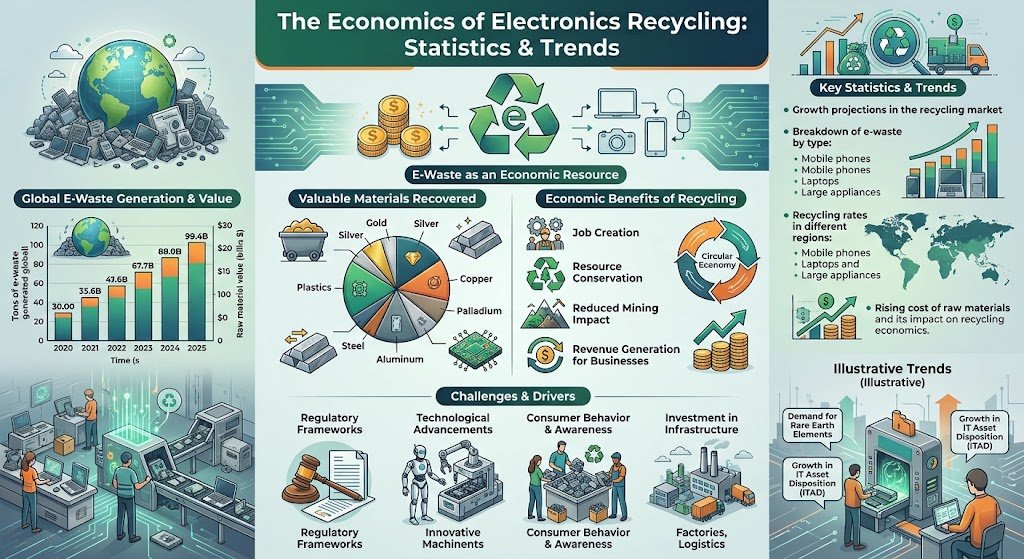
Electronics recycling is often discussed as an environmental issue, but it is also an economic one. Computers, smartphones, servers, appliances, televisions and other electronic products contain metals, plastics, glass and other materials that can potentially be recovered and returned to productive use. At the same time, collecting, transporting, dismantling and safely processing these products requires infrastructure, labour, technology and investment. This creates an important economic question: How much value is contained in discarded electronics, and how much of that value is actually recovered? Global data shows that the opportunity is significant, but so are the costs of managing e-waste responsibly. The Global E-Waste Economy in Numbers The Global E-waste Monitor 2024, published by the International Telecommunication Union (ITU) and UNITAR, reported that the world generated 62 billion kilograms of e-waste in 2022. That was equivalent to approximately 7.8 kg of e-waste per person. Only 13.8 billion kg, or 22.3%, was documented as formally collected and recycled. This means that the majority of global e-waste was not documented as being managed through formal collection and recycling systems. The economic significance becomes clearer when the materials contained in this waste stream are examined. Billions of Dollars in Materials E-waste is not made up only of waste materials. It contains resources that were originally extracted, processed and manufactured into electronic products. In 2022, the metals contained in global e-waste had an estimated value of approximately US$91 billion. This included approximately: The same e-waste stream contained an estimated 31 billion kg of metals, alongside approximately 17 billion kg of plastics and 14 billion kg of other materials, including glass, minerals and composite materials. These figures describe the estimated value of materials contained in e-waste. They should not be interpreted as the amount that a recycler can earn from collecting discarded electronics. Recovering those materials requires collection, sorting, dismantling, processing and access to appropriate downstream recycling markets. Why E-Waste Has Economic Value The economic value of electronics recycling comes mainly from resource recovery. A discarded electronic product may contain several material streams. Depending on the equipment, these can include ferrous metals, non-ferrous metals, precious metals, plastics, glass and other materials. Recycling allows some of these materials to be recovered and potentially used as secondary raw materials. This reduces the need to obtain every material exclusively from new extraction. The concept is often described as urban mining: recovering useful resources from products, infrastructure and waste already present in society. According to the Global E-waste Monitor, documented e-waste recycling in 2022 recovered approximately US$28 billion worth of secondary raw materials. That figure is considerably lower than the estimated US$91 billion value of metals contained in the year’s e-waste, illustrating the large gap between resources contained in electronic waste and resources actually recovered. Recycling Is Not Free One common misconception is that the value of metals automatically makes electronics recycling profitable. In reality, recycling has substantial costs. Electronic equipment must first be collected and transported. It may then need to be sorted, tested, dismantled and processed. Hazardous components may require controlled handling, while recovered materials need suitable downstream markets. The economic model therefore depends on several factors, including: A device containing valuable materials does not necessarily mean that recycling that individual device will generate a profit. The economics are determined by the entire recycling chain. The Hidden Cost of Poor E-Waste Management The economics of e-waste extend beyond the price of recovered materials. Improper handling can create environmental and social costs that are not always reflected in the market price of electronic products. The Global E-waste Monitor estimated that the overall economic impact of global e-waste management in 2022 represented a net cost of approximately US$37 billion. The assessment included approximately US$78 billion in externalized costs associated with impacts on people and the environment, including lead and mercury emissions, plastic leakage and contributions to global warming. It also estimated around US$10 billion in treatment costs. Against these costs, the report identified approximately US$28 billion in recovered metals and US$23 billion in monetized value from avoided greenhouse-gas emissions as economic benefits. This demonstrates an important point: The economics of electronics recycling cannot be measured only by the resale value of recovered materials. The costs avoided through proper management also matter. E-Waste Generation Is Growing Faster Than Recycling One of the most important trends is the widening gap between e-waste generation and formal recycling. Between 2010 and 2022, global e-waste generation increased from approximately 34 billion kg to 62 billion kg. During the same period, documented formal collection and recycling increased from approximately 8 billion kg to 13.8 billion kg. The Global E-waste Monitor describes e-waste generation as growing almost five times faster than documented formal collection and recycling during this period. This creates both an environmental challenge and an economic opportunity. More electronic products reaching end of life means more material potentially available for recovery. However, without adequate collection and processing infrastructure, much of that value remains outside formal recycling systems. The 2030 Outlook The trend is expected to continue. The Global E-waste Monitor projects that global e-waste generation could reach approximately 82 billion kg by 2030. Under a business-as-usual scenario, the documented formal collection and recycling rate could fall from 22.3% in 2022 to around 20% in 2030, because e-waste generation is increasing faster than recycling capacity. This is significant for the recycling industry. If collection and recycling systems do not expand alongside electronic consumption, the quantity of potentially recoverable materials outside formal systems will continue to grow. The Economic Importance of Secondary Raw Materials One of the strongest economic arguments for electronics recycling is the production of secondary raw materials. When metals are recovered from discarded electronics, they can become inputs for other manufacturing processes. This does not eliminate the need for mining, but it can reduce dependence on virgin material extraction for some applications. The Global E-waste Monitor estimates that documented e-waste recycling in 2022 avoided approximately 900 million tonnes of primary ore extraction. This illustrates why e-waste recycling is increasingly connected to discussions about
What Items Are Considered WEEE? A Simple Guide
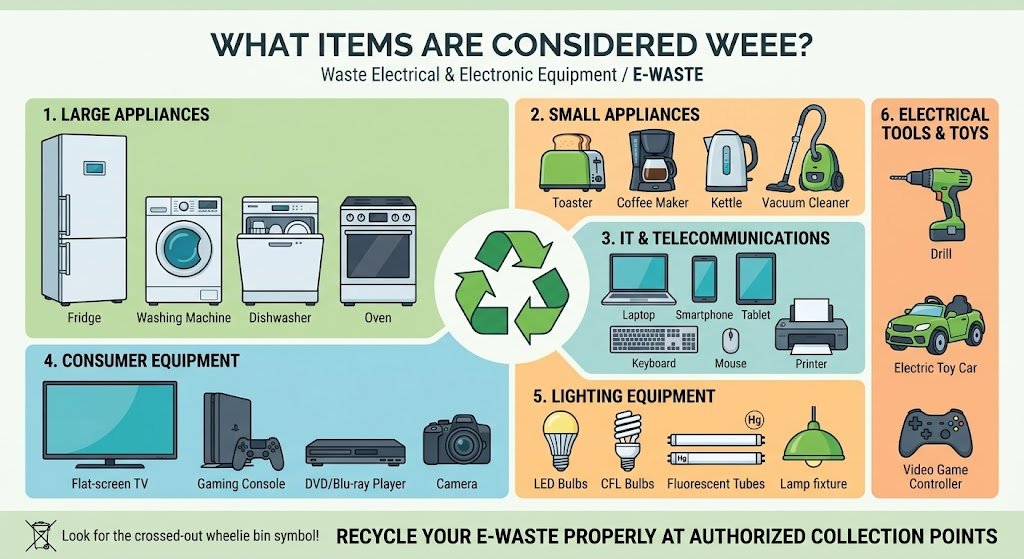
From an old laptop in an office drawer to a broken refrigerator at home, electrical and electronic products are part of everyday life. But when these products are no longer wanted or usable, what happens to them? This is where WEEE — Waste Electrical and Electronic Equipment — comes in. WEEE covers a wide range of electrical and electronic products that have reached the end of their useful life. Understanding what counts as WEEE helps households, businesses, and organizations make better decisions about collection, reuse, recycling, and responsible disposal. What Is WEEE? WEEE stands for Waste Electrical and Electronic Equipment. In simple terms, it refers to electrical or electronic equipment that has been discarded or is intended to be discarded. A product can become WEEE because it is: WEEE can come from homes, offices, schools, factories, hospitals, retail businesses, government institutions, and other organizations. What Items Are Considered WEEE? WEEE covers many different types of products. Some of the most common categories include the following. 1. Computers and IT Equipment IT equipment is one of the most recognizable forms of WEEE, particularly in offices and organizations. Examples include: When organizations upgrade their technology, large quantities of IT equipment can quickly become end-of-life assets. 2. Mobile Phones and Consumer Electronics Small electronic devices also contribute significantly to the WEEE stream. These include: Although many of these products are small, they can contain valuable materials such as copper, aluminium, and other recoverable metals. 3. Televisions and Screens Old televisions and display equipment are also considered WEEE. Examples include: Older equipment may contain components or substances that require specialized treatment, making proper recycling particularly important. 4. Large Household Appliances Large electrical appliances are another major WEEE category. Examples include: Some appliances may contain refrigerants or other components that need to be handled correctly during recycling. 5. Small Electrical Appliances Many everyday household products can eventually become WEEE. Examples include: If a product needs electricity or electronic components to perform its function and is discarded, it may fall within a WEEE stream depending on local regulations. 6. Lighting Equipment Discarded electrical lighting products can also be WEEE. Examples include: Different types of lamps may require different recycling and treatment processes. 7. Electrical and Power Tools Equipment used for construction, maintenance, workshops, and gardening can become WEEE. Examples include: These products should be separated from ordinary waste when they reach the end of their useful life. 8. Medical and Laboratory Electronics Healthcare and laboratory facilities also generate electronic waste. Examples may include: These items may require specialized handling because of their design, components, contamination considerations, or the information they may contain. 9. Cables, Chargers and Power Supplies WEEE is not limited to complete electronic devices. Discarded: can also enter electronic waste streams. These materials can contain valuable metals and plastics that may be recovered through appropriate recycling processes. 10. Batteries and Battery-Powered Equipment Batteries are often regulated separately from general WEEE, but they are closely connected to electronic waste management. Examples include: Batteries require particular care because damaged or improperly handled batteries can create safety and fire risks. What Makes an Item WEEE? A useful way to think about WEEE is: Electrical or electronic equipment + discarded or unwanted = potential WEEE However, the exact legal definition and categories can differ between countries. Some jurisdictions have specific rules for batteries, vehicles, medical equipment, refrigerants, and other specialized products. Therefore, businesses should always follow the WEEE and waste-management requirements that apply in their country or region. What Should You Do With WEEE? WEEE should not simply be thrown into general waste where appropriate recycling or collection systems are available. A responsible approach is: Identify → Separate → Collect → Secure → Reuse or Refurbish → Recycle → Recover Materials For businesses handling computers, servers, phones, storage devices, and other data-bearing equipment, data security should also be part of the process. Before equipment is recycled, organizations should ensure that sensitive information is properly sanitized or destroyed. Why Is Proper WEEE Recycling Important? Responsible WEEE management provides both environmental and economic benefits. It reduces landfill waste Recycling keeps valuable electronic materials out of landfill and reduces the volume of waste requiring disposal. It recovers valuable resources Electronics can contain materials such as copper, aluminium, steel, plastics, and other recoverable resources. It supports the circular economy Recycling and refurbishment allow materials and components to remain in productive use rather than being treated as waste. It reduces environmental risks Some electronic equipment contains substances that require controlled handling. Proper recycling helps prevent inappropriate disposal and environmental contamination. It protects business data IT equipment can contain confidential information. Secure data sanitization or destruction helps prevent sensitive information from being exposed when devices are retired. The Bottom Line Understanding what items are considered WEEE is an important part of responsible electronic waste management. Old computers, mobile phones, televisions, appliances, printers, lighting equipment, power tools, cables, medical electronics, and many other products can become WEEE when they are discarded. Instead of sending these items to general waste, they should be assessed for reuse, refurbishment, secure disposal, and recycling through appropriate channels. Better WEEE management means less waste, greater resource recovery, improved data security, and a more sustainable approach to the electronics we use every day. Frequently Asked Questions Are laptops considered WEEE?Yes. Discarded laptops are a common example of WEEE. Are mobile phones WEEE?Yes. Unwanted or discarded mobile phones generally fall within electronic waste streams. Are cables considered WEEE?Discarded electrical and electronic cables can be considered WEEE, depending on the applicable regulations. Are refrigerators WEEE?Yes. Refrigerators and other electrical appliances can fall within WEEE categories, although they may require specialized treatment. Can WEEE be recycled?Yes. Many WEEE items can be dismantled and processed to recover metals, plastics, glass, and other materials. Does WEEE contain hazardous substances?Some electrical and electronic equipment can contain substances or components that require controlled handling. Proper collection and recycling help manage these risks responsibly. Is WEEE the same as e-waste?The terms are often used interchangeably, although their precise
What Happens If Electronics Go to Landfill?
Electronic waste is growing worldwide, but what happens when old computers, phones, televisions, batteries, and other electronics end up in a landfill? Learn about the environmental risks, valuable materials that are lost, data security concerns, and why responsible e-waste recycling is a better solution. So, what actually happens when electronics end up in a landfill? The short answer: valuable resources are lost, and poorly managed electronic waste can create environmental and health risks. Understanding what happens next highlights why responsible e-waste recycling matters. What Happens to Electronics in a Landfill? Electronic devices do not simply disappear after they are thrown away. They are buried alongside other waste and can remain in the landfill for many years. As devices break down, their different materials behave in different ways. Plastics may persist for long periods, metals can corrode, and certain components may release substances into the surrounding waste environment. The conditions inside a landfill can also change over time due to moisture, temperature, and decomposition. This makes electronics fundamentally different from ordinary waste. 1. Electronics Take Up Valuable Landfill Space Electronic devices contain many different components packed into relatively small products. When large quantities of electronics are sent to landfills, they contribute to the growing volume of waste. Landfills have limited capacity, and disposing of materials that could potentially be recovered, recycled, or reused makes poor use of available resources. 2. Harmful Substances Can Enter the Environment Some electronic products contain substances that require careful handling. When electronics are damaged or exposed to landfill conditions, certain components can release contaminants. Rainwater passing through waste can create leachate, a liquid that may carry pollutants from discarded materials into surrounding soil and water if not properly contained and managed. This can create risks for ecosystems and communities near poorly managed waste sites. 3. Burning Electronics Can Create Additional Pollution Electronics should never be burned as a way of getting rid of them. When plastics, cables, circuit boards, and other electronic components are burned under uncontrolled conditions, they can release harmful smoke and pollutants into the air. Open burning is particularly dangerous because it provides little control over the substances released or the people exposed to them. 4. Valuable Materials Are Lost One of the biggest disadvantages of sending electronics to landfill is the loss of recoverable resources. Electronic devices can contain materials such as: Through proper recycling, many of these materials can be separated and returned to productive use. This reduces the need to extract as many new raw materials from the earth. 5. Electronics Can Represent a Data Security Risk For businesses, throwing an old computer, hard drive, server, or smartphone into general waste creates another concern: data security. A device that appears broken or useless may still contain sensitive information. Business records, customer information, passwords, financial data, and other confidential files can remain on storage devices unless the data has been properly erased or the storage media securely destroyed. That is why responsible electronic disposal should include secure data destruction where applicable. 6. Recycling Can Keep Electronics Out of Landfills Responsible e-waste recycling provides a better alternative to simply sending unwanted electronics to landfill. A professional recycling process can involve: Collection → Sorting → Data Destruction → Dismantling → Material Recovery → Responsible Recycling Depending on the equipment and its condition, some devices or components may also be suitable for reuse or refurbishment. The goal is to recover as much value as possible while ensuring materials that cannot be reused are handled responsibly. What Happens When Electronics Are Recycled Instead? Responsible e-waste recycling gives old electronics a different path. A typical process may include: CollectionOld electronics are gathered and transported responsibly. SortingEquipment is separated according to type, condition, and material. Data DestructionData-bearing devices are securely sanitized or physically destroyed when required. DismantlingEquipment is taken apart so different components and materials can be separated. Material RecoveryMetals, plastics, glass, and other recoverable materials are processed for recycling. Responsible Downstream RecyclingMaterials that cannot be handled locally may be sent through appropriate specialized recycling channels. The exact process depends on the equipment, local regulations, and the recycling facility involved. Landfill vs. Responsible E-Waste Recycling Landfill Disposal Responsible E-Waste Recycling Valuable materials remain buried Recoverable materials can be separated Adds electronics to general waste Keeps e-waste within appropriate recycling streams Potential contamination concerns Materials are processed through controlled systems Data may remain on storage devices Data can be securely sanitized or destroyed Resources are lost Materials can return to productive use What Should You Do With Old Electronics? Before throwing away an electronic device, ask: Can it be repaired, reused, refurbished, donated, or recycled? If the device contains personal or business information, address the data before handing it over. For businesses managing large volumes of obsolete IT equipment, a structured IT Asset Disposition (ITAD) process can help coordinate collection, data destruction, recycling, documentation, and environmental responsibility. And importantly, do not place electronics or batteries in general waste when dedicated e-waste collection and recycling options are available. The Bigger Picture The landfill is often viewed as the end of an electronic product’s life. In reality, it can represent the loss of materials that still have value. Old electronics can contain resources that can be recovered and used again. At the same time, some components require careful handling to prevent unnecessary environmental and safety risks. That is why responsible e-waste management is more than simply getting rid of old equipment. The better question isn’t “How do I throw away this electronic device?” It’s “How can I make sure this device is handled responsibly at the end of its useful life?” Choosing appropriate reuse, refurbishment, data destruction, and e-waste recycling options can help keep valuable materials in circulation and reduce the amount of electronics entering landfills.
Should You Donate or Recycle Old Electronics? A Simple Guide
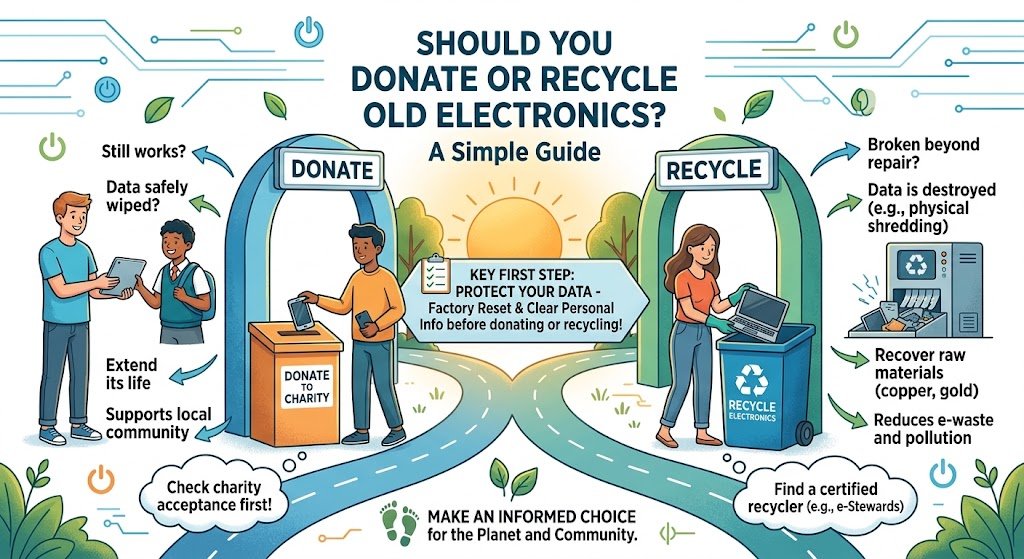
What should you do with an old laptop, phone, computer, printer, monitor, or other electronic device you no longer need? You generally have two responsible options: donate it if it is still useful, or recycle it if it has reached the end of its practical life. Choosing correctly can extend the life of electronics, protect your data, reduce electronic waste, and help recover valuable materials. But before deciding, there are a few important questions to ask. Donate or Recycle: Which Is Better? The answer depends on the condition, usefulness, age, and data stored on the device. A simple rule is: If someone can still safely and practically use it, consider donating or reusing it. If it is broken, obsolete, or no longer practical to use, recycle it responsibly. However, don’t treat donation as a way to get rid of equipment that is effectively waste. Passing unusable electronics to another person simply moves the disposal problem elsewhere. When Should You Donate Old Electronics? Donation can be a good option when an electronic device is: For example, a working laptop that is no longer needed by one person could potentially support a student, nonprofit, community program, or another user. Reuse keeps a product in service longer, which can reduce the demand for new electronics and the resources required to manufacture them. Prepare Electronics Before Donation Before donating a device, don’t simply hand it over. Take time to: For computers, servers, hard drives, SSDs, and other storage devices containing sensitive information, organizations should consider a verified data sanitization or destruction process rather than relying only on deleting files. When Should You Recycle Old Electronics? Recycling is usually the better option when equipment has reached the end of its useful life. Consider recycling electronics that are: Old electronics should not simply be placed in ordinary household trash where dedicated e-waste collection or recycling options are available. What If the Device Can Be Repaired? There is another option between donation and recycling: repair and reuse. A slow computer may only need additional memory or storage. A phone may need a battery replacement. A printer might only require a relatively simple repair. Keeping an electronic product in use for longer can reduce the need to replace it prematurely. So before recycling, ask: Can this device be safely repaired and realistically used again? If the answer is yes, extending its useful life may be the most sustainable choice. Don’t Let Your Data Become E-Waste One of the biggest risks associated with old electronics isn’t environmental—it’s data security. Computers, smartphones, servers, hard drives, SSDs, USB drives, and other devices can contain sensitive information long after they stop being used. This may include: Deleting a file does not necessarily mean the underlying data has been securely removed. Before donating, reselling, reusing, or recycling a data-bearing device, use an appropriate data sanitization or secure destruction method based on the sensitivity of the information. For organizations, maintaining documentation such as a certificate of data destruction can also provide evidence that retired data-bearing assets were handled appropriately. Donation vs Recycling: A Quick Comparison Situation Better Option Working laptop in good condition Donate or reuse Functional smartphone Donate or reuse Working monitor Donate or reuse Broken computer that is uneconomical to repair Recycle Obsolete printer Recycle Damaged or non-functional electronics Recycle Device containing sensitive business data Secure data sanitization/destruction first Repairable equipment Repair and reuse Equipment with no practical reuse value Recycle The key principle is reuse before recycling, and recycle before disposal whenever practical. Why Responsible E-Waste Recycling Matters Electronics contain materials that can potentially be recovered and reused. These include metals, plastics, glass, and various electronic components. Responsible recycling helps: Recycling is therefore not simply about getting rid of old electronics. It is also about recovering value from products that have reached the end of their useful life. What About Businesses With Large Amounts of Old Electronics? For businesses, handling obsolete IT equipment requires more planning than simply putting devices aside for collection. A responsible process may include: Identify → Assess → Secure Data → Reuse/Donate → Recycle → Document Businesses should identify equipment that is being retired, determine whether it can be reused, protect any data stored on it, and ensure equipment that cannot be reused is sent through an appropriate e-waste recycling process. For larger IT environments, an IT Asset Disposition (ITAD) program can help organizations manage retired computers, servers, storage devices, networking equipment, and other technology assets in a structured way. Common Mistakes to Avoid 1. Donating unusable electronics If something is effectively broken beyond repair, donating it may only transfer the waste to someone else. 2. Throwing electronics into general waste Electronic equipment should be handled through appropriate e-waste channels whenever possible. 3. Assuming deleted files are permanently gone Data protection should be treated as a separate step from physical recycling. 4. Ignoring batteries Some electronics contain batteries that require appropriate handling. Do not assume they belong in ordinary waste. 5. Forgetting documentation Businesses may need records showing what happened to retired equipment, particularly where sensitive data or compliance requirements are involved. A Simple Decision Checklist Before getting rid of an old electronic device, ask: Is it still working? → Yes: Can someone realistically use it?→ Yes: Reuse, donate, or refurbish it. Is it repairable? → Yes: Consider repairing it and extending its useful life. Is it broken, obsolete, or no longer practical to use? → Yes: Send it to a responsible e-waste recycling service. Does it contain sensitive data? → Yes: Securely sanitize or destroy the data before the equipment leaves your control. Frequently Asked Questions Is it better to donate or recycle electronics? If an electronic device is still functional and useful, donation or reuse can extend its life. If it is broken, obsolete, or beyond practical repair, responsible recycling is generally the better option. Should I erase my data before donating a computer? Yes. Personal and business data should be securely removed before donating, transferring, or recycling a computer. Can old electronics be
What Is Urban Mining?
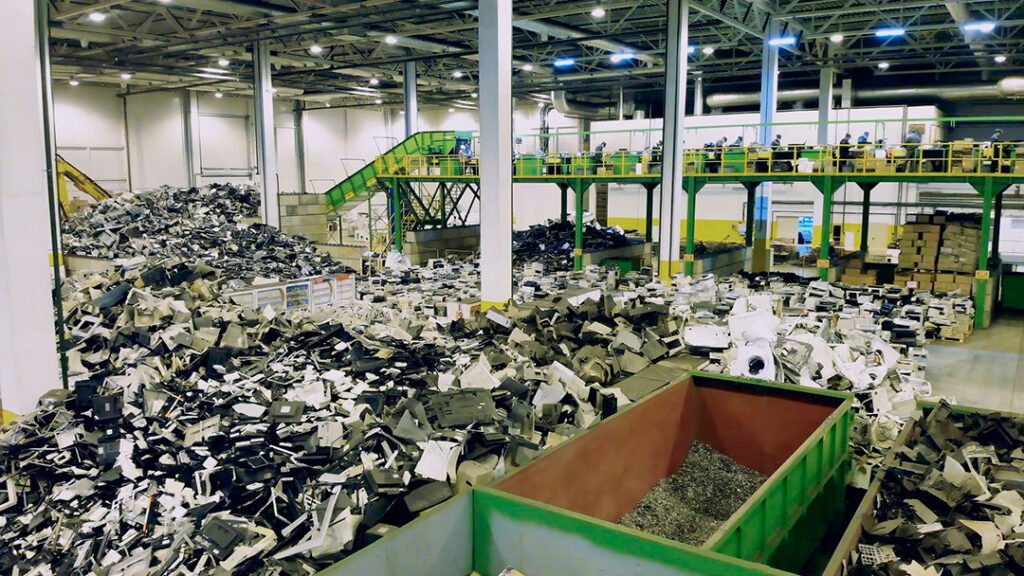
When we think about mining, we often imagine workers extracting minerals from the ground. But there is another source of valuable materials all around us: discarded electronic devices. Urban mining is the process of recovering valuable materials from discarded products, infrastructure and waste instead of relying only on newly extracted natural resources. In e-waste recycling, it involves recovering materials such as copper, aluminium, steel and precious metals from old electronics. As electronic waste continues to grow worldwide, urban mining is becoming an important part of resource recovery and the circular economy.nt. As the world produces more electronic waste, urban mining is becoming an important part of the circular economy. What Is Urban Mining? Urban mining is the recovery of valuable materials from discarded products, buildings, infrastructure and waste streams. In e-waste recycling, it involves recovering metals, plastics and other materials from unwanted electronic equipment for recycling and potential reuse. Think of a city’s landfills, junkyards, and storage rooms as a giant, artificial ore deposit. Instead of blasting through rock in a remote mountain, “miners” extract gold, copper, silver, and rare earth elements from circuit boards, cables, and appliances sitting right in our neighborhoods. In e-waste management, urban mining involves collecting unwanted electronics and processing them to recover materials such as: Precious metals — gold, silver, and platinum from circuit boards and connectors Base and industrial metals — copper, aluminum, and steel from wiring, casings, and appliances Critical and rare earth elements — cobalt, lithium, and neodymium from batteries and magnets, increasingly important for EVs and renewable energy How the Process of Urban Mining Actually Works Recovering usable material from waste isn’t as simple as melting things down. It generally follows a few stages: 1. Collection Gathering discarded devices, vehicles, or materials through take-back programs, recycling centers, or demolition sites. 2. Sorting Equipment is sorted according to its type, condition and material composition. Devices may include computers, phones, printers, servers, cables, monitors and other electronic equipment. 3. Dismantling Electronics are carefully dismantled so that different components and materials can be separated. For data-bearing equipment, secure data destruction or sanitization should take place before equipment is recycled or processed, particularly when devices have been used by businesses or organizations. 4. Processing using mechanical shredding, chemical treatment, or smelting to separate metals from plastics and other materials. 5. Refining purifying the recovered metals to a quality that manufacturers can reuse. 6. Reintegration feeding the recovered materials back into supply chains to make new products. Why Is Urban Mining Important? It Reduces Pressure on Natural Resources Traditional mining requires the extraction of minerals from the earth. Recovering materials from existing products can provide an additional source of raw materials. It Supports the Circular Economy Urban mining helps keep materials in circulation rather than allowing them to become waste. This supports the principle of using resources for longer and recovering materials at the end of a product’s useful life. It Helps Reduce E-Waste Electronic waste is one of the world’s fastest-growing waste streams. Responsible recovery can prevent valuable materials from being lost through uncontrolled disposal. It Can Recover Valuable Metals Some electronic components contain concentrations of metals that make material recovery worthwhile. Printed circuit boards, for example, can contain copper and smaller quantities of precious metals. It Creates Economic Opportunities Urban mining can support businesses and jobs in collection, logistics, dismantling, recycling, material recovery and environmental services. It strengthens supply chains for critical minerals, which are in high demand for batteries, solar panels, and electric vehicles — and which many countries currently have to import. Urban Mining vs Traditional Mining The two approaches are different, but they can complement each other. Traditional Mining Urban Mining Extracts materials from the earth Recovers materials from existing products and waste Requires mining and processing of natural deposits Uses materials already present in the economy Depends on geological resources Depends on discarded products and infrastructure Produces mining-related waste Helps recover materials from waste streams Supplies new raw materials Helps return existing materials to production Urban mining does not completely replace traditional mining. Instead, it provides another way to obtain and reuse valuable resources. Why It Matters Beyond the Money Urban mining isn’t just a clever way to make cash from junk. It solves several problems at once: The Challenges Urban mining isn’t a silver bullet. A few real obstacles stand in the way: What You Can Actually Do Urban mining works at a global, industrial scale — but it starts with everyday choices: The Bottom Line Urban mining is essentially about finding value in what has already been produced. Old electronics may contain materials that can be recovered and returned to productive use. By combining responsible e-waste collection, secure data destruction, recycling and material recovery, organizations can help reduce waste while contributing to a more circular economy. The next time you see an old computer, phone, server or cable, remember: it may not simply be waste—it may also be a source of recoverable resources. Nalabix Eco supports responsible e-waste recycling and secure data destruction, helping organizations manage end-of-life electronics responsibly and recover materials through appropriate recycling channels.
Frequently Asked Questions About E-Waste Recycling
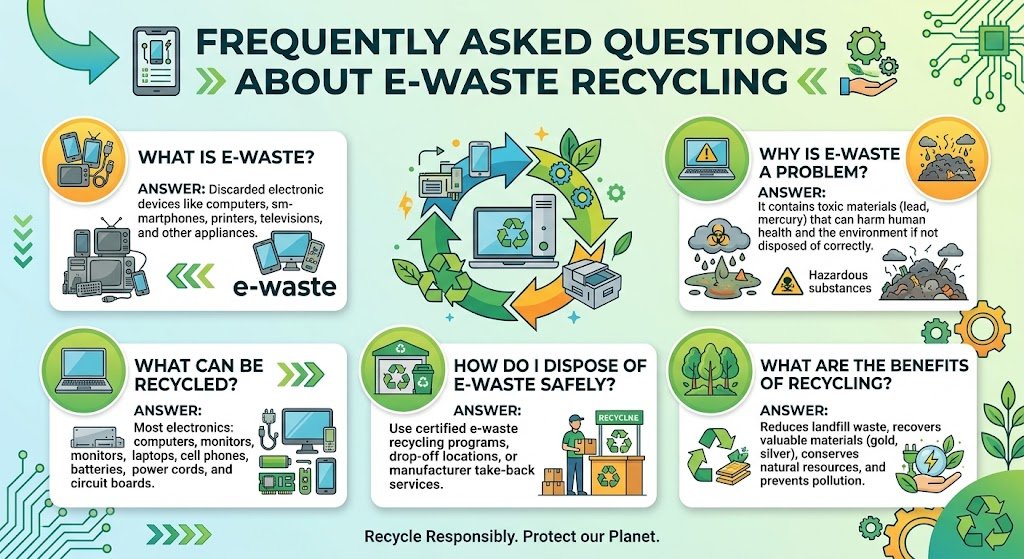
E-waste recycling can raise many questions, from what types of electronics can be recycled to how data and sensitive information are handled. This guide answers the most common questions about e-waste recycling, responsible electronics disposal, reuse, data security, and resource recovery. Electronic waste, or e-waste, is one of the fastest-growing waste streams in the world. From old smartphones and computers to printers, televisions, servers, batteries, and cables, unwanted electronics can contain valuable materials as well as substances that require responsible handling. E-waste recycling helps recover useful resources, reduce environmental pollution, and ensure that electronic equipment is managed safely at the end of its useful life. Below are some of the most frequently asked questions about e-waste recycling. 1. What is e-waste? E-waste is discarded electrical and electronic equipment that is no longer wanted, working, or useful. It can include computers, laptops, mobile phones, printers, monitors, televisions, servers, networking equipment, cables, appliances, and other electronic devices. 2. Why is e-waste recycling important? Responsible recycling helps prevent electronics from ending up in uncontrolled dumpsites or being improperly dismantled. It also allows materials such as metals, plastics, glass, and other components to be recovered and reused. Recycling therefore supports both environmental protection and resource conservation. 3. What electronics can be recycled? Many types of electrical and electronic equipment can be recycled, including: The exact items accepted depend on the recycler’s capabilities and local regulations. 4. Can broken electronics be recycled? Yes. Electronics do not have to be working to be recyclable. Broken, damaged, obsolete, or end-of-life equipment can often be processed to recover useful materials and components. However, devices containing batteries or sensitive components may require specialized handling. 5. What happens to electronics during recycling? A responsible recycling process generally involves collection, sorting, assessment, dismantling, material separation, recovery, and responsible downstream processing. Reusable components may be separated where appropriate, while materials such as metals, plastics, and other recoverable fractions are directed to suitable recycling processes. 6. Is e-waste recycling safe? Professional e-waste recycling is designed to manage electronic equipment safely and responsibly. Some electronics contain materials that can be harmful if handled incorrectly, so dismantling and processing should be carried out using appropriate procedures, equipment, and environmental controls. 7. Can valuable materials be recovered from e-waste? Yes. Electronic equipment can contain valuable materials such as copper, aluminium, steel, and other metals. Some electronic components and circuit boards may also contain precious metals. Recovering these materials reduces the need to obtain all resources from new extraction. 8. What should I do before recycling a computer or phone? Before handing over a device for recycling, remove personal accounts and back up any information you need. For devices that contain sensitive or confidential information, data destruction or secure data sanitization should be treated as a separate priority. Simply deleting files or performing a factory reset may not be sufficient for every situation. 9. Can e-waste recycling protect my data? Recycling itself does not automatically guarantee data security. If an electronic device contains sensitive information, it should go through an appropriate data sanitization or destruction process before or as part of its end-of-life management. Businesses may also require documentation confirming that the data-bearing equipment was securely processed. 10. Is e-waste the same as general waste? No. E-waste is a specific category of waste involving electrical and electronic equipment. Unlike ordinary household or general waste, electronic equipment can contain a mixture of recoverable materials and components that require specialized handling. This is why placing electronics in general waste bins is generally not the best disposal option. 11. Can e-waste be reused instead of recycled? Yes, when equipment is still suitable for continued use, reuse, repair, refurbishment, or redeployment may be preferable to immediate material recycling. The important principle is to assess the equipment and choose the most appropriate end-of-life option rather than automatically sending everything for disposal. 12. What should businesses do with obsolete IT equipment? Businesses should have a documented process for managing obsolete IT assets. This can include: This approach can form part of a broader IT Asset Disposition (ITAD) program. 13. Can e-waste be recycled indefinitely? Materials such as metals can often be recovered and recycled multiple times. However, recycling processes can involve material losses, contamination, degradation, or technical limitations. This is why preventing unnecessary electronic waste, extending product life, repairing equipment, and reusing suitable devices are also important parts of a circular economy. 14. Where should I take e-waste for recycling? Use a reputable e-waste recycler or authorized waste-management provider that can demonstrate responsible handling and appropriate downstream processing. Requirements vary between countries, so organizations should also consider applicable environmental regulations and documentation requirements. 15. What is the difference between e-waste recycling and e-waste disposal? E-waste recycling focuses on recovering useful materials and components from electronic equipment. Disposal is a broader term that refers to the final management of waste when reuse or recovery is not possible. A responsible approach prioritizes reuse and recovery where practical and ensures that remaining waste is handled through appropriate channels. 16. How can individuals reduce e-waste? You can reduce e-waste by: Small decisions can make a significant difference when adopted by many people. 17. How can businesses reduce e-waste? Businesses can establish an e-waste management policy covering purchasing, asset tracking, maintenance, reuse, secure data destruction, recycling, and documentation. Regular audits of IT equipment can also help organizations identify assets approaching end of life and plan their responsible disposition in advance. 18. What is the most important thing to remember about e-waste recycling? The goal is not simply to get rid of old electronics. It is to ensure that unwanted equipment is managed responsibly from collection through its final destination. A good e-waste management process protects data, supports resource recovery, reduces environmental risks, and promotes responsible use of materials. Final Thoughts E-waste recycling is an important part of responsible resource management in a technology-driven world. Whether you are disposing of one old phone or managing thousands of corporate IT assets, the right approach can help prevent pollution, recover